
Training
The Jerónimo Martins Group reaffirms its commitment to investing in high-quality training that is aligned with the needs of the business and the expectations of its employees. In 2025, investment in training totalled 17.8 million euros, resulting in over 9.7 million hours of training, equivalent to an average of 66 training hours per employee. Over 218,000 training sessions were held, covering 94.8% of employees, an increase of 0.2 p.p. compared to 2024. These results reflect the Group’s expansion, particularly its commitment to lifelong learning, preparing employees for sector challenges, and promoting a culture of development across all countries and business areas.
Key training indicators
|
|
2025 |
|
2024 |
|
2023 |
||||||||||||||||
|---|---|---|---|---|---|---|---|---|---|---|---|---|---|---|---|---|---|---|---|---|---|---|
|
|
Women |
|
Men |
|
Total |
|
Women |
|
Men |
|
Total |
|
Women |
|
Men |
|
Total |
||||
Group |
|
63 |
|
75 |
|
66 |
|
63 |
|
68 |
|
64 |
|
54 |
|
59 |
|
55 |
||||
Portugal |
|
49 |
|
58 |
|
52 |
|
53 |
|
63 |
|
56 |
|
44 |
|
59 |
|
49 |
||||
Poland |
|
59 |
|
56 |
|
59 |
|
61 |
|
52 |
|
60 |
|
54 |
|
43 |
|
52 |
||||
Colombia |
|
119 |
|
128 |
|
123 |
|
102 |
|
101 |
|
101 |
|
81 |
|
87 |
|
84 |
||||
Slovakia |
|
90 |
|
89 |
|
89 |
|
180 |
|
337 |
|
246 |
|
– |
|
– |
|
– |
||||
Czechia |
|
32 |
|
50 |
|
32 |
|
31 |
|
0 |
|
31 |
|
– |
|
– |
|
– |
||||
|
||||||||||||||||||||||
|
|
Training volume1 |
|
Total training courses |
||||||||||||||
|---|---|---|---|---|---|---|---|---|---|---|---|---|---|---|---|---|---|---|
|
|
2025 |
|
2024 |
|
2023 |
|
2025 |
|
2024 |
|
2023 |
||||||
Group |
|
9,715,113 |
|
8,943,221 |
|
7,367,472 |
|
218,366 |
|
209,160 |
|
220,788 |
||||||
Portugal |
|
1,843,835 |
|
1,991,698 |
|
1,761,827 |
|
69,665 |
|
66,292 |
|
57,417 |
||||||
Poland |
|
5,431,825 |
|
5,292,027 |
|
4,449,299 |
|
143,891 |
|
*139,463 |
|
160,859 |
||||||
Colombia |
|
2,394,458 |
|
1,614,310 |
|
1,156,347 |
|
4,138 |
|
3,217 |
|
2,512 |
||||||
Slovakia |
|
43,279 |
|
43,718 |
|
– |
|
590 |
|
102 |
|
– |
||||||
Czechia |
|
1,716 |
|
1,468 |
|
– |
|
82 |
|
86 |
|
– |
||||||
|
||||||||||||||||||
EducAction is the Group’s main digital learning platform, designed to give employees fast, simple and intuitive access to training content, anywhere from any device. In 2025, the platform provided access to 7,578 training materials and was used by 156,0471 employees, recording a monthly average of 58,217 active users. These indicators confirm the platform’s relevance as a tool supporting flexible learning integrated into our teams’ daily routines and aligned with business priorities.
Knowledge Share is a corporate digital library, which centralises more than 3,735 content materials, including 235 new resources added in 2025. It features news, articles, podcasts and webinars on critical topics such as business, leadership, sustainability and innovation, promoting knowledge sharing and reinforcing a culture of lifelong learning within a fully digital ecosystem.
Business training
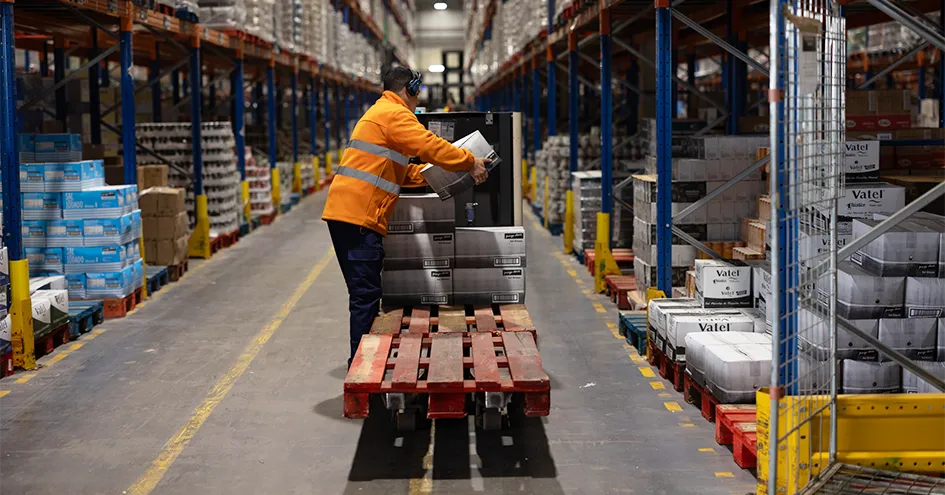
Our focus on technical and operational training reflects the importance of ensuring teams are prepared to respond effectively to business-specific challenges and meet customer expectations. The Group continues to invest in this area to enhance service quality, food safety and hygiene, and operational efficiency in all the countries where we are present.
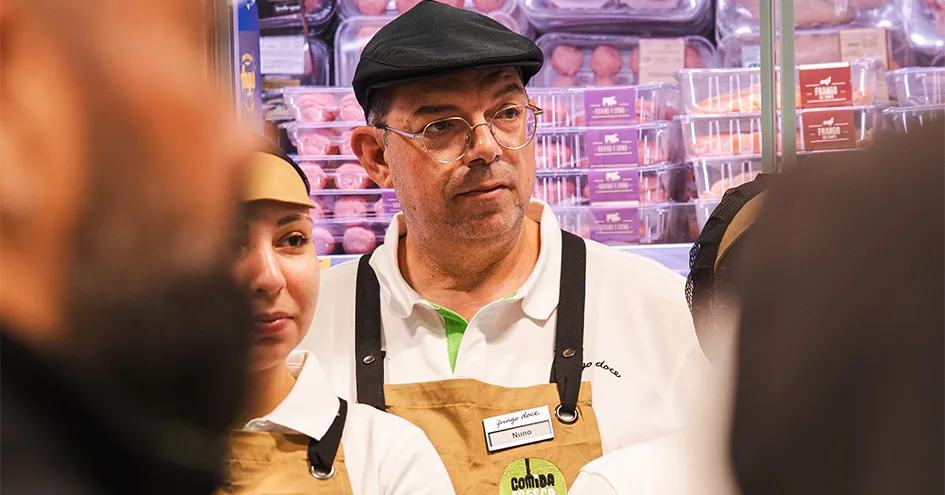
In Portugal, the Perishables School is a key pillar in the development of store teams, covering the butchery, fish, bakery and pastry, and fresh food categories. The training programme includes in-person modules, practical sessions and digital learning content. The Group also runs a training school focused on fruit and vegetables for store managers and district managers. In 2025, a total of 23,688 Pingo Doce and Recheio employees participated in the various perishables training programmes. Also in Portugal, Recheio launched the Wine Academy, aimed at improving product knowledge and delivering a differentiated service for professional customers.
In Poland, through the “Zostań Świeżoznawcą” (Become a Perishables Expert) programme, Biedronka trained 15,923 employees in the fruit, vegetable, meat, and fish categories. In Colombia, Ara trained 25,589 employees in perishables.
The Logistics School aligns internal procedures, promotes the sharing of best practices, and strengthens operational efficiency across distribution centres. In Poland, 64 Biedronka employees took part in the programme. In Portugal, 2025 was a year of restructuring the programme to better align it with strategic logistics challenges and critical functions.
Regarding customer service, the SVAL – “Sorrir, Vender, Agradecer, Limpar” (Smile, Sell, Thank, Clean) programme trained 16,234 Pingo Doce employees. Combining behavioural and technical training, this initiative strengthens service culture and customer proximity and is internally recognised as a key driver of the Company’s differentiation.
At Recheio, the “Número 1” (Number 1) project, a sales service model focused on supporting customers throughout their in-store journey, was implemented in 23 stores.
At Biedronka, “Customer service VR training” used virtual reality simulations to train 2,785 employees for customer service situations, particularly in more challenging scenarios, helping them develop practical skills and confidence in customer interactions.
Hebe introduced AI-supported on-demand training for operations, enabling more flexible and personalised learning. This initiative had a total of 1,736 employees trained, corresponding to 10,035 training hours.
To develop commercial skills, the Group implemented several training programmes:
“Biedronkowa Akademia Kupca” (Biedronka Shopping Academy), and the Biedronkowa Akademia Handlowa “BAH Advanced” (Biedronka Business Academy School), training 58 employees in 2025;
the Commercial School programme combines Group-wide and local initiatives tailored to the specificities of each country. The content covers negotiation, advanced negotiation and category management. The Commercial School trained 133 employees from all countries, corresponding to 2,185 training hours.
The degree course in Commercial and Retail Management, developed in partnership with Universidade Católica Portuguesa, continues to play a key role in supporting our employees to obtain an academic qualification from a leading university. Launched in 2023 as the first online bachelor’s degree designed for the sector, the programme opened applications to the public in 2024. In the 2024/2025 academic year, the degree programme included 80 students, 74 of whom were employees of the Group.
Management and leadership training
Management and leadership training aims to strengthen decision-making, execution, and collaboration capabilities, supporting the development of the business across different contexts and countries. The approach follows an integrated model that combines programmes designed and implemented at Group and local levels.
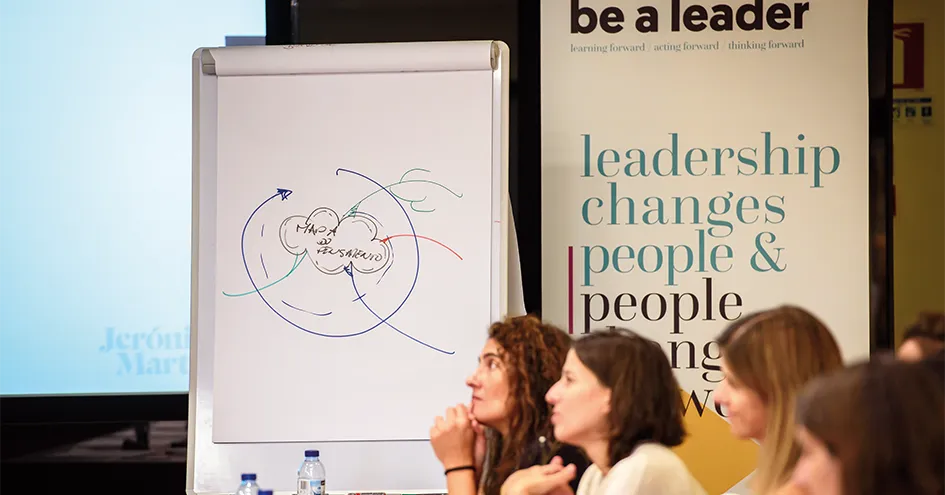
Establishing a shared vision of leadership has been one of the key pillars of this strategy. The global Be a Leader programme, created in 2018, is today the primary vehicle for leadership development within the Jerónimo Martins Group. Developed in partnership with the Center for Creative Leadership (CCL), the programme is organised into paths aligned with the leadership journey in the Group: Leading Self, Leading Others, Leading Teams and Leading Business. These paths are fully tailored to our reality, combining in-person sessions, online learning and opportunities for peer exchange among leaders from different countries. Since its launch, Be a Leader has trained 1,618 employees. In 2025, we held 15 editions of the programme, involving 280 managers, including, for the first time, participants from Slovakia. Investment in the programme totalled 1.3 million euros. The maturity and impact of the Be a Leader programme were recognised with a Bronze Medal in the “Best Leadership Development Programme” category at the 2025 Brandon Hall Excellence Awards.
To scale the Be a Leader programme and expand its reach to more employees, we continued to implement the Exponential Leadership programme, focused on preparing internal trainers, also developed in partnership with the CCL. In 2025, we trained 16 Exponential Leaders, who subsequently replicated the programme’s content within their organisations, reaching 2,862 employees and generating a clear multiplier effect.
The Strategic Management Programme (SMP), developed in partnership with the Católica Lisbon School of Business & Economics and the Kellogg School of Management, is an international programme tailored to our reality, focused on developing advanced management, innovation and leadership skills in highly complex environments. In 2025, we invested 570 thousand euros and gave high-potential leaders from Portugal, Poland, Slovakia and Colombia the opportunity to participate in the programme. This programme includes two main modules; one held in Lisbon and the other in Chicago.
In the field of digital transformation, the Digital Executive Education Programme (DEEP), developed in partnership with Nova School of Business and Economics– now in its eighth edition – strengthens digital skills applied to leadership management in different areas. In 2025, DEEP had 27 participants, resulting in the proposal of ten projects with the potential for implementation in our businesses.
Artificial Intelligence (AI) gained prominence in 2025, reflecting our belief in its transformative potential, when used responsibly and in line with the Group’s objectives. One of the initiatives launched was AI Explorer, which included online training for 117 employees across all countries and an in-person workshop with 50 participants from the Pingo Doce and Recheio commercial teams.
At operations level, the focus on people development is reflected in the implementation of programmes designed to strengthen management skills and frontline leadership, ensuring consistency in the implementation of the business model in the different countries of operation.
Store managers are prepared for their role through initiatives such as the Pingo Doce General Store Management Programme, designed for future deputy managers, and Recheio’s Store Management Specialisation Programme, aimed at perishables managers. In 2025, 132 employees attended the two programmes.
Pingo Doce also introduced the Integrated Management Pyramid programme to reposition the role of district manager by developing strategic and analytical skills, with 64 employees trained.
At Biedronka, operations employees participated in the programmes “Biedronkowa Akademia Zarządzania 2.0” (Biedronka 2.0 Management Academy) and “Biedronkowa Akademia Zarządzania – Zaawansowana” (Advanced Store Management Academy), with a total of 846 participants in 2025.
At Hebe, leadership development was reinforced through a structured portfolio of programmes addressing different career stages, including Hebe Way, for coordinators and specialists, and 1st Time Manager, designed to support employees taking on leadership roles for the first time. These programmes were attended by 26 employees.
In Colombia, “Líder Ara” (Ara Leader) programme focused on the leadership teams of four distribution centres.
Recognising English as a key transversal management competency, essential for effective collaboration across teams in different countries and for international career development, we continued to invest in language learning programmes. Training focused primarily on English, complemented by other relevant languages, ensuring a structured and scalable approach aligned with business requirements.
Leadership development
The development of our current and future leaders depends both on self-awareness and individual commitment to growth, and on the range of tools and opportunities we provide so that each employee reaches their full potential. Alongside structured processes for self-assessment, performance appraisals, continuous feedback, the identification of potential, and personalised development plans, we also provide access to mentoring programmes, 360-degree assessments (including feedback from managers, peers, and external stakeholders), and training pathways designed to address leadership challenges across different career stages. These mechanisms are complemented by internal mobility and career progression opportunities, ensuring that each leader can access experiences and contexts that support their development and their ability to lead and inspire teams.
Performance appraisal
The performance management model is a key pillar for aligning strategy, people and results across the Group and serves as one of the main tools for employee development. In 2025, performance appraisals involved 94,882 employees. Applied in all countries, this process clarifies expectations, identifies training needs, and supports professional growth while fostering a culture of feedback and continuous improvement. The active participation of employees in setting goals, self-assessment and development meetings, is recognised as one of the critical factors for success of the model.
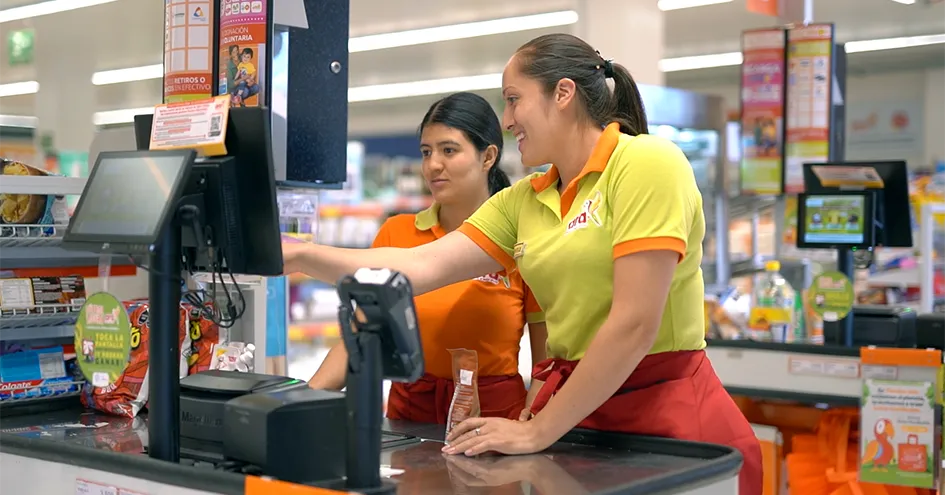
In 2025, all eligible employees2, from all functional levels (strategic, managerial and operational), participated in performance appraisal. During the year, we audited the 2024 performance management cycle, enabling stronger and more consistent alignment across the organisation on the evolution of the model. This work led to the creation of a single and transparent leadership framework, shared by all Companies, with progressive behavioural expectations aligned with different levels of responsibility.
Expected behaviours are structured around leadership principles that guide the actions and development of each leader, while also ensuring alignment between individual objectives and the Group and Companies’ strategy. By clarifying common principles, criteria and expectations, this work lays the foundation for a sustained and consistent evolution of the performance management model to be applied in the 2026 cycle.
Potential assessment and development
Assessing potential is essential to ensure the sustainability of the business and prepare the Group for the future. This process identifies, develops, and retains talent across corporate areas and Companies, providing robust information to support strategic people management decisions.
In 2025, the potential assessment process covered 6,287 employees in the strategic and managerial levels and those in critical roles from the operational level. The results inform decisions on succession and career planning, development and compensation and benefits, strengthening the alignment between talent, performance, and recognition.
Following performance appraisal, employees define personal development plans based on concrete and measurable actions. In 2025, a total of 3,392 plans were defined at the strategic and managerial levels. These plans are monitored by the Companies’ HR teams and employees leaders, promoting accountability and equal access to development opportunities.
The Be a Leader 360º programme remained in place as a tool for self-assessment and development for managers across different levels, involving 25 participants in the year. Through 360-degree assessments, leaders receive structured feedback from peers, teams and managers, identifying strengths and areas for improvement that feed personal development plans (PDP). This is complemented by coaching and follow-up sessions, encouraging more self-aware, empathetic and results-orientated leadership.
Internal mobility
Internal mobility is a key driver of talent development in the Group, promoting lifelong learning, strengthening skills, and enabling the development of diverse and enriching career paths. By encouraging employees to take on roles in other areas, Companies or countries, internal mobility broadens knowledge of the business and is essential for their professional and personal growth. It is also an important mechanism for internal response to the Companies’ needs.
44,733
people changed roles, workplace, or Company
(30.3% of total employees)
6,286
people were promoted to positions of greater responsibilityy
(4.3% of total employees)
In 2025, 44,733 people changed roles, workplace, or Company (30.3% of the workforce), including 6,286 employees who were promoted (4.3% of the total). This mobility reflects the organisation’s vitality and capacity for internal renewal, as well as its commitment to meritocracy and progression based on capabilities and performance.
Internal opportunities are available through Hello JM platform, which centralises all the Group’s internal vacancies and allows each employee to actively manage their career. At the same time, the performance appraisal process includes structured opportunities for sharing professional aspirations and mobility interests, providing valuable input for identifying potential candidates.
In Portugal, Pingo Doce employees can submit transfer requests between stores via “Sou Pingo Doce” (I am Pingo Doce) app. In 2025, a total of 696 transfers were concluded using the app, enabling a more agile response to store needs, and increasing satisfaction among employees seeking to balance their professional lives with their personal or family preferences.
The Group has also invested in a workforce planning tool to address recruitment needs and anticipate future employee movements, such as mobility, retirement, or international assignments. The goal is to annually map the profiles and skills needed by each team, anticipating critical movements and ensuring development and mobility strategies are aligned with business priorities.
Young talent
To nurture our leadership pipeline, we have several young talent development programmes in place, which are regularly reviewed to keep them attractive and aligned with participant expectations. All these programmes are remunerated in accordance with our compensation policies.
The Trainees Programme was revised in 2025 to ensure Group-wide alignment. With a duration of two years, it challenges participants to strengthen their skills in preparation for future leadership roles. The first year includes two tutor-supported projects focused on self-awareness and cultural alignment with the Group. The second year provides an immersive experience in stores or distribution centres, supported by a mentor, and includes opportunities to engage with the Group’s senior management. In 2025, the Trainees Programme had 104 participants, 40 of whom started the programme during the year.
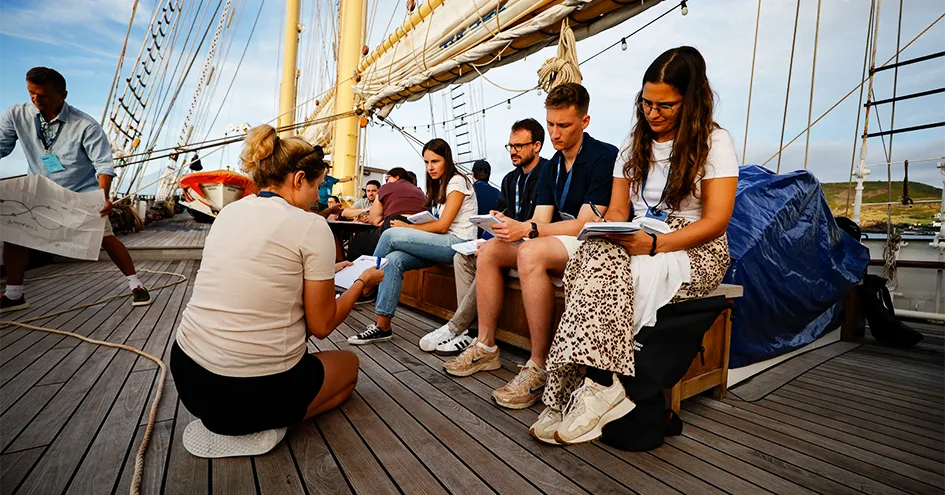
In 2025, we launched the first edition of the Leader’Ship Journey, a leadership development programme held aboard the Santa Maria Manuela, a ship that is part of our heritage. Thirty young people embarked on an immersive experience that used the workings of the ship and its crew as an analogy to prepare them to navigate with confidence in an increasingly demanding, complex, and unpredictable world.
The Professional Internship Programme, aimed at university students or recent graduates, is available in Portugal and lasts from six months to one year. Trainees are given the opportunity to deepen their academic knowledge by joining one of the business teams and receiving guidance from a tutor. In 2025, we welcomed 80 interns in the scope of this programme.
The Summer Internship Programme is designed for university students and lasts for two months during the summer holidays. In 2025, a total of 76 higher education students participated in the programme in Portugal and Poland.
The Ambassadors Programme included 43 students who represented the Group at their universities in Portugal, strengthening ties with academic communities, promoting our employer brand, and facilitating talent identification.
Our Companies also have their own young talent programmes adapted to their business context. The Recheio Campus initiative welcomed 26 participants and included curricular internships and exposure to the business. In the agrifood sector, the 2025 edition of JMA Future saw 36 participants in curricular internships tailored to the specificities of this business.
Personal empowerment
We believe that active participation in initiatives that have an impact on the Group and its surrounding communities is also an important part of each employee’s development journey.
Active participation
We encourage employees to actively engage in moments of sharing, ensuring that everyone feels safe to express themselves within the organisation. In 2025, in addition to the surveys conducted to regularly and efficiently measure employee satisfaction on specific topics, we launched a new edition of the Group-wide employee satisfaction survey. Under our Engagement Policy, this survey is carried out every two years to gather employees’ views on critical aspects of people management. The Group-wide survey conducted in 2025 received 101,946 responses, representing a participation rate of 81.5%. Action plans are defined for each Company based on the results of the Group-wide survey. The Chief People Officer has ultimate responsibility for this process, ensuring that the results lead to concrete action plans aligned with the identified needs.
Regular meetings are held in live broadcast format to bring employees and executive management closer together. Biedronka held four Executive Committee sessions, which were live streamed and offered simultaneous translation into different languages, with the participation of 6,629 employees. At Ara, three “Aquí Les Cuento”(Here I Tell You) sessions were held, during which the Company’s General Manager shared results, strategic objectives and critical issues, in which more than 20,000 employees participated.
In 2025, the Beyond the Desk programme was launched to ensure global HR policies remain aligned with the realities and needs of employees in the Companies. Through this initiative, corporate HR team members spend at least three days per year working in one of the Group’s stores.
In Poland, internal idea generation competitions were held, encouraging employees to actively contribute to innovative solutions aimed at improving processes and the working environment. At Hebe, the Bank of Ideas programme encouraged employees to propose concrete initiatives for the workplace, covering topics such as social support campaigns and health promotion. At Biedronka, employees proposed improvements to operational processes and initiatives to strengthen a positive organisational culture. A total of 1,818 ideas were submitted, of which 34 were implemented.
Ara and Biedronka employees continue to refer candidates to join the recruitment processes. In 2025, 1,387 people were hired because of internal recommendations in the two Companies.
We also have several social dialogue mechanisms in place to hear the views of employees and their representatives regarding actual and potential impacts on the workforce. These mechanisms are described in more detail in “Freedom of association and collective bargaining”.
Working with purpose and meaning
To promote a sense of purpose at work and expand our positive impact on the communities where we operate, we encourage individual responsibility and create opportunities for volunteering and active participation in society. Biedronka enabled employees to dedicate four hours of their working time to preparing Christmas food hampers for families in vulnerable situations – an initiative that involved 698 employees. The company also organized another blood donation drive at its offices, promoting civic engagement and a commitment to the health and well-being of the community.
For more information about this and other projects, see “Programmes and projects to engage and support affected communities”
1 Includes all employees who used the platform throughout the year, even those who were no longer with the Group as of 31 December 2025.
2 For the purposes of the performance management process, eligible employees include those from the strategic and managerial functional level who have held their position for at least three months in the Group, as at the reference date of 31 December 2025. Eligibility criteria are currently being standardised and centralised for the operational functional level.