
The preservation of marine ecosystems is essential to ensuring the sustainability of fishing activities. For this reason, we ensure that the fish and seafood sold in our stores – whether fresh, frozen or used as an ingredient in our Private Brand products – does not contribute to the over‑exploitation, depletion or extinction of aquatic species.
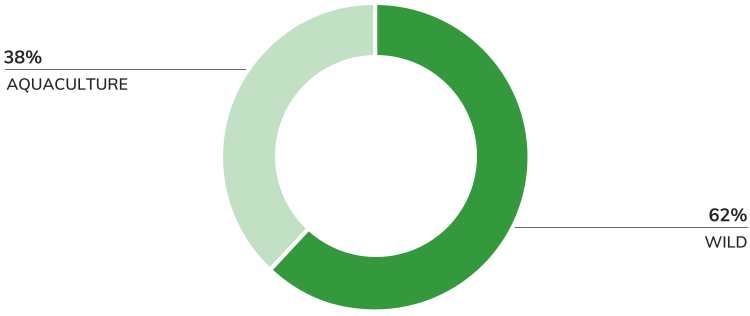
In 2025, we identified more than 230 fish and seafood species across our assortment, reinforcing our strategy of diversifying the offer as a way to mitigate pressure on the most consumed species. As in the previous year, the share of wild‑caught seafood remained at 62% of total consumption by weight, while aquaculture‑origin seafood accounted for 38%. The consolidation of the investments made by JMA in aquaculture production and its subsequent commercialisation by our food retail Companies helps reduce pressure on wild stocks, particularly for high‑demand species such as salmon, seabream, sea bass, shrimp and trout.
Origin of Private Brand and Perishable Fish
in Kg (2025)
Impact assessment and mitigation actions
In line with our commitment to annually monitor the conservation status of the wild‑caught fish species we commercialise, we once again conducted an assessment based on IUCN1 (International Union for Conservation of Nature) data, which categorises different levels of threat as follows: Critically Endangered (highest risk), Endangered (intermediate risk) and Vulnerable (lowest level of risk among threatened categories). The classifications Not Evaluated, Data Deficient, Least Concern or Near Threatened were not considered threat categories.
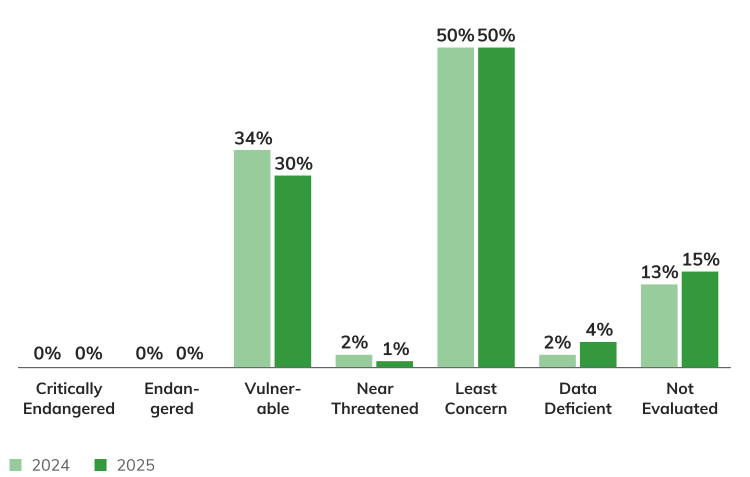
In 2025, 30% (4 p.p. less than in 2024) of the wild‑caught fish used in our Private Brand and perishable products fell within the Vulnerable category – the lowest risk level within the threatened categories. Half of all wild‑caught fish purchases presented no conservation risk, as they were classified as Least Concern or Near Threatened. An increase was also observed in purchases of species with Data Deficient status (2 p.p. more than in 2024) and species classified as Not Evaluated by the IUCN (also 2 p.p. more than in 2024). Notable examples include Asiatic hard clam (Meretrix lyrata), Alaska pollock (Gadus chalcogrammus and Pollachius virens), hake (Merluccius hubbsi, Merluccius paradoxus, Merluccius australis), pacific cod (Gadus macrocephalus and Theragra chalcogramma). No purchases were recorded of wild‑caught fish species classified as Critically Endangered or Endangered.
Conservation satus of wild fish species
in kg (2024-2025)
For each of the three risk levels (high, medium and low), we define concrete actions to mitigate the negative impacts of our activity on marine ecosystems. The table below shows the degree of compliance with the commitments we have made, based on the IUCN2 classification.
IUCN Risk Classification |
|
Commitment |
|
Status |
|
Compliance in 2025 |
||||
|---|---|---|---|---|---|---|---|---|---|---|
Critically Endangered |
|
We prohibit the purchase and sale of species without extraordinary licences that allow it, or for which aquaculture for the full life cycle is not ensured. |
|
The European eel (Anguilla anguilla)1 has not been sold in our stores since 2016, a decision taken following the first Group‑level assessment. In the review carried out in 2022, two additional commercial species with this risk level were identified: sturgeon (Acipenser baerii) and tope shark (Galeorhinus galeus). In 2025, only the species Acipenser baerii was marketed, with full life‑cycle aquaculture origin guaranteed, in line with our commitment. |
|
100% |
||||
Endangered |
|
We prohibit the commercialisation of species whenever they are not 100% sourced from aquaculture and/or from sustainably managed stocks and/or when they do not have a sustainability certification |
|
We identified seven species to which this action line applies: shortfin mako shark (Isurus oxyrinchus); striped catfish (Pangasianodon hypophthalmus); smooth-hound (Mustelus mustelus); black hake (Merluccius senegalensis); undulate ray (Raja undulata); sandy ray (Raja circularis); and American plaice (Hippoglossoides platessoides). In 2025, only the species striped catfish (Pangasianodon hypophthalmus) was marketed, 100% sourced from aquaculture. |
|
100% |
||||
Vulnerable |
|
We limit promotional activities whenever the species are not sourced from aquaculture and/or from sustainably managed stocks and/or when they do not have a sustainability certification |
|
In the 2025 assessment, we identified 20 species to which this action line was applied, limiting promotional activities involving species classified with the Vulnerable risk level. |
|
100% |
||||
|
||||||||||
Sustainability of wild stocks and biodiversity conservation
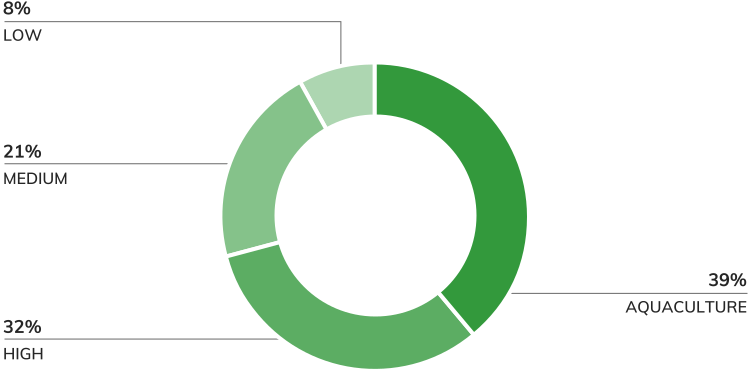
The analysis of the fishing methods and gear used to catch the fish and seafood commercialised in our Private Brand and perishable products enabled us to assess their potential environmental impact on marine ecosystems, based on the fishing and aquaculture impact classifications provided by ENCORE3 (Exploring Natural Capital Opportunities, Risks and Exposure). From this assessment, we concluded that that more than half (68%) of the fish and seafood came from aquaculture or was caught using fishing gear considered to have a low or medium impact. Fishing gear classified as having a high impact on marine habitats accounted for 32% of the fish and seafood commercialised by the Group.
Impact of Fishing Methods and Gear on Marine Ecosystems
(% of sold Kgs)
These results reflect the current structure of the fish and seafood supply chain, and for this reason we encourage the continuous monitoring of risks and the search for aquaculture alternatives that help reduce pressure on wild stocks.

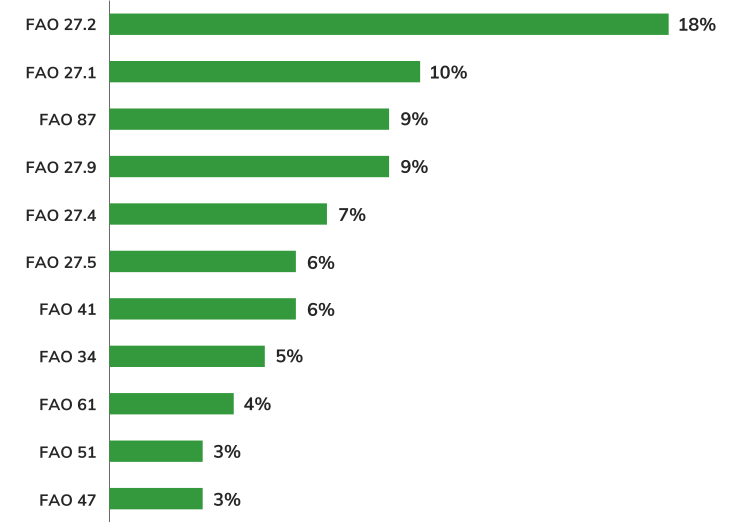
The diversity of the species we commercialise is equally evident when identifying the origin of seafood by FAO area4. In 2025, more than 70% of wild‑caught fish and seafood originated from FAO 27 – Northeast Atlantic5. Other important catch areas included: FAO 87 – Southeast Pacific (9%); FAO 41 – Southwest Atlantic (6%); FAO 34 – Eastern Central Atlantic (5%); FAO 61 – Northwest Pacific (4%); FAO 51 – Western Indian Ocean (3%); FAO 47 – Southeast Atlantic (3%). The predominance of these FAO areas reflect the relevance in our assortment of species such as Atlantic cod (Gadus morhua), herring (Clupea harengus), mackerel (Scomber scombrus), skipjack tuna (Katsuwonus pelamis), sardine (Sardina pilchardus), yellowfin tuna (Thunnus albacares), Asiatic hard clam (Meretrix lyrata) and horse mackerel (Trachurus trachurus).
Origin of wild fish by FAO
in Kg (2025)
Traceability to the level of FAO areas – for the top 80% of fish and seafood we commercialise – further confirmed that more than half (52%) of wild‑caught fish and seafood in our Private Brand and perishable products from these regions presented no conservation risk (Least Concern and Near Threatened), and 28% of that fish and seafood were classified at the lowest risk level within threatened categories (Vulnerable). Around 20% of wild‑caught species commercialised were classified as Data Deficient or Not Evaluated.
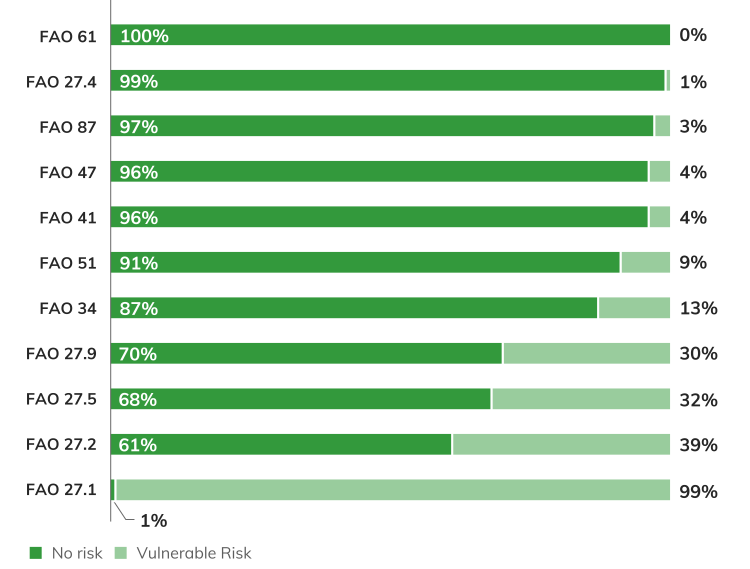
Regarding the sustainability status of stocks, in the two most representative subareas of FAO 27, the proportion of wild‑caught seafood classified as Vulnerable was 39% in the Norwegian Sea, Spitzbergen and Bear Island (FAO 27.2) and 99% in the Barents Sea (FAO 27.1).
Fish conservation status per FAO
(%) in Kgs (2025)
Atlantic cod (Gadus morhua) represents a significant share of our seafood assortment. Fishing pressure on cod populations in this region is currently above recommended levels, and biomass levels are declining6. This species has been subject to strict monitoring and management to ensure sustainable fisheries. For this reason and given that cod is a strategic product in our portfolio, JMA made a financial investment in 2025 in a company specialising in cod aquaculture, thereby contributing to reducing pressure on wild stocks.
For species we commercialise from the Southeast Pacific (FAO 87), only a small share (3%) was classified as Vulnerable. In this region, bigeye tuna (Thunnus obesus) was the most representative species. Biomass levels of this species have been increasing due to conservation measures, and it is therefore not currently overexploited7 or subject to overfishing8 9.
In Portuguese waters (FAO 27.9), around 30% of species commercialised were classified as Vulnerable, due to the relevance of horse mackerel (Trachurus trachurus) in our assortment. In this region, horse mackerel stocks have biomass levels above the limit reference point, maintaining stable reproductive capacity10.
In contrast, in the Southwest Atlantic (FAO 41), approximately 4% of species were classified as Vulnerable, with bigeye tuna (Thunnus obesus) being the most representative population within this category. According to the biological reference points used for stock assessments, the Atlantic bigeye tuna stock is overexploited, although not subject to overfishing.
For species we commercialise from the Eastern Central Atlantic (FAO 34), only 13% were classified as Vulnerable, with bigeye tuna (Thunnus obesus) again being the most representative species (99%). The stock of this species in this region is currently overexploited, but not under overfishing.
It is also important to highlight the Northwest Pacific (FAO 61) region, whose composition consists mainly of species not evaluated by the IUCN, including Asiatic hard clam (Meretrix lyrata), which accounts for around 99% of seafood originating from this region.
In FAO 27.4 (North Sea), almost all seafood commercialised was classified as Least Concern (95%). Within the Vulnerable category (1%), cod was the most representative species, being subject to overfishing and with biomass below safe biological limits11.
In Iceland and the Faroe Islands (FAO 27.5), around 32% of species commercialised were classified as Vulnerable, due to the predominance of Atlantic cod (Gadus morhua), which represents almost all wild‑caught fish and seafood from this region. Conservation assessments for Atlantic cod in this area vary significantly between the two populations of subarea 27.5, although both show signs of considerable fishing pressure: In subdivision 5.b.112, fishing pressure is above sustainable levels, and biomass remains below desirable levels, although not collapsed. In subdivision 5.b.213, there are insufficient data to assess overfishing, but biomass levels are above the minimum acceptable threshold.
In contrast, in the Western Indian Ocean (FAO 51), only 9% of species were classified as Vulnerable, with bigeye tuna (Thunnus obesus) being the most representative population in this category. The bigeye tuna stock in this region is not currently overexploited nor subject to overfishing14.
In the Southeast Atlantic (FAO 47), only 4% of seafood presented a Vulnerable risk level. Bigeye tuna (Thunnus obesus) accounts for the entirety of this category. This stock is not currently overexploited nor under overfishing.
Tuna traceability
Regarding the assessment of conservation risk for the fish species we commercialise, tuna – particularly Atlantic bigeye tuna (Thunnus obesus) – stands out among the most relevant species, mainly due to overfishing and the pressure exerted on available stocks. Supply chains also face challenges associated with illegal, unreported and unregulated (IUU) fishing, the use of fishing methods that may have impacts on ecosystems – such as bycatch15 – and the dependence on fish aggregating devices (FADs16), which increase the likelihood of catching juveniles and other non‑target species.
In 2025, we were able to trace 90% of the tuna used in our Private Brand and perishable products back to vessel level – a 36 p.p. increase compared with the previous year. This progress is aligned with our commitment to achieving full traceability by the end of 2026. This commitment is essential to ensure continuous monitoring of fishing practices associated with tuna, enabling us, whenever necessary, to establish additional sourcing criteria that help reduce overfishing risk and reinforce the sustainability of our tuna supply chains.
According to the International Seafood Sustainability Foundation (ISSF), around two‑thirds of all tuna worldwide is caught using purse seine nets17, making this the most important and dominant gear type in global tuna fisheries. This trend is also reflected in the tuna fishing methods used in our Private Brand and perishable products, where purse seine and seine nets account for 86% of catches, followed by longlines and hooks, which represent 10%.
The ISSF provides two complementary transparency tools operating at vessel level – the ProActive Vessel Register (PVR) and Vessels in Other Sustainability Initiatives (VOSI) – which, together with the IUU vessel lists of Regional Fisheries Management Organisations (RFMOs), constitute essential indicators of minimum compliance within the global fisheries governance system. Taken together, these tools enable economic operators to verify whether specific vessels are effectively implementing responsible fishing practices aligned with internationally recognised standards.
In 2025, we verified that 56% of the vessels associated with our tuna supply chain were registered in the PVR, 97% of which confirm the adoption of best practices for FAD use. Among the vessels registered in VOSI – representing 46% of all vessels linked to our tuna supply chain – 77% adopt best practices for FAD management, contributing to reductions in bycatch, lowering the risk of entanglement, and reducing the loss of fishing gear18.
Additionally, none of the vessels were listed on the Combined IUU Vessel List19, which means there is no evidence of prior involvement in illegal, unreported or unregulated fishing activities.
1 For this assessment, we used 2024 data from the IUCN Red List of Threatened Species, sourced from the Integrated Biodiversity Assessment Tool (IBAT). This tool is provided by BirdLife International, Conservation International, IUCN and UNEP‑WCMC. For the purposes of this analysis, the category Extinct in the wild is not considered, as the scope assessed concerns species harvested in the wild.
2 More information is available at www.iucn.org.
3 ENCORE is a tool that helps link economic activities with their dependencies and impacts on natural capital. It uses sector classifications based on ISIC codes to identify material environmental pressures.
4 In 2025, we traced more than 80% of the wild‑caught seafood commercialised in our Private Brand and perishable products to the FAO catch area.
5 This includes the Barents Sea (FAO 27.1), the Norwegian Sea, Spitzbergen and Bear Island (FAO 27.2), the North Sea (FAO 27.4), Iceland and the Faroe Islands (FAO 27.5), and Portuguese waters (FAO 27.9).
6 ICES. 2025. Cod (Gadus morhua) in subareas 1 and 2 north of 67°N (Norwegian Sea and Barents Sea), northern Norwegian coastal cod. In Report of the ICES Advisory Committee, 2025. ICES Advice 2025, cod.27.1‑2coastN. Available at: ICES Report.
7 A stock is considered overexploited when population abundance is too low, typically below an established biological reference point. More information available at: ICCAT Glossary.
8 A stock experiencing overfishing is one in which fishing mortality is too high — in other words, fish are being caught faster than the population can rebuild its biomass through natural reproduction. More information available at: ICCAT Glossary.
9 IATTC. 2024. Stock Assessment Report for Bigeye Tuna (Thunnus obesus) in the Eastern Pacific Ocean. Inter-American Tropical Tuna Commission. Available at: IATTC Report.
10 ICES. 2025. Horse mackerel (Trachurus trachurus) in Division 9.a (Atlantic Iberian waters). In Report of the ICES Advisory Committee, 2025. ICES Advice 2025, hom.27.9a. Available at: ICES Report.
11 ICES. 2023 / 2025. Cod (Gadus morhua) in Subdivision 21 (Kattegat). Available at: ICES Report; ICES. 2025. Cod in Subarea 4, divisions 6.a and 7.d, and Subdivision 20 (North Sea, West of Scotland, eastern English Channel and Skagerrak). Available at: ICES Report.
12 ICES. 2025. Cod (Gadus morhua) in Subdivision 5.b.1 (Faroe Plateau). Available at: ICES Report.
13 ICES. 2025. Cod (Gadus morhua) in Subdivision 5.b.2 (Faroe Bank). Available at: ICES Report.
14 WCPFC. 2023. Stock assessment of bigeye tuna (Thunnus obesus) in the western and central Pacific Ocean: 2023 (Final Rev. 02). Available at: WCPFC Report.
15 FAO defines bycatch as the unintentional capture of marine species — including fish, marine mammals, seabirds, turtles and other organisms — that occurs during fishing operations targeting specific species.
16 According to the FAO, a Fish Aggregating Device (FAD) is a floating or anchored structure designed to attract fish, especially pelagic species, by creating an aggregation point in open waters. These devices often include materials such as buoys, ropes and sometimes nets. More information available at FADs.
17 ISSF. 2026. Status of the world fisheries for tuna. Jan. 2026. ISSF Technical Report 2026‑01. International Seafood Sustainability Foundation, Pittsburgh, PA, USA. ISSF Report. Most catches correspond to skipjack tuna, yellowfin tuna, bigeye tuna, albacore tuna and bluefin tuna.
18 The ISSF identifies and recognises several Best Practices Initiatives — including Biodegradable FAD Trial, FAD Buoy Position Data, FAD Echosounder Biomass Data, Non‑Entangling FADs (NE FADs) with No Netting, and the FAD Recovery Initiative — which contribute to reducing marine pollution, lowering the risk of entanglement for vulnerable species, increasing transparency and the quality of scientific data, and mitigating the environmental impact associated with abandoned or lost FADs.
19 The Combined IUU Vessel List is a global consolidated list of vessels involved in Illegal, Unreported and Unregulated (IUU) fishing, compiled by the major Regional Fisheries Management Organisations (RFMOs) worldwide.