
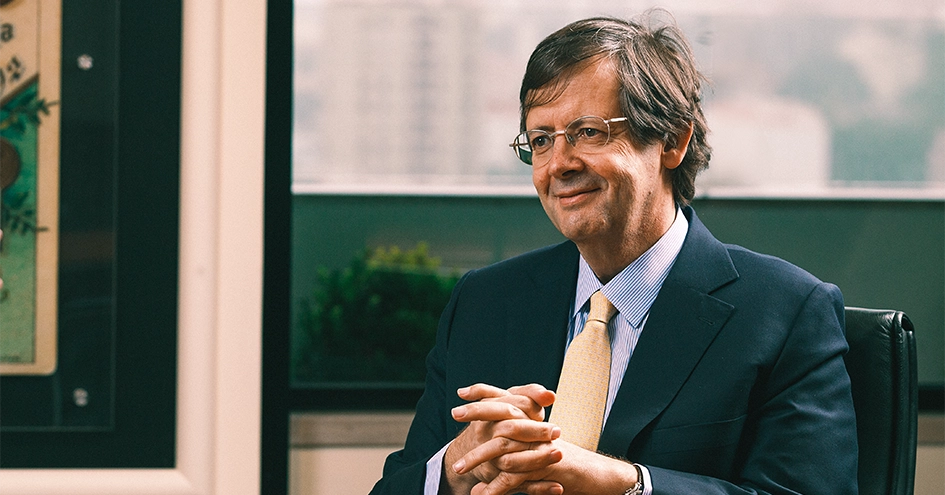
Chairman and CEO of the Jerónimo Martins Group
In 2025, in a context of heightened geopolitical tension, global uncertainty, unresolved conflicts and growing strategic rivalry between major powers, the Jerónimo Martins Group posted strong results and delivered a robust performance. both financially and in terms of sustainability.
Our Companies responded with consistency, focus and assertiveness to consumer caution, particularly in Poland, prioritising price competitiveness and promotions. The disciplined way in which we delivered on our value proposition day after day, remaining faithful to our strategic priorities – price leadership, assortment innovation and the continuous improvement of shopping experience in our stores – strengthened consumer preference and, consequently, reinforced our market positions.
Our teams’ focus and hard work in ensuring price competitiveness and consistently offering strong promotions drove consolidated sales to grow by 7.6% to around 36 billion euros, reflecting year-on-year increase of 2.5 billion euros, of which 1.8 billion was added by Biedronka (with some positive contribution also from the złoty exchange rate).
This robust consolidated performance, together with reinforced cost discipline, operational efficiency and productivity measures, helped protect margins against the simultaneous sources of pressure faced by our Companies throughout the year, including intense competition and high-cost inflation, namely in wages. All banners contributed to the nearly 2.5 billion euros of consolidated EBITDA delivered in the year, representing an increase of 11.1%, above sales growth, with the respective margin standing at 6.9% (an increase of 22 basis points compared with the previous year).
From a business perspective, it is important to highlight that while food inflation remained low, cost inflation did not. The combination of these two factors intensified competition in the markets where we operate and increased pressure on all players to gain volumes. Amidst this increasingly competitive environment, labour costs rose significantly, a particularly relevant factor for a Group of our size as an employer. Minimum wages increased by 10% in Poland, 11% in Colombia (including transport allowance) and 6.1% in Portugal, leading to a 10.7% rise in staff expenses, above the pace of sales growth.
Margin pressure was therefore inevitable, as in previous years. Nevertheless, our Companies responded decisively in defending profitability. On top of volume growth, cost discipline and efficiency gains were key to increasing the EBITDA margin – something not achieved since 2021. Net earnings advanced 7.9% to 646 million euros.
The year was also marked by a long-awaited milestone: the clear recognition of our sustainability performance by CDP with a triple A rating across all programmes: Climate, Water and Forests. This achievement saw Jerónimo Martins become the first food retailer in the world to attain this very demanding milestone, confirming our strong commitment to placing sustainable growth at the core of our Companies’ strategy and activities, and of our corporate citizenship.
By year’s end Jerónimo Martins was listed in over 180 international sustainability indices, with 57 investors and analysts closely monitoring our ESG performance. Reflecting our recognised low-risk sustainability profile, we continued to increase the weight of sustainability linked instruments in our financial portfolio, which reached approximately 29% at year-end.
In Europe – where our two most important markets are located – economic momentum remained subdued throughout the year with Germany narrowly avoiding another recession and recording minimal growth.
Despite its high exposure to the German economy, in 2025 Poland surpassed the one-trillion-dollar GDP threshold for the first time, joining world’s 20 largest economies and consolidating its position as one of the fastest-growing economies in the European Union.
Although the rise in real wages has increased consumer purchasing power, it did not translate into higher food spending. Households remained focused on low prices and promotions, and the food retail market continued to lose volumes. Combined with the ongoing capacity expansion of most of market players, this led to a sharp intensification of competition.
In 2025, we celebrated Biedronka’s 30th anniversary – three decades of commitment to everyday low prices and service to Polish families. Today, one in three consumers in Poland choose to shop regularly at Biedronka, reflecting the brand’s strength and trustworthiness. Building on this strong brand equity, and proving its preparedness and maturity as a Company, in 2025 Biedronka expanded beyond Polish borders for the first time, entering Slovakia, where it closed the year with 15 stores and one distribution centre, becoming the first banner in the Jerónimo Martins Group to internationalise itself.
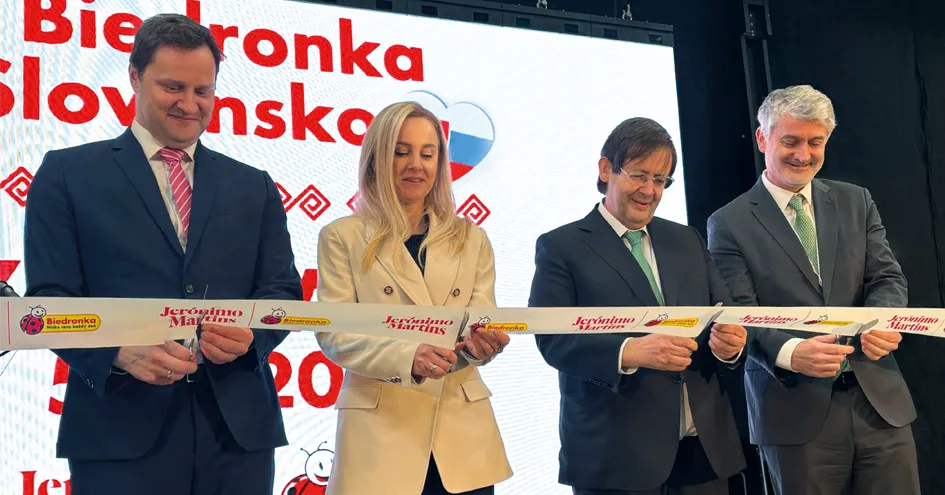
Throughout the year, Biedronka operated with low basket inflation (which turned negative in the final quarter of the year) and further strengthened its market share. Known for consistently outperforming growth of the Polish food retail sector, the Company maintained strong commercial momentum and assertive price leadership. Sales grew by 5.9% in złoty (7.5% in euros, surpassing the 25-billion-euro mark for the first time), with like-for-like growth of 1.9%. The Company continued investing in its network, with 152 net additions in the year, 200 refurbishments and five new Biek micro-fulfilment centres (28 in total at year-end), also expanding the capillarity and reach of its Q-commerce operation.
All in all, the strong push for volumes, a strategic approach to margin mix, extra attention paid to productivity and a heavy fist on costs, particularly in logistics and utilities, enabled Biedronka to increase EBITDA above sales growth. EBITDA grew 9.8% (up 8.1% in local currency), with the respective margin reaching 7.9% (against 7.7% in 2024).
Also in Poland, Hebe faced particularly intense price competition and operated with strong basket deflation. Despite these challenging conditions, sales grew by 5.7% in złoty (7.4% in euros, to 626 million), with a positive like-for-like of 1%. E-commerce contributed positively to top line performance, representing nearly 20% of total sales at year-end. In the year, Hebe opened 18 stores (13 net additions), including two in Czechia.
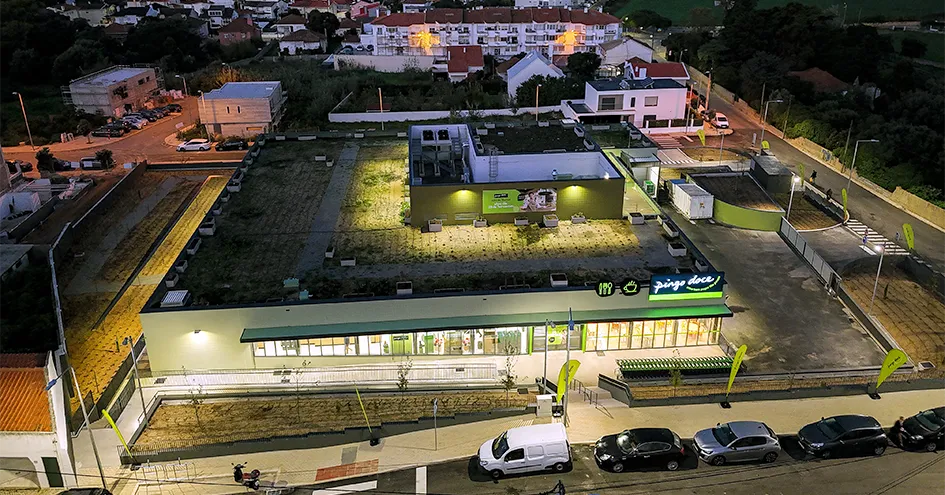
In Portugal, as in Poland, consumers remained highly focused on price and promotions. In this context, Pingo Doce maintained its strong commercial activity and made significant progress in the conversion of its store network to the All About Food concept, strengthening its focus on ready meals and fresh produce, two of the banner’s most strategic and high-contributing categories. Throughout the year, Pingo Doce also opened nine new stores (eight net additions) and launched its own e-commerce operation. As a result, sales grew by 5.3% to 5.3 billion euros, with like-for-like growth (excluding fuel) of 4%, supported by improved cost control and productivity, which drove EBITDA growth of 8.5%.
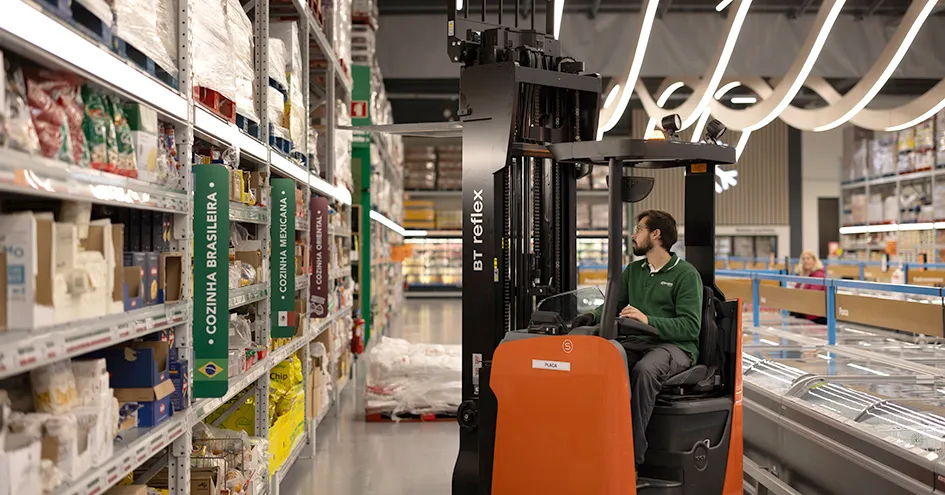
Recheio benefited from a positive year in the HoReCa channel – the segment in which the Company has invested the most – driven by a strong summer season. The Company’s strong performance in the HoReCa channel reflects a combination of competitive prices, high-quality assortment and service excellence. In traditional retail, Recheio’s Amanhecer partner network expanded to 758 stores, 52 more than in 2024. Total sales increased by 3% to 1.4 billion euros, with like-for-like growth also at 3%, with the EBITDA margin increasing to 5.2% from 5.1%.
In Colombia, households faced another challenging year. Ara maintained its very high promotional intensity alongside everyday low prices, operating with low basket inflation throughout the year, below the country’s food inflation rate. Sales grew by 17.4% in Colombian pesos (13.3% in euros, to 3.2 billion), outperforming the market, with like-for-like growth of 5.8%. Affordable prices are certainly a very important reason behind the remarkable third-place ranking earned by Ara among Colombia’s most beloved brands. A national market study conducted by Kantar Insights for a special edition November 2025 issue of P&M, a magazine specialising in advertising and marketing, assessed two dimensions: brand love and responsibility. Consumers were asked to spontaneously say which “Colombian product brands and/or services they love the most” and which “reflect commitment and responsible conduct towards the environment”. Ara ranked third, behind two traditional Colombian brands (Alpina and Alquería), both with more than 65 years of history, not least because, according to the magazine, “since 2013, Ara has revolutionised Colombian retail with a direct value proposition: proximity, fair pricing and local connection,” adding that “its success proves that inclusion can also be a market strategy.”
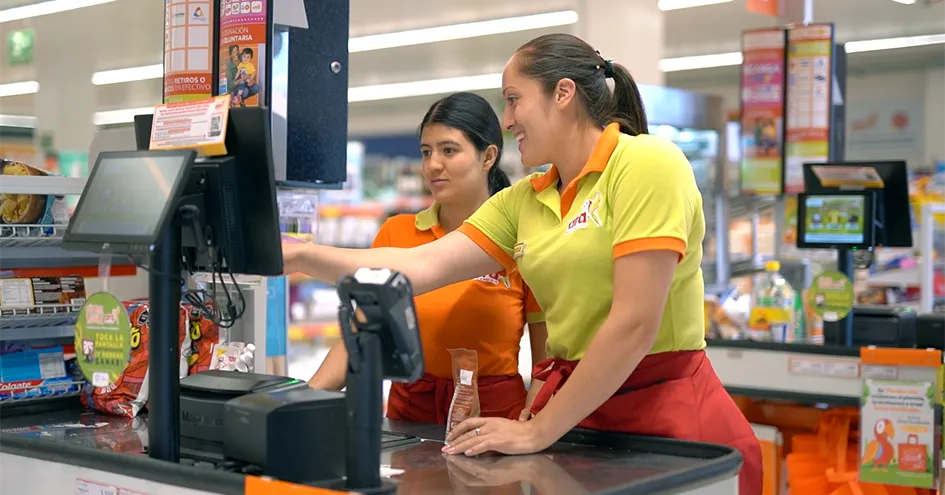
Higher volumes, a different approach to margin mix and the systematic work done by the Company on costs enabled a significant improvement in EBITDA.
In 2025, our global investment programme totalled 1.2 billion euros. We opened 448 new stores – more than one per day –, refurbished 281, expanded our global network beyond 6,500 locations and started two new distribution centres in Poland, one of them automated. In addition, 85 million euros were allocated to financial investments, mostly directed to salmon and cod aquaculture projects in Norway.
It is important to underline that, in the past five years, more than 60% of Biedronka’s stores have either been refurbished or are entirely new – a large-scale modernisation effort in a chain that in 2026 will surpass 4,000 stores. Moreover, the Company made significant investments in the packaging deposit and return system and in introducing electronic shelf labels.
In Portugal, Pingo Doce concluded its 45th anniversary year with a total of 497 stores. Over the past four years, more than half of the banner’s stores were refurbished or are new, and the Comida Fresca network already includes 256 restaurants.
Also in Portugal, Recheio refurbished its Évora store and prepared the opening of an important new unit in the Lisbon area, which was inaugurated in February of this year. The Company is optimistic about the opportunity to strengthen its presence in the HoReCa segment in a region as strategic as Lisbon.
In the first days of 2026, we announced the discontinuation of the Hussel business in Portugal. This was a difficult decision, as the banner had been part of our portfolio for 35 years, but an inevitable one with our long-standing partner in Germany having declared bankruptcy and the strong pressure on cocoa prices.
In Colombia, where investment totalled 228 million euros, Ara opened 225 stores, including locations previously operated by Colsubsidio, closing the year with 1,653 units.
In addition to investment in our store networks and distribution centres, we strengthened the production capacity of our agrifood business. JMA acquired the fruit and vegetable trading operation of the Luís Vicente Group, increased its stake in Andfjord Salmon to 40%, and acquired an 18% stake in Norcod, with the first two transactions concluded already in the beginning of 2026.
As regards sustainability, we continued to invest significantly in installing solar panels across stores and distribution centres, replacing refrigeration systems with natural or low Global Warming Potential gases, and in reinforcing our commitment to responsible practices throughout the value chain. Despite expansion and strong sales growth, our scope 1 and 2 carbon emissions decreased by 18.4% compared to 2021 (base year) and more than 2,700 locations are now equipped with photovoltaic panels. Today, over half of the Group’s total energy consumption comes from renewable sources, rising to more than 60% when considering electricity consumption alone.
Regardless of the angle from which we may look at it, nothing of what we achieved in 2025 would have been possible without the dedication and commitment of our employees. We are now nearly 150 thousand people of almost 90 nationalities, and we invested more than 360 million euros in recognition measures.
In the social domain, I highlight the setting-up work of the Jerónimo Martins Foundation, which celebrated its first full year of activity in 2025; the Biedronka Foundation, which continues to be play a vital role in combating poverty and malnutrition among the older adults in Poland; and the “2 million reasons” programme, which benefitted more than 60 thousand people in Colombia – mainly children and mothers from vulnerable communities – through 14 social investment projects.
Looking ahead to 2026, and as we see rising global instability, with tension growing everywhere and the world order as we knew it being deeply challenged, we are determined to stick to our values, to protecting our businesses and keep growing and serving the communities in the countries where we are present to the best of our abilities. We will also be focused on executing our defined plans while maintaining the flexibility and sense of readiness to make whatever adjustments may be necessary to protect the sustainability of our businesses.
Before concluding, I would like to note that 2025 marked the beginning of a new Board of Directors’ mandate, with six of the eleven members newly appointed for the 2025-2027 term. To the Board members who stepped down, I express my gratitude for the years of shared work and for their contribution. To the new Board, I express my appreciation for the way in which they have supported me throughout most of 2025.
I would also like to acknowledge the contribution of my colleagues on the Group’s Managing Committee, whose dedication has been instrumental in delivering the consistent results we have achieved. I extend my gratitude to the shareholders – including the family I represent – for their renewed confidence in my leadership and in the top management team.
It is a privilege to work with you every day in building a more responsible, stronger and future ready business.
Pedro Soares dos Santos
Chairman and CEO of the Jerónimo Martins Group