
We recognise animals as sentient beings and, for this reason, in collaboration with our Private Brand and perishable suppliers, as well as our production units, we promote practices aligned with the highest animal‑welfare standards. Our commitment is based on respect for the Five Freedoms of Animal Welfare, ensuring that all species in our value chain are: (i) free from hunger and thirst; (ii) free from discomfort; (iii) free from pain, injury and disease; (iv) free to express normal behaviour; and (v) free from fear and distress.
Based on these principles, we have defined operational guidelines for our production units and for all animal species we commercialise and that may also be present in our Private Brand and perishable products in the countries where we operate. These guidelines include:
the prohibition of growth‑promoting substances (hormones and beta‑agonists);
restricting the use of antibiotics exclusively to therapeutic purposes, never for prevention or growth promotion;
mandatory stunning of all animals before slaughter, except for certified religious rituals such as halal or kosher (which represent less than 5% of total sales);
a ban on animal testing in the development of our products, except for animal‑feed products (in which sensory tests may be performed to assess acceptance by the target population), and products designed to control or eliminate parasitic species and/or overpopulations that may be sources of contamination or disease (e.g., insects);
the prohibition of genetically modified or transgenic ingredients or additives, including the use of cloning techniques, whether of plant or animal origin.
Our Genetically Modified Organisms1 (GMO) Policy requires Companies to:
collaborate with suppliers to understand production processes and evaluate the safety and quality standards they implement;
carry out regular laboratory testing through independent and accredited entities;
ensure suppliers identify and trace GMOs in cases where replacement is not possible;
guarantee consumers’ right to information regarding the presence of GMOs through appropriate product labelling2.
To ensure compliance with these principles, we carry out regular laboratory tests and food quality and safety audits, including animal‑welfare criteria, on the audits to the suppliers and slaughterhouses used by our food distribution Companies in Portugal, Poland and Colombia. These actions are complemented by training and awareness initiatives for our suppliers. In 2025, the Group conducted more than 6,750 GMO analyses (an increase of 4,699 compared to 2024) in its Molecular Biology Laboratory. For more information on these audits, please see “Product analyses”.
These topics are analysed during meetings of each Company’s Sustainability Committee, forums in which strategies are discussed, and performance objectives are defined. The results are disclosed publicly, ensuring transparency and enabling progress to be monitored as part of the implementation of continuous improvement opportunities.
Although animal welfare was not identified as a material topic in our double materiality matrix for the 2024-2026 period, we have set specific targets that reflect our commitment to continuously raising standards across the value chain. The animal‑welfare targets are detailed in “Sustainability Commitments”.
To reinforce transparency and our commitment to responsible practices, annual animal‑welfare audits are carried out. For more information on these audits, the actions we conduct with our suppliers, and the results achieved, please see “Selection and monitoring of suppliers”.
Livestock transport and slaughter practices
In the countries where we operate, we assess the performance of perishable‑product suppliers in terms of animal welfare by monitoring a set of indicators. This consolidated process provides a detailed understanding of the practices applied throughout the supply chain.
For animal transport, we analyse criteria such as the average transport time of live animals and the mortality rate during transport to slaughterhouses in our operations in Colombia, Poland and Portugal. For slaughter practices, we assess the effectiveness of stunning and the percentage of animals that die at the slaughterhouse. These systematically collected data help us identify trends, anticipate potential risks and support suppliers in implementing improvements that reduce animal stress and ensure higher levels of compliance with animal‑welfare standards.
Portugal
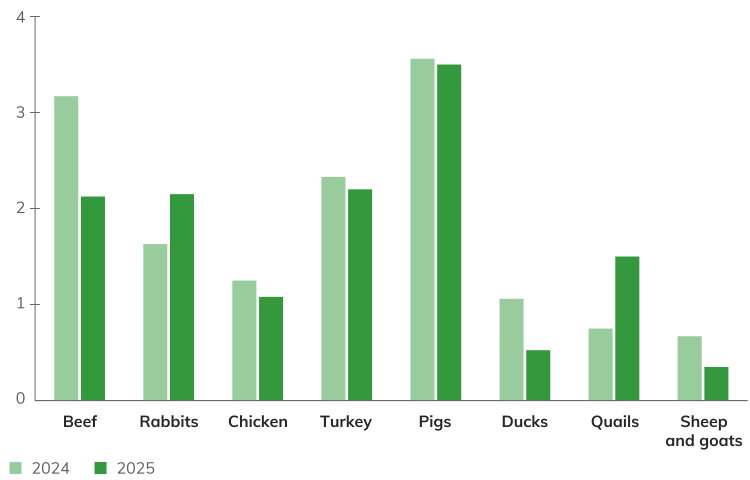
Average travel time to the slaughterhouse in Portugal (hours) - Perishables
Mortality rate associated with the trip to the slaughterhouse in Portugal - Perishables
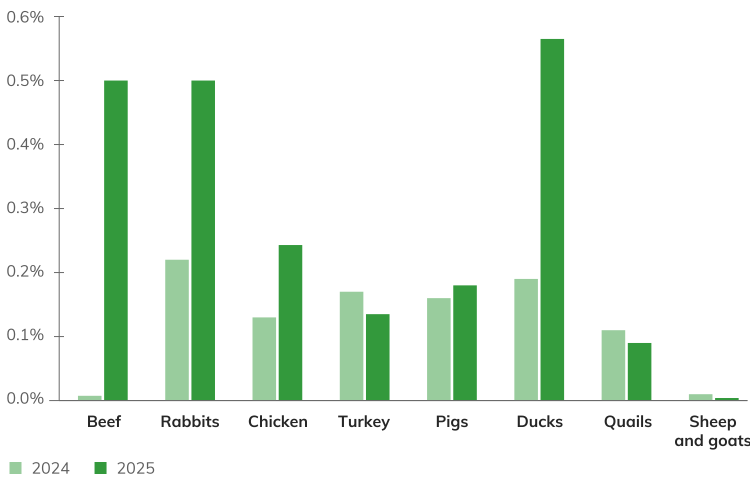
Considering the recommended maximum average transport time of 8 hours, since 2021, in Portugal, we have remained below this threshold and consistently below 4 hours. In 2025, the average transport time was below 2 hours (a reduction of more than 20 minutes compared with 2024). The registered mortality rate remained below 0.6% across all species, suggesting no excessive levels of discomfort, pain or suffering.
Regarding slaughter practices used by perishable‑product suppliers in Portugal, 100% of animals were stunned before slaughter, and approximately 99% of stun attempts were effective on the first attempt, as was the case in 2024.
Colombia
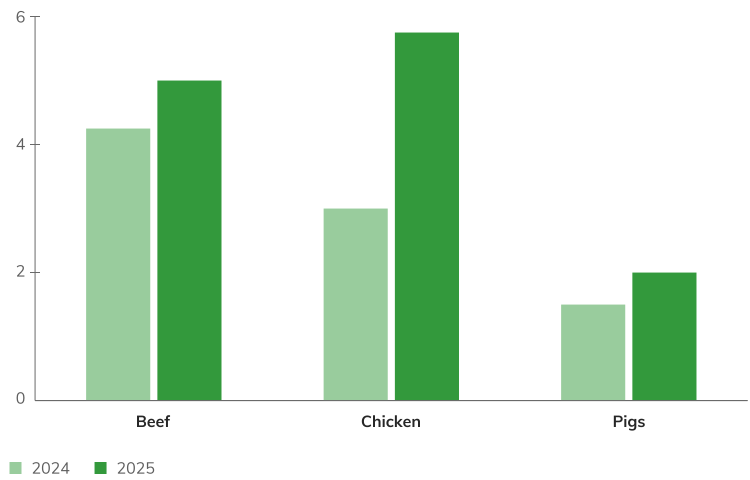
Average travel time to the slaughterhouse in Colombia (hours) - Perishables category
Mortality rate associated with the trip to the slaughterhouse in Colombia - Perishables category
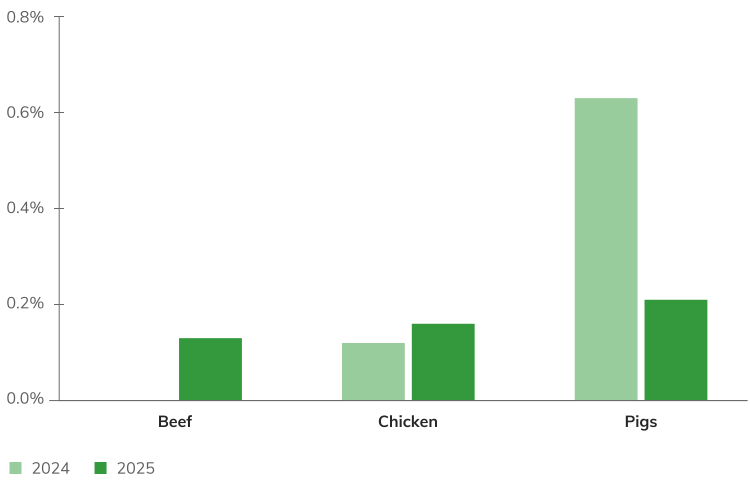
In Colombia, for the three species commercialised – cattle, poultry and pigs – the results remained within levels considered positive. The average transport time stayed below the internationally recommended 8‑hour limit, with the average across all species at around 4 hours. Regarding transport mortality, values were approximately 0.2% for all species (an average decrease of 0.1 p.p. compared with 2024). All indicators remain within benchmarks considered acceptable to avoid excessive levels of discomfort, pain or animal suffering.
In addition to these two indicators, it was also possible to analyse several practices adopted by slaughterhouses in Colombia. It was concluded that around 100% of animals commercialised were stunned prior to slaughter, and approximately 97% of stunning procedures were effective on the first attempt.
Poland
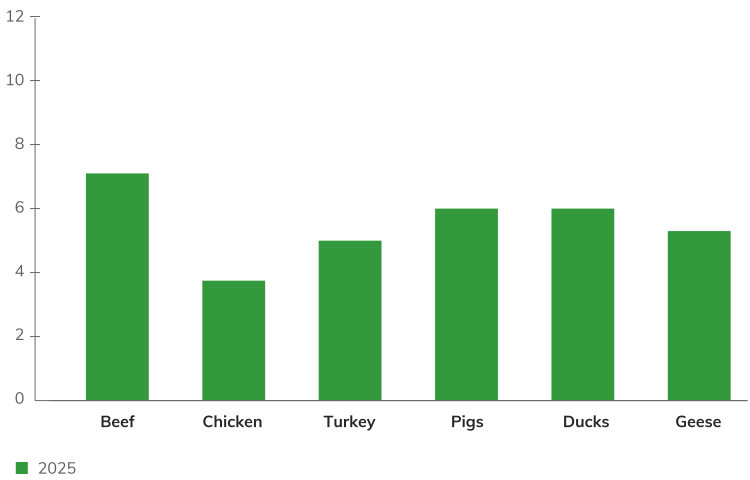
Average travel time to the slaughterhouse in Poland (hours) - Perishables category
Mortality rate associated with the trip to the slaughterhouse in Poland - Perishables category
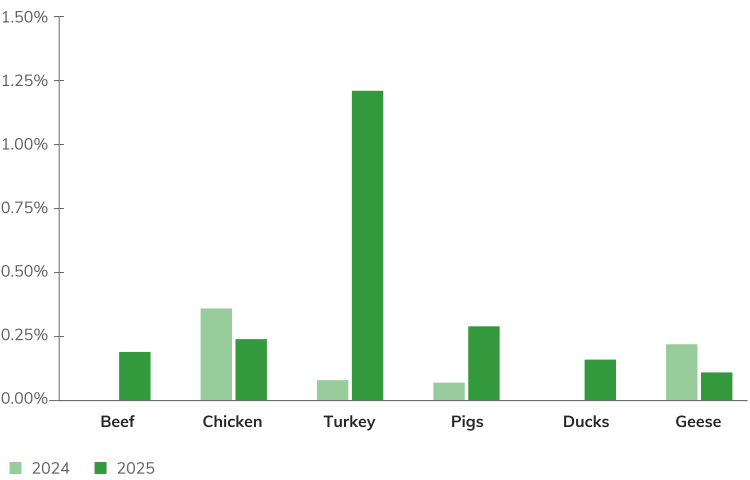
In 2025, we strengthened the robustness of our monitoring systems, gaining access to systematised information on two critical indicators in Poland – mortality rate during transport to the slaughterhouse and average journey time – enabling a more comprehensive understanding of animal‑welfare conditions during the final stages of the logistics chain.
Regarding average transport time, the results show that all species were transported below the internationally recommended 8‑hour limit, with the overall average at around 5.5 hours. This demonstrates the existence of logistics processes capable of reducing stress associated with longer journeys. Concerning transport mortality, the species with the highest values were turkey, at 1.21% (+1.1 p.p. vs. 2024), pigs, at 0.29% (+0.2 p.p. vs. 2024), and broiler chickens, at 0.24% (‑0.1 p.p. vs. 2024).
In addition to these two main indicators, it was also possible to analyse further practices related to stunning in Poland. Based on this analysis, about 99.2% of animals commercialised were stunned before slaughter, and approximately 99.9% of stunning attempts were effective on the first attempt.
Dairy, fresh egg and meat production practices
In 2025, we continued to integrate animal‑welfare criteria into our Private Brand and perishable products, ensuring that animal‑derived ingredients come from practices aligned with responsible production. We also maintained our commitment to transparent consumer communication, using labels, in‑store materials and digital channels to raise awareness and support more informed choices.
Beef
In 2025, we strengthened animal‑welfare practices across the beef supply chain, from primary production through to slaughter.
The beef sold at Ara originates from animals raised in extensive, pasture‑based systems, with freedom of movement and without the use of confinement systems. The farms supplying Ara ensure adequate handling conditions, including permanent access to water, safe equipment, non‑slip walkways and teams properly trained in animal welfare, enabling calm interactions and reducing animal stress.
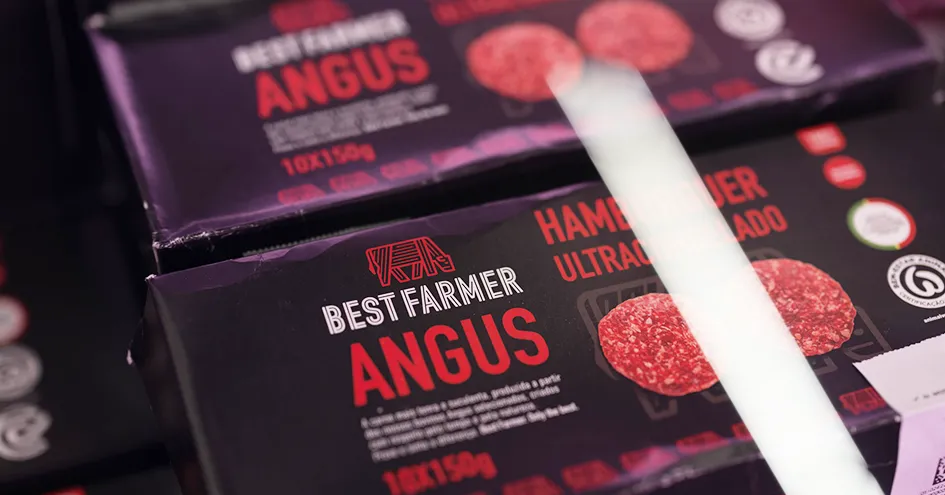
Pingo Doce continued to offer Private Brand Angus beef with dual certification: antibiotic‑free production and animal welfare certification under the international Welfare Quality reference and the Welfair™ label. Pingo Doce also maintained the sale of organic beef, ensuring compliance with certification criteria such as outdoor access, GMO‑free feed and pasture‑based rearing. Together, Angus and organic beef represented 6% of total sales (+1 p.p.), by weight, in the fresh beef category.
Chicken
In Poland, Biedronka continued to offer free‑range chickens (slow‑growing Hubbard Redbro lineage). These chickens, produced 100% nationally, are raised without antibiotics and fed GMO‑free feed. The minimum slaughter age is 70 days (14 days longer than the market average), birds have outdoor access, and stocking density does not exceed 27.5 kg/m2 (providing up to ten times more space than conventional poultry production). Biedronka maintained in its assortment conventional chicken that is antibiotic-free and 100% nationally produced.
At Pingo Doce and Recheio, free‑range chickens are also 100% from Portuguese production, with a minimum slaughter age of 81 days, raised outdoors with a maximum density of 25 kg/m2. Both Companies maintained the Frango da Quinta – Best Farmer (Hubbard Redbro), raised mostly outdoors and slaughtered at an average age of 85 days. This production is certified by AENOR as antibiotic‑free and as respecting animal‑welfare, according to the Welfair™ label (based on the Welfare Quality protocol), with no thinning practised during production. All free‑range and Frango da Quinta birds are raised with natural light and outdoor access.
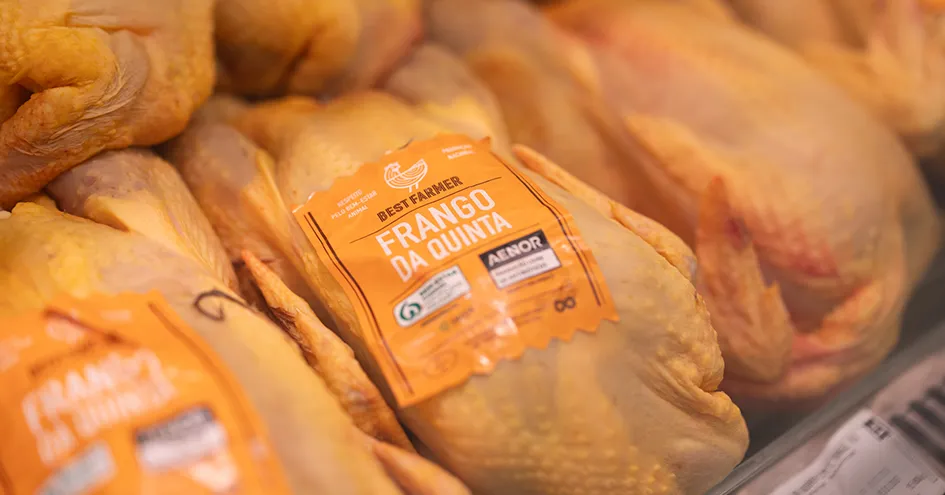
Across Biedronka, Pingo Doce and Recheio, the sale of free‑range chicken, animal‑welfare‑certified chicken and antibiotic‑free chicken represented, in line with 2024, 8% of total sales, by weight, in this category.
Dairy
More than 95% of the producers supplying Terra Alegre’s dairy factory maintained certification under the Welfare Quality protocol, carrying the Welfair® seal, certified by AENOR – a distinction held by the company since 2020. The protocol follows four essential principles: good feeding, good housing, good health, and appropriate behaviour. This certification also ensures that dairy cows are kept free from tethering and tail docking.
Terra Alegre, part of Jerónimo Martins Agro‑Alimentar, supplies Private Brand products for Pingo Doce and Recheio. At Pingo Doce, certified products from Terra Alegre include lactose‑free milk, fresh milk, high‑protein milk and Pura Vida milk. At Recheio, the certified product is lactose‑free milk.
Cage‑Free Eggs
We had committed to ensuring that, by the end of 2025, all Private Brand fresh eggs would be sourced from cage‑free hens. To ensure the fulfilment of this objective, the Companies have worked closely with their suppliers, identifying new production sites and conducting visits by quality and food‑safety teams in order to ensure compliance with the required criteria.
Three cage‑free production systems for laying hens are accepted: barn, free‑range, and organic free‑range. These systems establish animal‑welfare criteria that provide better living conditions, enabling greater freedom of movement and the expression of natural behaviours. Among the three methods, the barn‑raised system is the most widely adopted.
Private Brand Fresh Eggs' Production Systems – 2025
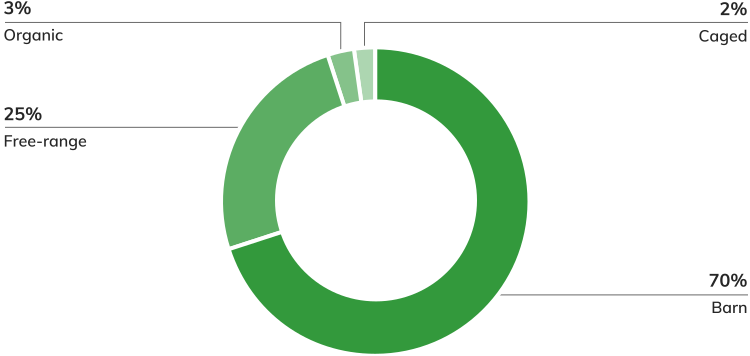
At the end of 2025, 98% of Private Brand fresh eggs were sourced from cage‑free hens.
Pingo Doce achieved 100% in August 2019, and Biedronka Poland reached this goal at the end of 2022, extending the commitment to supplier brands. Biedronka Slovakia, whose first stores opened in 2025, has its entire assortment of fresh eggs sourced from cage‑free hens. By the end of 2025, Recheio had ceased selling fresh eggs from caged hens, thereby contributing to the fulfilment of the Group’s overall commitment. Ara does not commercialise Private Brand fresh eggs. Regarding supplier brands, Ara, Pingo Doce and Recheio all offer cage‑free eggs.
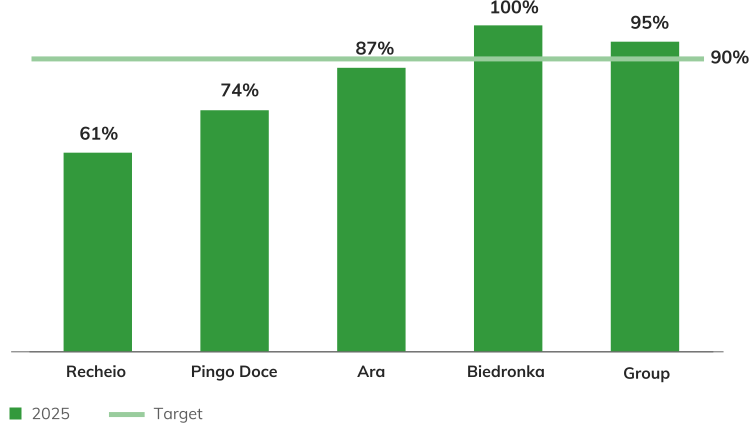
Another commitment we have established is to ensure that, by the end of 2026, in Portugal and Poland, at least 90% of the eggs used as an ingredient in Private Brand products come from cage‑free hens. In 2025, and for the first time, we were able to calculate the actual quantity of egg used as an ingredient. This analysis allows for a more accurate assessment of the real amount of raw material present in the products we sell, as until now we were only able to calculate this based on the number of SKUs, rather than on the actual tonnage of egg.
Tonnes of cage-free egg ingredient by Company – 2025
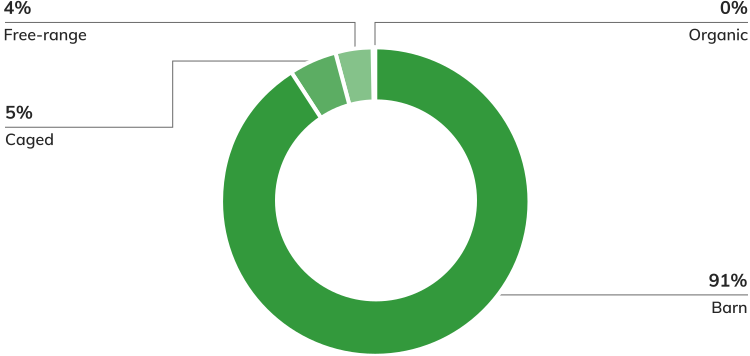
Tonnes of cage-free eggs per type of production – 2025
According to this indicator, 100% of the egg quantity used as an ingredient in Biedronka’s Private Brand products in Poland comes from cage‑free hens, a standard the Company has maintained since 2022. The share was 74% at Pingo Doce, 61% at Recheio, and 87% at Ara. Although the Colombian market, for its specific characteristics, is not included in our Group‑wide target, Ara’s result was very close to the commitment established for Portugal and Poland. At Group level, 95% of the eggs (in weight) used across the assortment originated from cage‑free hens.
Practices adopted by Jerónimo Martins Agro-Alimentar (JMA)
JMA, the Group’s company specialising in food production and which also supplies our distribution operations, has four business areas: dairy, livestock farming, aquaculture, and fruit and vegetables. Jerónimo Martins Agro‑Alimentar (JMA) adopts rigorous animal‑welfare practices across all livestock and aquaculture activities, ensuring housing, handling and production conditions aligned with international benchmarks and recognised certification systems.
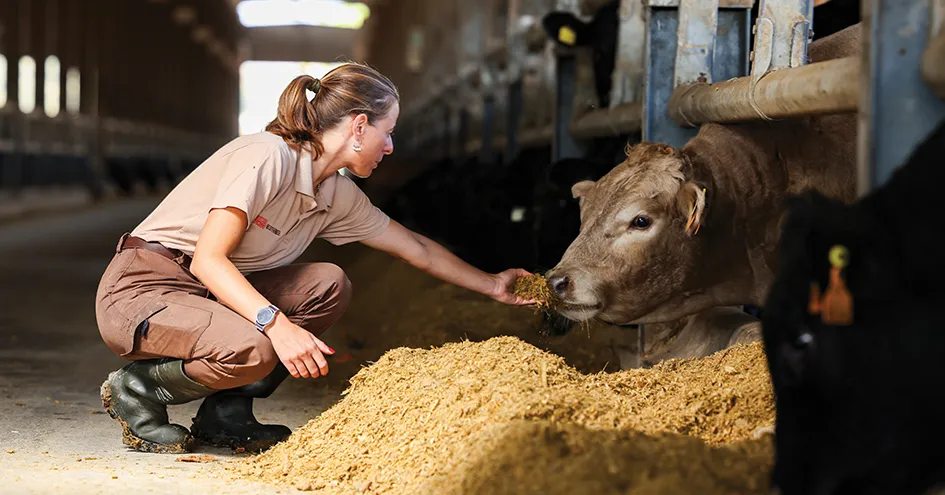
In Aberdeen Angus beef production, each animal has a minimum area of 6.5 m2. The facilities use grooved concrete or rubber flooring, which reduces the risk of slipping and injury, and ensure the daily replenishment of fresh straw bedding, promoting comfort and appropriate resting conditions. Animal welfare is further reinforced through additional measures such as individual resting areas, 60 cm of feeder space per animal, automatic grooming brushes and ambient music, all designed to reduce stress and encourage natural behaviours. All animals have access to pasture areas and benefit from automatic cooling systems with fans and sprinklers that support thermal regulation. The use of individual monitoring collars allows early detection of behavioural changes, enabling timely intervention and reducing the need for medication. In the dairy units and Angus production areas, additional welfare standards are ensured, including 100% vaccination and deworming, the complete absence of mutilation practices such as tail docking or dehorning, and housing systems that do not use tethering, ensuring freedom of movement. The facilities are equipped with assisted ventilation, reducing ammonia concentration. All employees receive mandatory animal‑welfare training, and the use of electric prods, sticks or any instruments capable of causing pain or injury is strictly prohibited, ensuring safe and responsible handling practices.
In sheep production, a minimum area of 0.6 m2 per animal is ensured, above the recommended best‑practice value of 0.5 m2. Feeding is based on forage and concentrates, and no castration practices are carried out. All animals show normal locomotion.
In 2025, JMA maintained its certification for the prudent and responsible use of antibiotics in beef‑fattening units and dairy facilities, and renewed its Welfair™ animal‑welfare certification, based on the Welfare Quality® protocol. Sheep production also remained certified under the AWIN® standard.
In aquaculture, stocking density is kept below 20 kg/m3, and 100% of fish are vaccinated, a practice applied across all species. Production takes place in open‑water environments, in areas with natural currents that ensure adequate water circulation and high environmental quality, promoting conditions closer to the natural habitat. No mutilation practices, such as fin clipping, are carried out. At slaughter, a rapid‑chilling process in ice‑cold water is used, promoting loss of sensibility and minimising stress and suffering, in line with animal‑welfare principles. The production of sea bream and sea bass in Madeira, Morocco and the Algarve is GlobalG.A.P.‑certified.
For further information about JMA, please refer to “Jerónimo Martins Agro-Alimentar (JMA)”.
1 Framed within our Product Quality and Safety Policy, available on our website.
2 We ensure its disclosure in strict compliance with the Group’s maximum limit of 0.1% (the quantification limit of the method). The limit permitted under European legislation is 0.9%.