
We have developed partnerships with several institutions to address social cohesion challenges in areas such as healthy eating, the promotion of reading habits, social inclusion and environmental awareness. We also participate in corporate volunteering initiatives.
Healthy eating habits and lifestyles
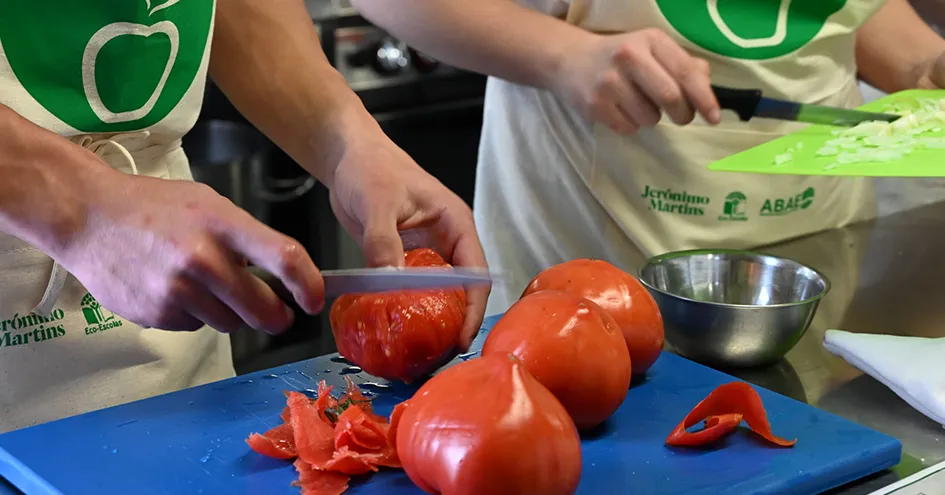
Since 2016, in Portugal, we have been sponsors of the Alimentação Saudável e Sustentável (Healthy and Sustainable Eating) programme of the Eco‑Schools initiative, promoted by ABAAE – the Blue Flag Association for Environment and Education. In 2025, the amount of our support for this programme – which raises students’ awareness of topics such as nutrition, healthy eating and the sustainability of agri‑food production – amounted to over 46 thousand euros. In the 2024/2025 edition, 350 schools across the country participated.
Since 2023, Biedronka has been the main sponsor of Olimpiada Zdrowia PCK z Biedronką (the Polish Red Cross and Biedronka Health Olympiad), a competition that promotes healthy eating habits and healthy lifestyles among school‑aged children and young people. The competition begins with a general test on nutrition, health and ecology. Students with the highest scores are then invited to present projects related to these themes. After finishing secondary education, the winners may study at the health sciences faculty of the Medical University of Lodz1, which sponsors the initiative.
Biedronka’s sponsorship has two components: financial support for the winners, including specific prizes awarded for the best projects on healthy eating habits and healthy living in the local community, and advisory support from Company experts in quality and Private Brand, environment and sustainability. These Biedronka professionals are also involved in developing the competition questions. In the 32nd edition, nearly 22 thousand students participated, with 32 reaching the final. Biedronka awarded eight special prizes across the two age categories in the form of gift cards worth more than 900 euros, contributing with over 51 thousand euros to the project. In November, the 33rd edition was launched, focused on issues related to mental health, and counted with 22,800 students from 1,525 Polish schools.
Hebe’s support focused on:
providing participation kits for several editions of the Bieg Kobiet Zawsze Pier(w)si (Women’s Always First) race, an initiative raising awareness of breast and cervical cancer prevention;
supporting other cancer prevention events;
providing prizes for the winners of the Stowarzyszenie Sportowe Ich Własna (Sports Association Ich Własna) women’s football league, whose aim is to eliminate discrimination against women in sport.
Ara partnered with four institutions – Fundación Leicy Santos, Fundación Manuela Vanegas, Parchemos Concreto and Fundación La Quinta.com – that promote sports practice as healthy habits, particularly football and dance in vulnerable regions, involving 1,065 children from the areas of Copacabana, Lorica and Quibdó.
Literature and reading habits
Promoting family reading habits from an early age is an important way to foster children’s and young people’s literacy and to contribute to more informed and better‑prepared societies. With this purpose, and in addition to offering books at very affordable prices, Pingo Doce and Biedronka organise national awards for children’s literature. The winners of the two phases of each competition – writing and illustration – are guaranteed publication of their work in book form, sold exclusively in stores of each banner. Whether in Portugal or Poland, each winner of each phase receives a monetary prize of 25 thousand euros.
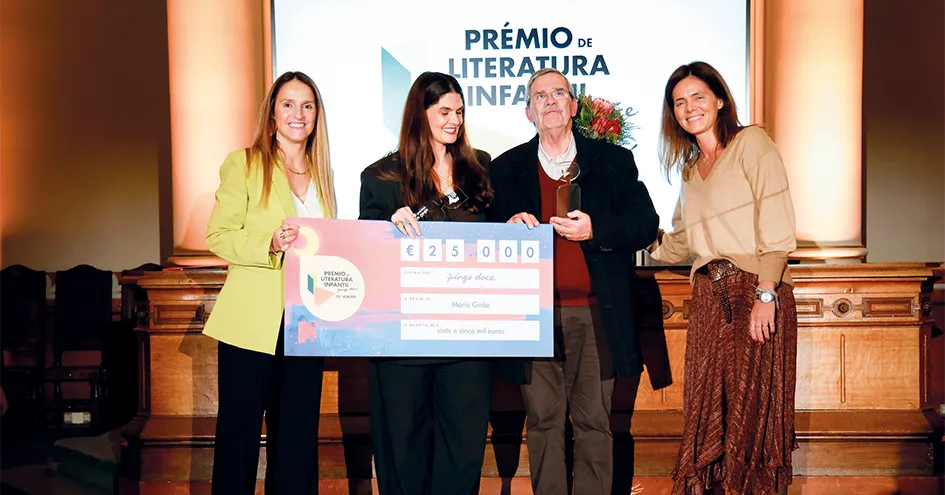
Since its creation in 2014, the Pingo Doce Children’s Literature Prize has awarded 24 writers and illustrators. Previous editions have demonstrated the impact of this initiative on the promotion of children’s literature in Portugal, and in encouraging creativity, and creating dynamic in the sector. The winning works have resulted in 12 published titles and more than 205 thousand copies sold, reaching thousands of children across the country. The latest distinguished work was Os Três Castelos das Três Bruxas Malvadas (The Three Castles of the Three Wicked Witches), by José Dias Pires, illustrated by Maria Girão. The prize forms part of Pingo Doce’s long‑standing commitment to children’s literature, which over two decades has offered high‑quality content with more than 570 exclusive titles and three million books sold.
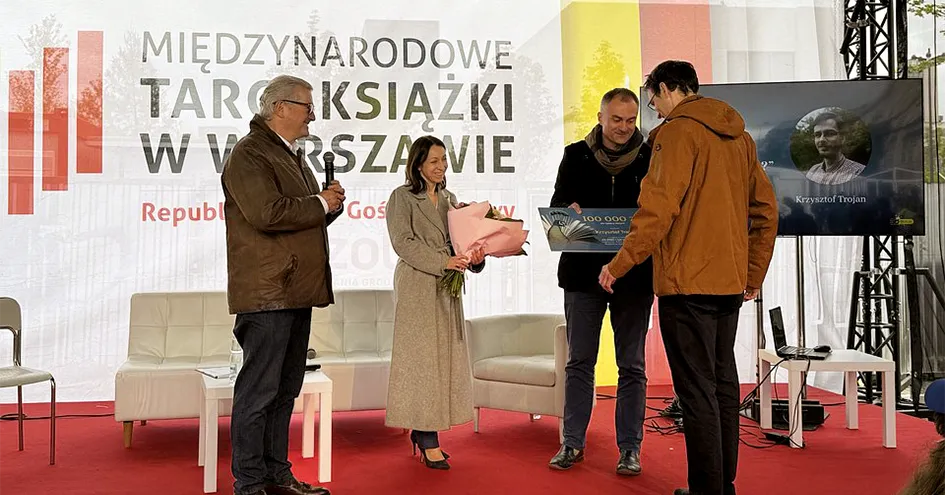
The Piórko – Nagroda Biedronki za książkę dla dzieci prize (Biedronka Children’s Literature Prize) has, since its first edition, been endorsed by the Children’s Ombudsman in Poland. The 11th edition recorded a record number of more than 3,900 text submissions, with Co zrobić z tym smokiem? (What to do with this dragon?), by Krzysztof Trojan, winning the writing phase and serving as inspiration for the more than 980 illustrators who entered the second phase of the competition, which was won by Marek Gołębiowski. Since the initiative’s launch in 2015, more than 600 thousand copies of the 11 winning books have been sold.
In Portugal, Pingo Doce took part in eleven book fairs, at which more than seven thousand books were sold, and launched 27 new exclusive titles (recognized by the National Reading Plan), which were made available in stores at affordable prices. Participation in book fairs is aimed at both the general public and children, and in addition to exclusive children’s book sales, reading sessions and book signings with the winners of the Pingo Doce Children’s Literature Prize are organised.
Strengthening its role in the ecosystem of reading and children’s literature promotion, Pingo Doce donated, for the second consecutive year, libraries with children’s books to paediatric hospitals and paediatric wards with inpatient units across the country. Each library is equipped with 30 exclusive Pingo Doce children’s books, for children aged 2 to 12. Depending on the size of each paediatric unit, more than 130 mini‑libraries were delivered – creating real “Reading Neighbourhoods” – and a total of more than four thousand books were donated.
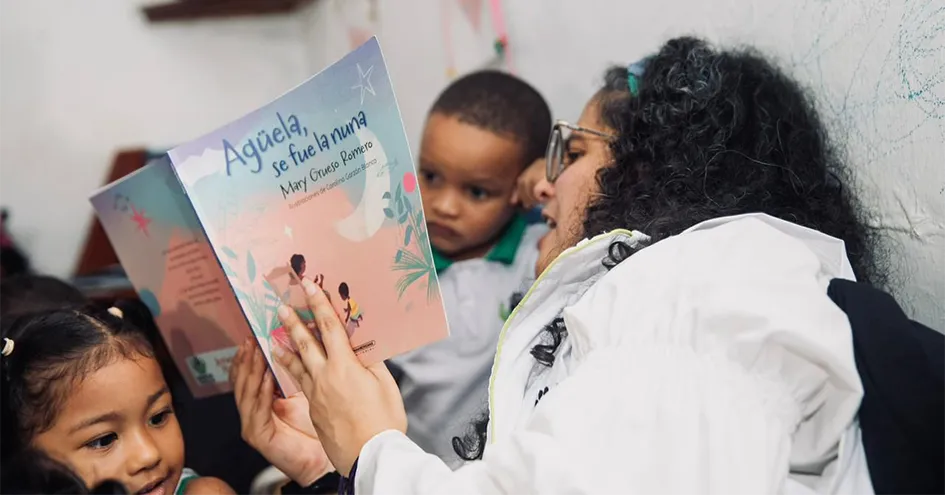
Ara joined the Rincones de Lectura (Reading Corners) initiative, community spaces that promote child development through reading, play and art. With an investment of around 330 thousand euros, one thousand reading corners were delivered to 915 community homes and 85 kindergartens, benefiting 14 thousand children with access to books, games and artistic materials that stimulate imagination, creativity and learning.
Social inclusion and entrepreneurship
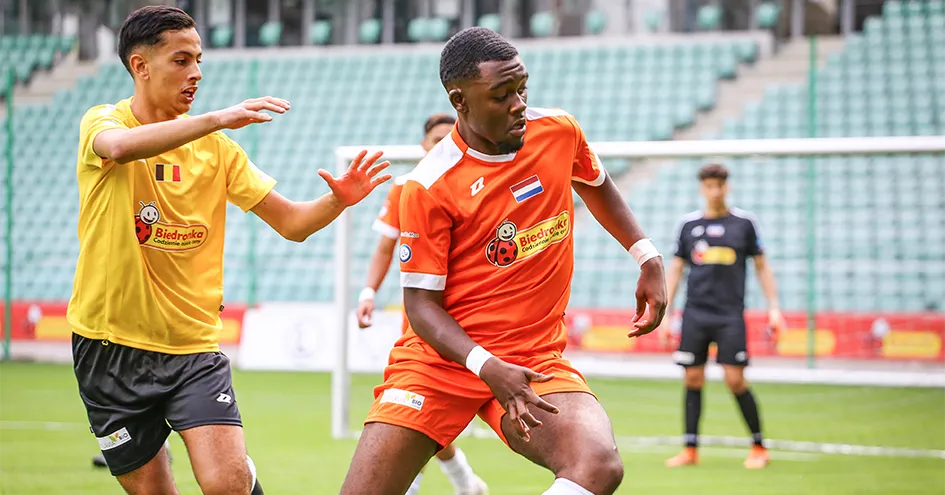
Since 2018, Biedronka has been the main sponsor of the Nadzieja Na Mundial Association (“Hope for the World Cup”). This association supports the development of institutionalised children through socialisation in sport and organises football tournaments with other children and young people from Poland and from other European and non‑European countries. In 2025, the 16th edition of the Polish championship took place, with 400 children from 39 teams across the country travelling to Warsaw to compete. The best players were selected to join the Polish team for the 9th edition of the world championship, which brought together teams from 22 countries, including Portugal and Slovakia. Biedronka invested more than 174 thousand euros in these two initiatives.
To celebrate childbirth in Poland, Biedronka has, since 2021, offered product packs to babies born in the country and registered on the website of the Dada club (Dada is Biedronka’s Private Brand for baby hygiene and care, and the market leader in nappies). In 2025, the number of registrations exceeded 54 thousand, bringing the total number of kits distributed to around 332 thousand. The kits include nappies, baby food jars, wet wipes and cotton buds.
As part of its support for the integration of people with disabilities, Biedronka continued its collaboration with the Podaj Dalej Foundation, an organisation supported since 2024 whose mission is to help people with disabilities achieve independence and live active and fulfilling lives. Thanks to the support generated through cooperation with Biedronka, the Foundation organised several initiatives:
Artistic and sports camps for around 70 children with disabilities from various regions of Poland.
Workshops for 12 mothers of children with disabilities, focused on strengthening and empowerment mechanisms, relaxation and adapted nutrition habits, while ensuring full supervision of their children by the institution.
The publication of a series of 12 stories about the fox Ibisek, designed to help children and young people better understand and manage their emotions.
In 2021, Biedronka became the first retailer in Poland to launch a programme dedicated to fighting period poverty2: “Together We’ll Start a Period of Change”, in partnership with Koalicja Okresowa, an NGO coalition founded by the Kulczyk Foundation. In the same year, the Company launched the campaign “Menstruation Action in Your School”, in collaboration with Akcja Menstruacja, an organisation with which the Company started working with to promote topics related to women’s health. During the 2025/2026 school year, Biedronka supported 680 schools by offering more than 1.3 million tampons and sanitary pads, an investment of around 46 thousand euros, benefiting a total of 121 thousand students.
Hebe continued its collaboration with the Odkryj Siebie Z Hebe (“Discover Yourself with Hebe”) initiative, in partnership with the One Day Foundation, to promote the social and professional inclusion of young adults who live or have lived in orphanages. In the fourth edition of the programme, the 37 participants worked in 31 Hebe stores for two months3. Hebe also donated more than 35 thousand euros to support the Foundation’s social mission.
Hebe also donated around 8 thousand euros to the fifth edition of the TOP Women in e‑business programme, created by the Fundacja Kobiety E‑Biznesu (Women in E‑Business Foundation), whose main objective is to support the creation of online businesses led by women.
Ara supported the Somos CaPAZes programme, aimed at mothers and children in vulnerable situations, with the goal of strengthening family bonds and promoting safe environments. The project reached 390 beneficiaries and included the creation of protected spaces for families in high‑risk areas, as well as the development of a community garden in the Pereira region.
Also noteworthy is the project with the Fundación Hogar Cañitas Saludables, aimed at improving the well‑being and living conditions of 70 elderly people facing abandonment or vulnerability. The partnership included refurbishing and painting the institution’s facade, repairing beds and damaged furniture, installing television rooms and organising recreational and therapeutic activities. The project also included the donation of fruit, vegetables and products with damaged packaging but still totally suitable for consumption.
Environmental education
We develop a set of actions directed at the communities surrounding our operations, with the aim of reinforcing the importance of ecosystem protection and biodiversity preservation4, contributing to greater collective environmental responsibility.
In the area of raising awareness about ecosystem protection, since 2019 we have partnered with Portugal Chama, a campaign by the Integrated Rural Fire Management System (SGIFR) that seeks to alert the population, particularly in high‑risk fire areas, to the importance of prevention, especially during the most critical months of the year. Pingo Doce, Recheio and Amanhecer made their websites, social media channels and in‑store audio systems available to disseminate the prevention and fire‑safety messages developed by AGIF, significantly expanding their reach within communities.
As part of the Mar Vivo (Living Ocean) programme, and in line with previous years, Pingo Doce organised another edition of the Brigada Mar Vivo (Living Ocean Brigade), the largest school beach‑cleaning initiative in the country. More than 64 thousand students from 53 municipalities collected 5.8 tonnes of waste from Portuguese beaches. In addition, the Peniche Surfing Clube initiative was created, under which 97 beach and cliff clean‑ups were carried out, 5.3 tonnes of marine and coastal litter were collected. These initiatives involved more than 10 thousand people.
Pingo Doce also continued the project launched in 2024, “Take Your Class to the Oceanarium”, in partnership with ABAAE. Focused on the protection of marine ecosystems, the project aims to raise awareness and educate younger generations about the importance of ocean conservation. This year, students up to the 9th grade were invited to develop an exhibition on endangered species included in the IUCN Red List, encouraging interest in marine biodiversity conservation.
In the field of awareness‑raising for pollinator protection and biodiversity conservation, in Portugal we developed the “SOS Pollinators” campaign in partnership with Quercus, with whom we have been carrying out educational communication actions since 2014, directed at school communities, while also providing training to various stakeholders (local authorities, farmers, beekeepers and technicians). The second edition of the Pollinator‑Friendly Schools Network took place, with 20 sessions held across 30 schools, with the participation of more than 1,700 students. As part of this project, the fourth edition of the contest “Build a Pollinator Insect Hotel” was launched, involving 18 citizens and 48 schools. The initiative promotes the construction of refuges for pollinating insects, raising awareness about their importance.
In the same area of pollinator protection and the promotion of their role in biodiversity, Ara has implemented, since 2021, the “Bee Protection” project in partnership with Fundabejaz, with the aim of protecting and conserving these important pollinators. In 2025, the Company’s support contributed to:
rescuing 51 swarms, promoting coexistence with communities;
monitoring and evaluating the rescued swarms, identifying 35 viable hives;
delivering 33 hives to the community – mainly farmers – reinforcing the commitment to ecosystem protection. Hives not yet delivered remain in the strengthening process to ensure optimal technical and environmental conditions for future integration;
reducing extermination requests in areas where 83 awareness campaigns were carried out about the importance of bees and pollinators. These sessions involved 2,650 participants from rural communities, including students from local schools.
In the medium and long term, the programme aims to transform the relationship between communities and bees by integrating environmental education into school curricula. At the same time, formal perception measurement tools and monitoring mechanisms are being developed to strengthen the programme’s qualitative and quantitative indicators, ensuring greater rigour and effectiveness in assessing its impact.
Also in Colombia, the Loros Project is being developed, aimed at rehabilitating and releasing macaws. This project is carried out in partnership with Fundación Loros, a non‑profit organisation dedicated to the protection of birds such as parrots, macaws, parakeets and cockatoos. Since 2024, the Foundation has had a cooperation agreement with Ara to strengthen its actions. The initiative covers a macaw reserve of around 300 hectares and includes, among other actions, the construction of aviaries for the recovery and release of birds, as well as awareness‑raising campaigns against the trafficking and illegal capture of macaws and wild birds, directed at 40 children from the IETA (Institución Educativa Técnica Agropecuaria) school. The success of these initiatives has resulted in an increase in reports supporting species conservation.
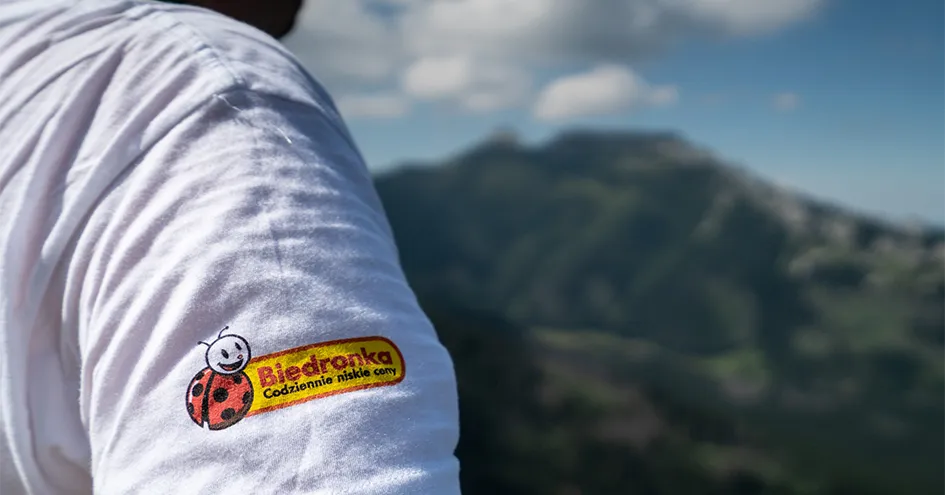
Since 2019, Biedronka has supported, in partnership with the Clean Poland Association (a Polish NGO), the Clean Tatras project, developed in collaboration with the Tatra National Park and other specialised organisations. The project combines waste‑collection activities with an educational component through the creation of an eco‑village that promotes sustainable behaviours to reduce human impact on the environment. In 2025, the 7th edition took place, combining environmental education with mountain‑trail clean‑ups, resulting in the collection of 100 kilos of waste. This volume has decreased year after year, reflecting not only the effectiveness of annual clean‑ups but also a positive change in visitors’ behaviour: despite increasing tourist pressure, tourists are leaving less waste and demonstrating greater environmental awareness. This evolution confirms the educational impact of the initiative, which inspires participants and the surrounding community to adopt more responsible daily practices.
In March 2025, Biedronka announced a new partnership with Operation Clean River to collaborate on waste management (including green‑space clean‑ups) and biodiversity protection. This initiative responds to a community‑level environmental issue observed along the Bug River and its surrounding areas. Across multiple clean‑up campaigns carried out throughout the year, around 31,400 people participated, and with Biedronka’s support, 960 sites were cleared and 579 thousand kilos of waste collected.
Another mechanism for disseminating knowledge and raising environmental awareness is through our social media platforms, via educational campaigns. In 2025, Ara ran a highlighted Instagram campaign on Habitat Day, featuring questions about the natural habitats of Colombian species.
Volunteering
Volunteering initiatives are a concrete way of strengthening the social and environmental impact of our Group in the communities where we operate. In addition to directly helping address local needs and supporting vulnerable populations, these initiatives foster mobilisation and active engagement among our employees. In 2025, 1,105 employees participated in volunteering activities, totalling more than 4,700 hours, with the following initiatives standing out:
Pingo Doce, under the cooperation protocol celebrated with the National Republican Guard (GNR) aimed at fighting loneliness and social isolation among the elderly, organised a volunteering action with employees from the Campo Grande team to assemble food baskets for more than 1,800 elderly people in situations of extreme vulnerability.
At Biedronka, each employee is entitled to four working hours dedicated to volunteering activities. A highlight is Szlachetna Paczka (Noble Gift), a Polish social programme that supports people living in poverty or social isolation, including the elderly, large families, accident victims, people who are ill or living with a disability. In 2025, around 700 employees from different areas (offices, distribution centres and stores) took part in preparing baskets for previously identified beneficiaries. Through this joint effort, 32 families were supported.
In partnership with TECHO (a Latin‑American NGO operating in 19 countries, building housing for people living in precarious conditions without minimum hygiene and comfort), a volunteering action was organised in which 57 Ara employees helped build two emergency houses for vulnerable families in Bogotá and Medellín.
The “Viaje La Guajira – Abaco” (Travel La Guajira – Abaco) initiative, a social tourism project with vulnerable Indigenous communities in the Riohacha area, involved 10 employees who delivered food baskets, cooked with families and supported child nutrition reinforcement activities.
Cooking workshops and recreational activities promoting healthy habits, social integration and emotional well‑being for children are among the initiatives carried out by 43 Ara employees under the partnership with SOS Children’s Villages Colombia, a collaboration in place since 2016 in the regions of Bucaramanga and Cali.
20 Ara volunteers, in partnership with Fundación Tierra Grata, installed 10 solar lamps in a vulnerable neighbourhood in Barranquilla, improving safety, night‑time visibility and residents’ quality of life.
62 employees took part in the “Mi mejor amigo” (My best friend) project, aimed at improving the conditions of a shelter housing around 150 rescued dogs. Activities included building structures, distributing food, deworming, providing general care and organising recreational actions.
In 2025, we welcomed four interns from the Girl Move Association, an initiative we have supported since 2016 and which, in 2026, will become part of the Jerónimo Martins Foundation. The Association aims to empower young Mozambican women to become agents of development in their communities. Training lasted three weeks: the first dedicated to visits to various Group facilities, followed by two weeks of placements with eight mentors. In addition to training, the interns delivered Impact Talks to 85 employees.
1 Only applicable to the 2025-2026 edition.
2 According to a study carried out in 2020 by the Kulczyk Foundation, one in five women in Poland has difficulty accessing adequate hygiene products, and 40% of women facing economic hardship have had to forgo purchasing hygiene products.
3 For more information about this project, please refer to “Own workforce”.
4 For more information, refer to “Biodiversity and ecosystems”.