
The Organisation for Economic Co-operation and Development (OECD) estimates that global Gross Domestic Product (GDP) growth reached 3.2%1 in 2025, slightly below the 3.3% recorded in the previous year.
GDP growth is projected to slow to 2.9% in 2026, before accelerating again to 3.1% in 2027. Despite increasing pressure on public finances, the institution anticipates further reductions in interest rates and only limited fiscal tightening.

The past year was marked by the appointment of Donald Trump as the 47th President of the United States (US) and the implementation of a more protectionist trade policy. The prospect of higher trade tariffs led to the early execution of many international trade transactions in the first half of 2025, with repercussions for inflation in the US and the affected economies.
Most central banks cut interest rates on several occasions in an effort to support economic growth, except the US Federal Reserve, which kept monetary policy unchanged for around three quarters, given the potential effects of the new trade policy on inflation. Nevertheless, it initiated a cycle of interest rate cuts from September onwards.
The slowdown in inflation allowed for an easing of monetary policy across the major economies, helping to offset the uncertainty linked to geopolitical and trade tensions. Nonetheless, economic activity and income recovery evolved unevenly across the different economic blocs. Consumer confidence gradually improved in most economies, but remained below historical averages, particularly in more developed economies.
From a geopolitical standpoint, 2025 was marked by significant challenges and a complex evolution of the international landscape. The war in Ukraine continued throughout the year, with negotiations over a possible peace agreement occurring primarily in the final quarter of 2025, although no effective conclusions were reached.
The US administration also announced higher trade tariffs on several trading partners. Agreements were subsequently reached with most countries and economic blocs, including China. On the domestic front, a partial shutdown of the US Federal Administration began in early October and lasted for 43 days, marking the longest government shutdown in US history.
Gross Domestic Product
Last 3 years
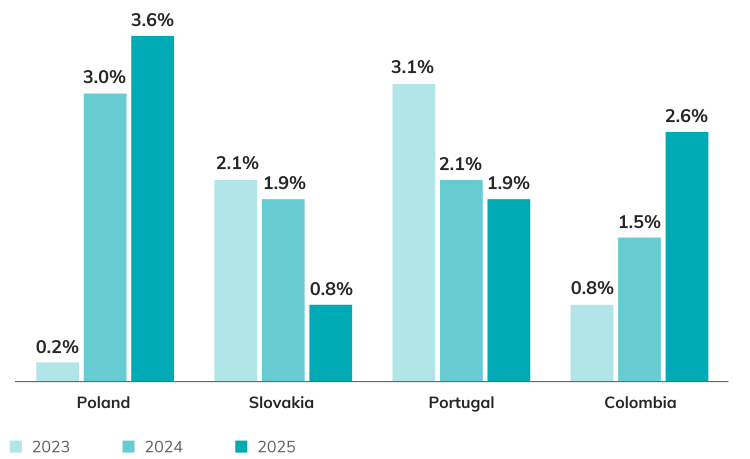
Economic growth in Poland accelerated in 2025, with GDP increasing by 3.6%, compared with the 3.0% recorded in the previous year. This growth was driven by household consumption of non-food goods and services, which benefited from higher minimum wages, disinflation, and the easing of financial conditions.
In 2025, Slovakia recorded modest GDP growth of 0.8%, due to weaker external demand and the impact of new trade tariffs. Despite support from European Union funds, economic uncertainty and the need for fiscal consolidation constrained investment in the country.
In Portugal, the fall of the Government in May and the subsequent elections were followed by a partial restoration of political stability. Economic growth slowed compared with 2024, with GDP increasing by 1.9%. The economy maintained a solid performance throughout 2025 despite an adverse external environment. The labour market remained strong, with employment levels at historic highs and a low unemployment rate.
In Colombia, the Government activated a safeguard clause to temporarily suspend certain fiscal rules, revising the projected deficit upward to 7.1%. At the same time, the Central Bank maintained a cautious stance in order to contain persistent inflation.
Colombia’s economy grew by 2.6%, above the 1.5% recorded in the previous year. This performance was supported by private consumption, government spending, a volatile but ongoing recovery in investment, and consumer confidence, which reached multi-year highs.
Consumer Price Index
Last 3 years
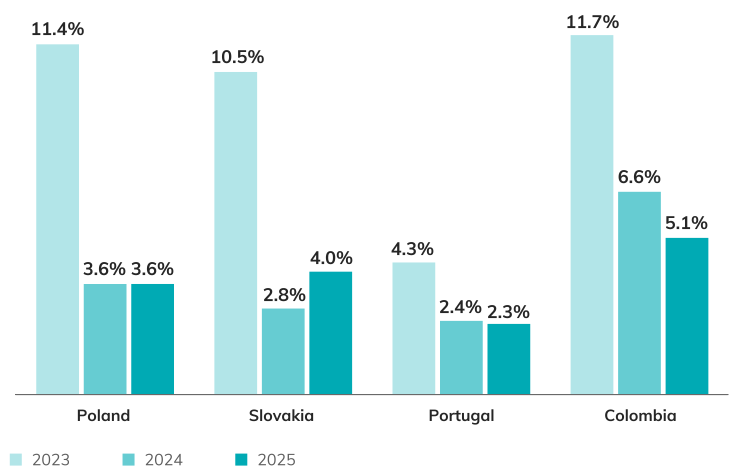
Inflation in Poland closed 2024 on an accelerating path, largely reflecting the withdrawal of government support measures (including the temporary reduction in VAT on essential goods), with the trend continuing into early 2025. Nevertheless, inflation declined for most of the year, reaching a year-on-year rate of 2.4% in December – the lowest level since April 2024. Average inflation stood at 3.6%, in line with 2024.
In Slovakia, inflation accelerated again in 2025, with the average rate reaching 4.0%, reflecting an increase in service prices.
In Portugal, average inflation was 2.3% (2.4% in 2024), with volatile behaviour throughout the year. The slight decline in inflation rate was influenced by developments in energy products, which recorded an average annual change of -0.2%, as well as by the deceleration of core inflation, which registered an average annual rate of 2.2% (2.5% in 2024).
Average inflation in Colombia stood at 5.1% (6.6% in 2024). The price index remained above 5.0% for most of the period.
Reference Interest Rate - EoP
Last 3 Years
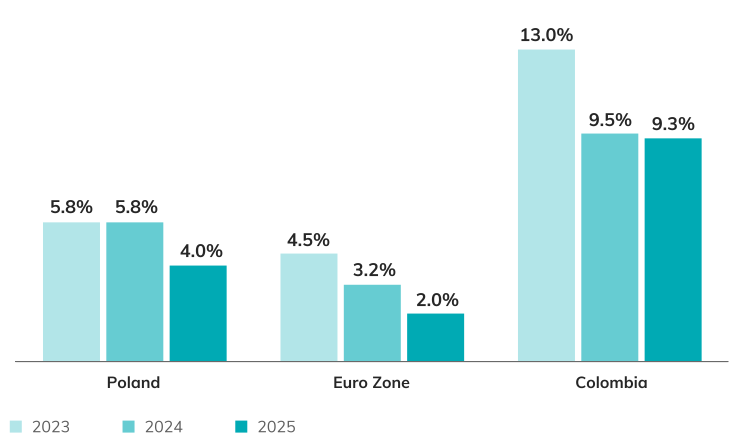
In 2025, the world’s major central banks continued to gradually ease the restrictiveness of their monetary policies.
The European Central Bank (ECB) reduced interest rates at its first four meetings of the year, through June, bringing its main policy rate to 2.0%. Since then, the institution has kept its policy rates unchanged.
In Poland, the central bank kept its rates unchanged at 5.75% until April, before initiating a monetary policy easing cycle that brought rates down to 4.0% in December.
The Central Bank of Colombia restricted monetary easing to a single 25-basis-point cut in April, ending the year with the policy rate at 9.25%.
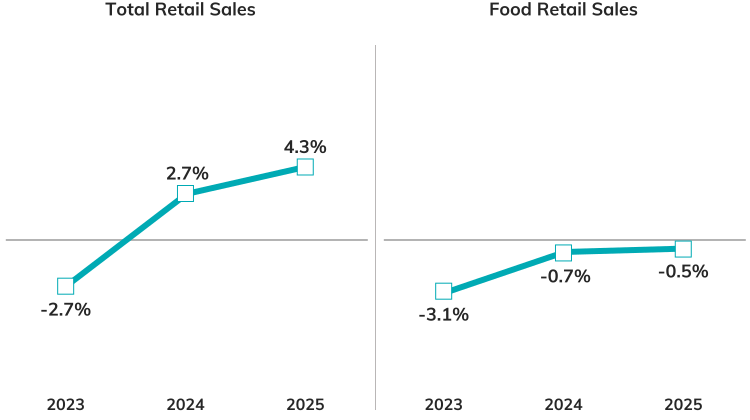
POLAND - Total and Food Retail Sales Indices
Constant Prices
SLOVAKIA - Total and Food Retail Sales Indices
Constant Prices
PORTUGAL - Total and Food Retail Sales Indices
Constant Prices
COLOMBIA - Total and Food Retail Sales Indices
Constant Prices
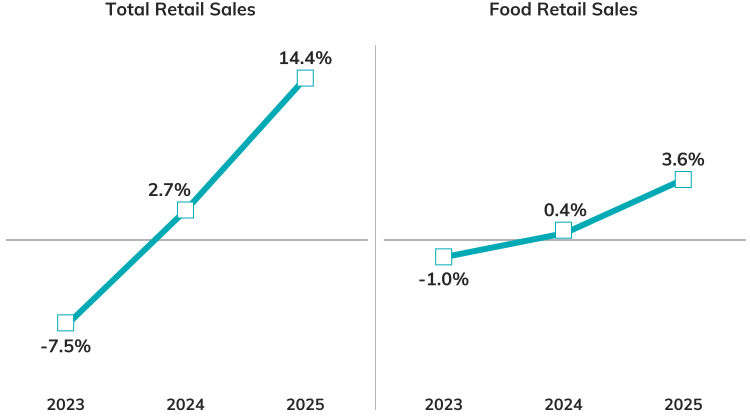
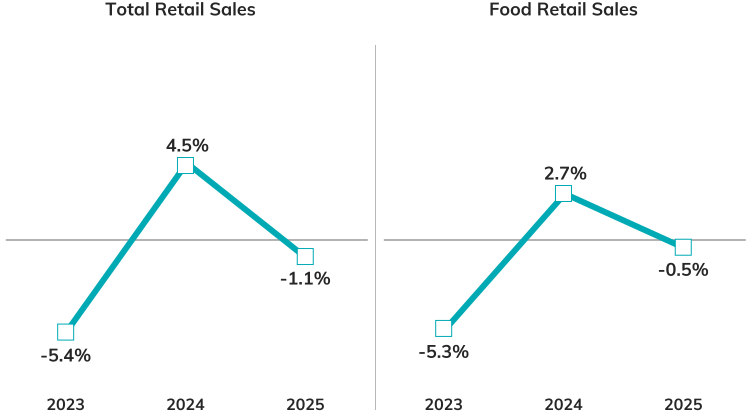
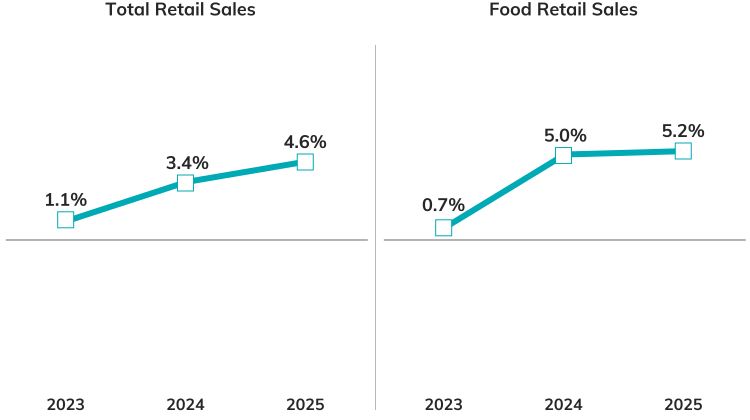
With regard to Food Retail sales at constant prices, Portugal recorded the strongest performance among the economies under review, followed by Colombia. In Poland and Slovakia, Food Retail sales recorded a slight decline compared with 2024.
Consumer Confidence Indicator
Average, Last 3 Years
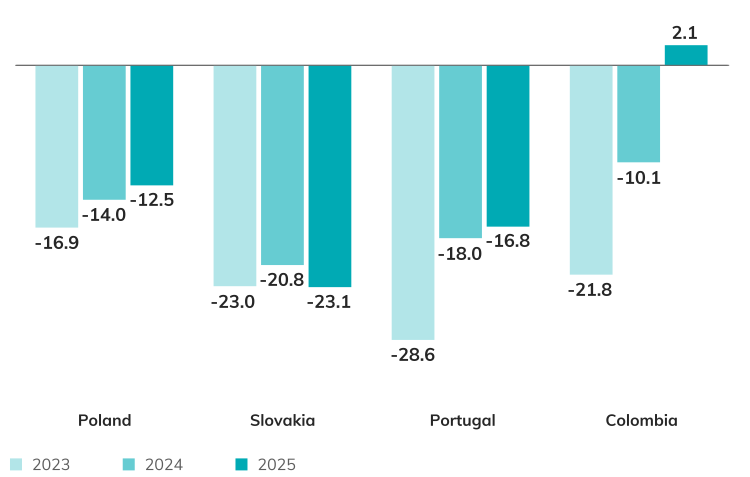
Consumer Confidence Indicator (CCI) levels improved in Portugal, Poland and Colombia, although the indicator remained in negative territory (with the exception of Colombia).
In Poland, the indicator followed a somewhat uneven trajectory throughout the year, peaking in September at -8.3 points before ending the year at -9.9 points. The slowdown in real wage growth was one of the factors that limited the improvement in consumer confidence in 2025.
In Slovakia, the CCI continued to decline in 2025, influenced by the fiscal consolidation package announced by the government in September 2024, which included measures such as higher VAT and increased corporate taxes.
In Portugal, the CCI showed an unstable trajectory. At the beginning of the year, the indicator declined amid expectations of higher inflation. Consumer confidence gradually improved throughout 2025, supported by greater optimism about the national economy, future financial conditions and expectations of moderating inflation.
In Colombia, despite a challenging start to the year, the indicator closed the year at its highest level in more than a decade.
Unemployment Rate
Last 3 Years
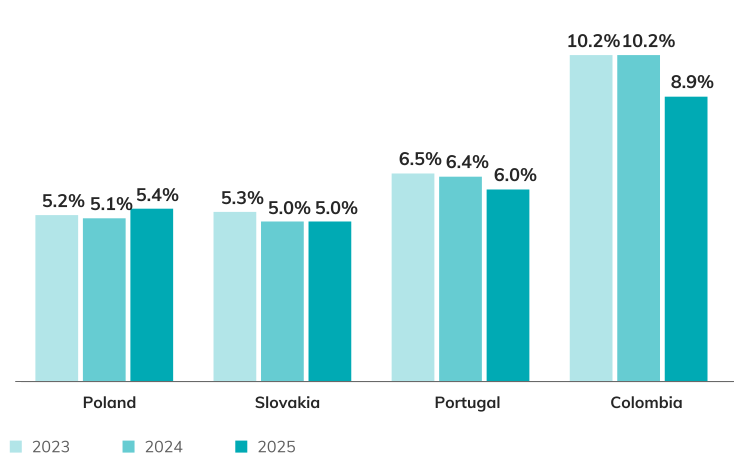
In Poland, the average unemployment rate increased to 5.4% in 2025 from 5.1% in 2024, while in Slovakia it remained at 5.0%.
In Portugal, this indicator decreased to 6.0% in 2025, compared with 6.4% in the previous year.
In Colombia, the unemployment rate continued its downward trend in 2025, reaching 7.0% in November the lowest level in more than a decade – before rising to 8.0% in December. The annual average rate was 8.9%.
Regarding exchange rates, the złoty recorded an average annual conversion rate2 of 4.2397 in relation to the euro, corresponding to a 1.5% appreciation compared to the average exchange rate of 4.3049 recorded in 2024.
In contrast, the Colombian peso average annual conversion rate2 was 4.568 per euro, depreciating by 3.6% compared with the 2024 average of 4.405.
Economic Outlook for 2026
In 2026, global GDP growth is projected to slow to 2.9%. Inflation is expected to remain moderate, while global monetary policy is likely to become less restrictive.
Analysts project GDP growth of 3.4% for Poland in 2026.
For Slovakia, forecasts indicate an acceleration in economic growth to 1.1% in 2026. The absorption of EU funds will continue to be the main driver for investment, although capital formation is expected to remain under pressure from economic uncertainty and the ongoing fiscal consolidation process.
The Portuguese economy is expected to record sustained growth in 2026, above the level registered in the previous year. A robust labour market, higher minimum wages and a reduction in income tax are expected to support private consumption. However, the effects of the extreme weather events recorded at the beginning of 2026, with particular emphasis on Storm Kristin, may affect these prospects.
In Colombia, investment should recover gradually, although it will continue to be affected by uncertainty. Monetary policy is likely to remain restrictive in order to ensure the return of inflation to the established target, with fiscal deficits projected to remain elevated. Inflation is expected to decrease, although it is forecast to remain above the 3.0% target until 2027.
However, it should be noted that macroeconomic outlook for 2026 continue to be characterised by heightened volatility, requiring the necessary adjustments in light of increased geopolitical risks. These include the impact of the recent attack on Iran on energy markets, inflation and on the confidence of economic agents at a global level.
1 OECD Economic Outlook, Volume 2025 Issue 2.
2 Average annual conversion rate determined by weighting the turnover of the Group Companies operating in this currency.