
With more than 147,000 employees across six countries and three continents, we embrace the diversity of skills, cultures, and generations that shape our population. The multiplicity of Companies and countries inherent of an international Group strengthens our belief that diversity is a key pillar of our identity, contributing to stronger teams, encouraging innovation, and enabling us to reflect the communities we serve.
|
|
Age group |
|
Gender |
|
Total |
||||||||||||||
|---|---|---|---|---|---|---|---|---|---|---|---|---|---|---|---|---|---|---|---|---|
|
|
< 30 |
|
30-50 |
|
>50 |
|
Women |
|
Men |
|
|||||||||
|
|
|
|
|
# |
|
% |
|
# |
|
% |
|
||||||||
Group |
|
38,336 |
|
90,271 |
|
19,102 |
|
111,710 |
|
75.6% |
|
35,999 |
|
24.4% |
|
147,709 |
||||
Portugal |
|
9,302 |
|
18,914 |
|
7,144 |
|
22,464 |
|
63.5% |
|
12,896 |
|
36.5% |
|
35,360 |
||||
Poland |
|
19,589 |
|
60,857 |
|
11,849 |
|
78,293 |
|
84.8% |
|
14,002 |
|
15.2% |
|
92,295 |
||||
Colombia |
|
9,228 |
|
10,164 |
|
69 |
|
10,566 |
|
54.3% |
|
8,895 |
|
45.7% |
|
19,461 |
||||
Slovakia |
|
173 |
|
277 |
|
34 |
|
324 |
|
66.9% |
|
160 |
|
33.1% |
|
484 |
||||
Czechia |
|
28 |
|
22 |
|
3 |
|
52 |
|
98.1% |
|
1 |
|
1.9% |
|
53 |
||||
Morocco |
|
16 |
|
37 |
|
3 |
|
11 |
|
19.6% |
|
45 |
|
80.4% |
|
56 |
||||
Functional levels |
|
|
|
|
|
|
|
|
|
|
|
|
|
|
|
|
||||
Strategic1 |
|
1 |
|
133 |
|
98 |
|
76 |
|
32.8% |
|
156 |
|
67.2% |
|
232 |
||||
Managerial |
|
273 |
|
2,949 |
|
497 |
|
1,977 |
|
53.2% |
|
1,742 |
|
46.8% |
|
3,719 |
||||
Operational |
|
38,062 |
|
87,189 |
|
18,507 |
|
109,657 |
|
76.3% |
|
34,101 |
|
23.7% |
|
143,758 |
||||
|
||||||||||||||||||||
In 2025, 8.6% of our employees were of a different nationality than that of the country where they work, corresponding to an increase of 1.1 p.p. compared to 2024. The Group’s workforce includes professionals representing 86 nationalities across four generations.
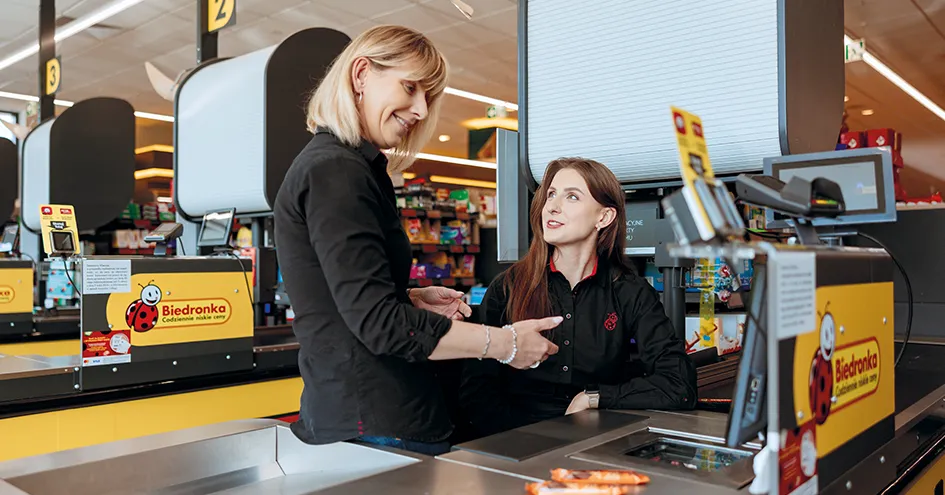
We ensure that all employees, at every level of the organisation, benefit from conduct guided by ethical standards, and that are treated in accordance with the principles of fairness, equal opportunity, and non-discrimination, regardless of origin, gender, sexual orientation, religion, age, marital status, family situation, nationality, ethnicity, disability, political or ideological beliefs, trade union membership, or any other criteria. The Group’s Code of Conduct reflects this determination, by promoting human resources management practices that are aligned with the established principles.
This commitment is reflected in concrete initiatives, and our efforts to promote diversity and an inclusive workplace were once again recognized by the Financial Times and the online platform Statista, acknowledging the Jerónimo Martins Group as a Diversity Leader. This is the third consecutive year that we have received this recognition, and we are the only company based in Portugal to be featured in the Diversity Leaders 2026 ranking. The Group was included once again in the FTSE Diversity & Inclusion Index, ranking among the top 100 companies for inclusive workplaces.
Gender equality
Our commitment to gender equality is implemented through policies and initiatives that promote fair and equitable workplaces, where opportunities for women and men are based on merit. We therefore strive to ensure balanced gender representation across all levels of the organisation and throughout all stages of our people management processes. The pay equity already achieved in the main countries where we operate reflects the importance we place on these matters.
Women represent most of our workforce (75.6%), similar to what is observed in the food retail sector. We endeavour to ensure balanced gender representation at all levels of the organisation, including management and leadership roles. In 2025, women held 69.1% of management positions and 52.0% of leadership positions (managerial and strategic functional levels).
Representativeness and employee life cycle |
|
2025 |
|
2024 |
|
2023 |
||||||||
|---|---|---|---|---|---|---|---|---|---|---|---|---|---|---|
Management positions held by women1 |
|
69.1% |
|
69.1% |
|
67.4% |
||||||||
Entry-level positions held by women2 |
|
76.9% |
|
76.7% |
|
77.0% |
||||||||
Revenue-generating functions carried out by |
|
75.3% |
|
75.4% |
|
73.1% |
||||||||
Hires taken by women |
|
66.7% |
|
69.2% |
|
68.1% |
||||||||
Promotions given to women |
|
65.3% |
|
68.2% |
|
73.6% |
||||||||
Terminations taken by women |
|
66.3% |
|
68.0% |
|
67.6% |
||||||||
|
||||||||||||||
Gender pay ratio by country and most representative Company in each country1 |
|
2025 |
|
2024 |
|
2023 |
||||
|---|---|---|---|---|---|---|---|---|---|---|
Group |
|
98.6% |
|
98.5% |
|
98.5% |
||||
Portugal |
|
99.4% |
|
99.5% |
|
100.2% |
||||
Pingo Doce |
|
99.8% |
|
99.9% |
|
|
||||
Poland |
|
98.4% |
|
98.1% |
|
97.9% |
||||
Biedronka |
|
98.5% |
|
98.1% |
|
|
||||
Colombia |
|
97.9% |
|
98.7% |
|
98.0% |
||||
Ara |
|
97.9% |
|
98.7% |
|
|
||||
|
||||||||||
Our approach to promoting gender equality is structured through the Plan for Equality between Women and Men, the progress on which is monitored and reviewed annually. This plan is supported by a set of internal and external assessment tools and establishes an action plan made up of seven dimensions and 12 measures aligned with the guidelines of the regulation authority Commission for Equality in Labour and Employment (CITE), a Portuguese entity under supervisory authority of the Ministries of Parliamentary Affairs and Labour, Solidarity and Social Security. Our strategy for promoting gender equality is based on four pillars:
Formalising equality between women and men in policies and procedures through guidelines that enshrine our commitment to human rights and the prevention of discrimination based on any diversity factor, including gender;
Monitoring gender indicators by analysing internal practices and indicators on a quarterly basis throughout the employee’s life cycle, to understand the main challenges and act on them, as well as monitoring the investors, analysts and main sustainability indices that assess our performance in this area;
Facilitating the integration of professional, personal and family life with measures to support parenting, family wellbeing, situations of vulnerability and/or social emergency, as well as support for communities;
Raising awareness and capacity building for equality between women and men within and outside the Group, sharing information and providing training on the Code of Conduct and fundamental rights, such as equal opportunities and the prohibition of discrimination, establishing external partnerships, and participating in working groups.
To promote the internal and external dissemination of good gender equality practices, we maintain institutional cooperation relationships with external entities specialised in the matter. In 2025, both the Group’s Holding and Biedronka maintained their affiliation of the LEAD Network, an organisation committed to strengthening diversity in leadership, particularly among women.
In 2025, Biedronka launched the She Leads Tomorrow programme, a partnership with Kozminski University (Poland Business School) aimed at supporting young women in discovering and developing their leadership potential. In its first edition, the programme welcomed 26 young women and included talks with Biedronka mentors, training, and a workshop on career goal setting.
We continued our participation in the “Diversity, Equity and Inclusion (DEI)” working group led by GRACE – Responsible Companies (an entity comprising over 30 organisations in Portugal that work together to respond to these challenges). We also maintained our participation in iGen – Business Forum for Equality, a CITE initiative that seeks to establish itself as an ambassador for equality and a specialised centre of expertise in this field.
Multigenerational workforce
We promote the hiring and creation of development opportunities for people of all age groups and encourage cooperation between different generations. In 2025, we hired 27,176 people under the age of 30 and 2,235 people over the age of 50.
At Ara, the National Training Service (SENA – Serviço Nacional de Aprendizagem) programme is one of the main mechanisms for integrating young talent. In 2025, the Company hired 938 people under this programme.
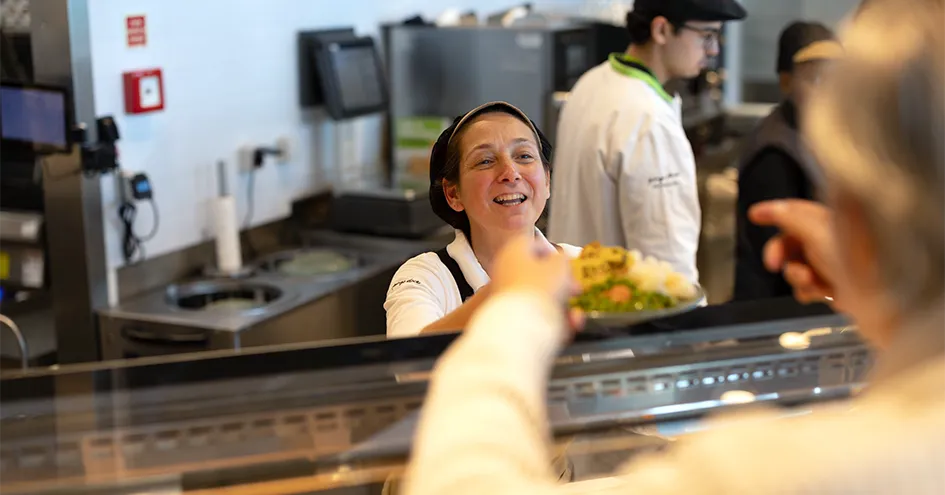
In 2025, Pingo Doce launched a new edition of the Pingo Doce Summer Academy, providing young people with the opportunity to get to know the business and develop their communication and interpersonal skills. During the Christmas holidays, Pingo Doce also invited the children of employees between the ages of 16 and 25 to apply for a brief professional experience in the stores. The two initiatives had 195 and 334 participants in 2025, respectively.
To strengthen collaboration among the different generations comprising teams, Biedronka and Hebe have implemented a training programme focused on intergenerational communication, cooperation, feedback, and a culture of appreciation, reaching 207 participants in 2025. At Biedronka, a reverse mentoring model through which younger employees supported 27 seasoned employees in developing technological skills.
In 2025, we continued the JM Talks initiative, hosting three sessions that connected experienced leaders with junior employees to inspire and share knowledge. A total of 655 employees took part in these sessions.
Inclusion of minorities
We take an inclusive approach within the communities where we operate, actively promoting opportunities for employment, training, and development for individuals facing disadvantages to accessing the labour market. This approach is implemented through a range of programmes with innovative formats, methodologies, and infrastructures, all aimed at increasing recruitment opportunities and facilitating the integration of these professionals.
|
|
Women |
|
Men |
|
Total |
||||||||||
|---|---|---|---|---|---|---|---|---|---|---|---|---|---|---|---|---|
|
|
# |
|
% of |
|
# |
|
% of |
|
# |
|
% of the workforce |
||||
Group |
|
2,414 |
|
2.2% |
|
1,081 |
|
3.0% |
|
3,495 |
|
2.4% |
||||
Portugal |
|
517 |
|
2.3% |
|
375 |
|
2.9% |
|
892 |
|
2.5% |
||||
Poland |
|
1,869 |
|
2.4% |
|
682 |
|
4.9% |
|
2,551 |
|
2.8% |
||||
Colombia |
|
26 |
|
0.2% |
|
21 |
|
0.2% |
|
47 |
|
0.2% |
||||
Slovakia |
|
2 |
|
0.6% |
|
3 |
|
1.9% |
|
5 |
|
1.0% |
||||
|
||||||||||||||||
The Incluir programme, created in Portugal in 2015, promotes training and employment opportunities for people with disabilities and/or impairments, migrants, refugees, and people at social risk. The programme is managed by a multidisciplinary team with the training and expertise required to support the integration of these professionals. Using a customized approach, the programme is tailored to each participant’s needs and to the roles available in each business area. The programme includes training in psychosocial skills and practical on-the-job training, as well as specific adaptations considered necessary by our internal team for each participant, namely at the workstation level (equipment and/or work tools), or at job level (by adjusting roles or the way certain tasks are performed).
The Incluir programme is supported by a network of 127 partner institutions, which help us in identify potential candidates. The process begins with an application, followed by recruitment and selection, during which each candidate’s skills and motivations are assessed by an internal technical team specialised in rehabilitation and social integration. An individual plan is then created, which usually includes training, with each candidate assigned a case manager who supports them throughout the entire process.
The initial stage of training lasts two weeks and takes place at the Incluir Centres in Lisbon and Porto. The first week is dedicated to learning interpersonal skills. The second week is spent in the simulation stores, a space that allows candidates to simulate the tasks they will perform in a store (such as replenishment, checkout, and counter service), in a comfortable and safe environment. Each Incluir Centre was built with all types of diagnoses, disabilities and impairments in mind. The Centres have lifting platforms, signage and fonts that make it easier for partially-sighted people to read, tactile maps of the spaces and text transcription into Braille, colour codes (for people who are colour blind), use of soft colours and adjustable lights (for greater comfort for people with autism and Asperger syndrome), among other adaptations. The Incluir Centres are spaces open to the community and feature exhibitions of works of art created by people with disabilities from some of our partner institutions.
The second stage of the training lasts ten weeks and takes place in a real work context, with the support of tutors and the technical team of the Incluir Programme. In 2025, we had 54 tutors, who received initial training to prepare them to welcome, integrate, support and maximise the potential of the trainees they take under their wing. Tutors also receive “Leadership for Difference” training, which was specifically created to raise awareness among leaders and give them tools to manage difference, welcoming, supporting and developing each person, without unconscious bias. By 2025, this training had covered 5,119 leaders.
Since its launch in 2015, the Incluir Programme has reached 2,458 people. In 2025, the Programme’s various initiatives involved 399 participants, resulting in the hiring of 40 employees.
This year we celebrated the 10th anniversary of the Incluir Programme, reaffirming inclusion as an integral part of the Group’s culture. As a result of these efforts, the Jerónimo Martins Group’s inclusion practices were once again recognised by the Portuguese Institute of Employment and Professional Training (IEFP)1, which renewed the Inclusive Employer Brand seal for Pingo Doce, Recheio, and the Group’s Holding.
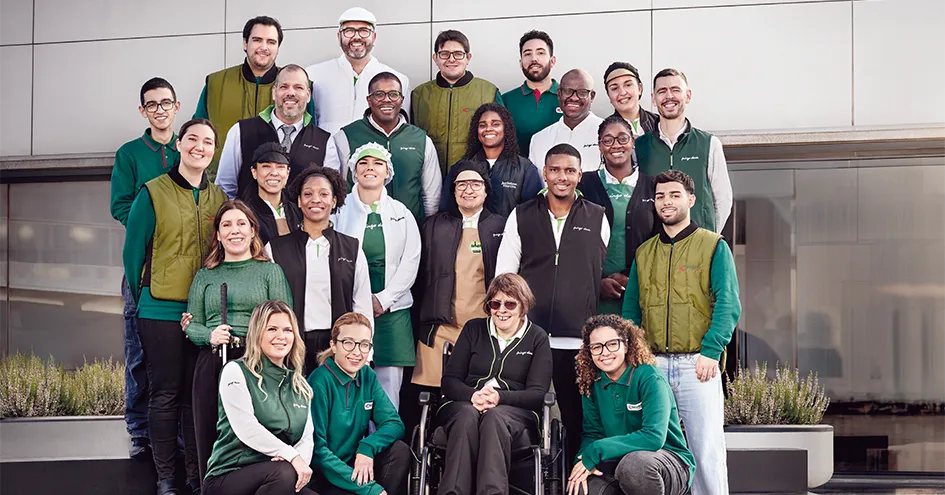
In 2025, the Incluir Programme was also recognised by the World Economic Forum as an initiative of excellence in the area of Diversity, Equity and Inclusion (DEI), selected as one of the eight case studies featured in the 2025 Lighthouses Report, a publication highlighting best practices and trends in promoting diversity, equity and inclusion across organisations worldwide.
In Poland, Biedronka promoted awareness of the importance of an inclusive work environment through the launch of the RóżniMY2 campaign. This initiative includes, among other actions, one month dedicated to diversity and an e-learning programme on diversity, inclusion, and unconscious bias, available to all Biedronka employees.
At the same time, with the aim of strengthening and further developing its strategy for the inclusion of people with disabilities and/or impairments, Biedronka continued to promote the self-checkout support function, which helps customers use self-service checkouts while ensuring quality service. In 2025, the Company had 1,440 employees with disabilities or impairments performing this function across 1,411 stores (36.3% of the Biedronka network).
In Poland, both Biedronka and Hebe continue to support the integration of Ukrainian refugees into the workforce. In 2025, we had 5,407 people of Ukrainian nationality in the Group, 98.9% of whom in Poland. To ensure effective management of their integration, Biedronka and Hebe have implemented the following mechanisms:
a team responsible for recruiting and integrating migrants;
content and recruitment channels adapted for the Ukrainian population;
onboarding, communication, and occupational health and safety at work materials and operational processes, such as store checkout, in Ukrainian;
internal channels with useful information in Ukrainian, including a chatbot to support employees;
support for the immigration process;
language training in Polish for Ukrainian employees and in Ukrainian for Polish coordinators.
Jerónimo Martins Agro-Alimentar (JMA) continues to strengthen its support for the integration of migrant employees. The team responsible for the recruitment and integration of these employees provides legal and tax advice and manages mobility processes. In 2025, it also launched two workshops for foreign employees, one focused on intercultural onboarding and another on citizenship and Portuguese culture, with a total of 15 participants. At the same time, a practical onboarding guide available in ten languages (including Thai, Hindi, and Nepali) provides key information on health and safety at work, as well as guidance to support effective communication for workers who are not employees hired for seasonal agricultural campaigns. This guide has since been adapted and extended to the Company’s other businesses.
Creating opportunities for people who are at a disadvantage in accessing the job market because they are at social risk is another aspect of how we include minorities. As part of the “Odkryj Siebie z Hebe” (Discover Yourself with Hebe) initiative, the Company offered two-month store traineeships for young adults who live or have lived in orphanages, helping them develop essential skills for integration into the labour market. This initiative is developed in partnership with the One Day Foundation and supported 37 young people in 2025.
1 Criteria: (i) recruitment, professional development and advancement; (ii) job retention and return to work; (iii) accessibility (employees); (iv) services and relationships with the outside world (community and customers).
2 From the Polish “różnimy” meaning “we are different”. The emphasis on MY (“we”) reinforces the initiative’s message that “We are the difference”.