
The main way we support surrounding communities is through donations, both monetary and in-kind food donations. In 2025, we allocated more than 91 million euros in direct support to over 2,200 entities1. This amount represents an increase of more than 12% compared with 2024, mainly due to an increase in in-kind donations across almost all Companies.
|
|
2025 |
|
2024 |
|
Δ 2025/2024 |
||||
|---|---|---|---|---|---|---|---|---|---|---|
Group |
|
91,270 |
|
81,088 |
|
+12.6% |
||||
Poland |
|
54,850 |
|
55,676 |
|
-1.5% |
||||
Biedronka1 |
|
54,542 |
|
55,598 |
|
-1.9% |
||||
Hebe |
|
307 |
|
78 |
|
+292.9% |
||||
Portugal |
|
34,419 |
|
23,799 |
|
+44.6% |
||||
Holding (JMH) |
|
2,480 |
|
3,387 |
|
-26.8% |
||||
Pingo Doce |
|
29,851 |
|
19,324 |
|
+54.5% |
||||
Recheio |
|
2,043 |
|
1,057 |
|
+93.2% |
||||
Jeronymo & Hussel |
|
12 |
|
11 |
|
+5.6% |
||||
Jerónimo Martins Agro-Alimentar |
|
34 |
|
21 |
|
+62.2% |
||||
Colombia |
|
2,002 |
|
1,613 |
|
+24.1% |
||||
Ara |
|
2,002 |
|
1,613 |
|
+24.1% |
||||
|
||||||||||
In accordance with the procedure we have followed for several years, surplus products that can no longer be sold but still meet quality and food safety standards are donated to social solidarity institutions. These institutions distribute the donated food to people experiencing socioeconomic vulnerability. This practice, adopted across all the Group’s Companies, ensures that products reach the tables of those who need them most.
In 2025, we donated more than 23,200 tonnes of food, representing an increase of 25% compared with 2024 and reversing the decline recorded that year (3.6% less than in 2023).
Company |
|
2025 |
|
2024 |
|
Δ 2025/2024 |
||||||
|---|---|---|---|---|---|---|---|---|---|---|---|---|
Biedronka2 |
|
10,273 |
|
10,776 |
|
-4.7% |
||||||
Pingo Doce |
|
12,022 |
|
7,162 |
|
+67.9% |
||||||
Recheio |
|
638 |
|
351 |
|
+81.5% |
||||||
Ara |
|
329 |
|
317 |
|
+4.0% |
||||||
Total |
|
23,262 |
|
18,606 |
|
+25.0% |
||||||
|
||||||||||||
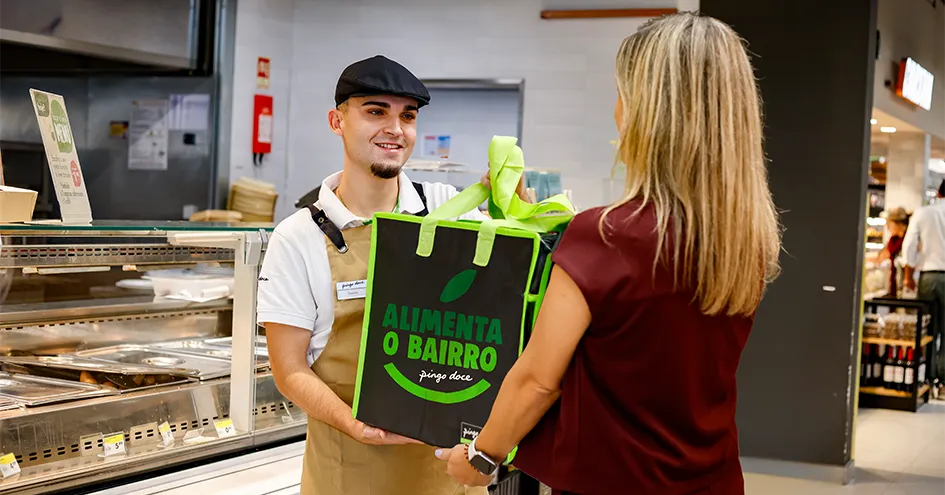
The overall increase in in‑kind food donations, particularly among the Companies in Portugal, is due to the “Alimenta o Bairro” (Feed the Neighbourhood) programme implemented by Pingo Doce and to Recheio’s efforts to extend the delivery of donations to all its stores. At Ara, the Company’s commitment to establishing long‑term partnerships with social institutions for the collection of surplus food, namely through the municipal authorities of Bogotá, has begun to yield positive results.
Food‑in‑kind donations follow specific procedures designed to prevent food waste. In addition to appointing staff responsible for handling products and delivering them to institutions, the Companies that donate food have processes in place for the entities that collect food in stores. Biedronka also has a donation allocation procedure that includes information on eligible types of donations, required documentation, roles responsible for organising the donation process, data reporting and social impact assessment.
Corporate area
The Group’s Holding supported 80 entities in 2025, most of which (61%) operate in the social field, with contributions amounting to close to 2.5 million euros. We maintained regular support to 23 institutions, in most cases for more than a decade. A highlight is the psychological support project for school‑aged children and young people who live in, or regularly attend, institutions in Portugal supported by the Group, provided on a continuous and structured basis. Under this initiative, and by creating synergies with internal programmes already in place for employees, we extended to these children and young people the possibility of benefiting from a protocol with a psychology and psychiatry clinic that provides weekly sessions – entirely free of charge – to 20 children and young people. This specialised support promotes equal opportunities and facilitates social integration, contributing to improved quality of life and greater emotional autonomy. Between 2023 and 2025, more than 750 consultations were delivered, with our support exceeding 35 thousand euros in 2025.
Jerónimo Martins Foundation
In addition to supporting the Group’s employees and their families, the Jerónimo Martins Foundation also develops social initiatives aimed at local communities. In this regard, the Foundation has started to manage two programmes that were previously under the responsibility of the Jerónimo Martins Group.
One of these programmes is the scholarships initiative, awarded to students in vulnerable situations who, as a result, are unable to complete their academic journey. These scholarships are granted through EPIS – Empresários Pela Inclusão Social (Businessmen for Social Inclusion), an association created in 2006 of which the Group was a founding member. Since the beginning of 2025, participation in EPIS projects has been transferred to the scope of the Jerónimo Martins Foundation.
Support for the Girl Move Association, which the Group has been providing continuously since 2016, was also transferred to the Foundation at the end of 2025.
Biedronka
Biedronka allocated 54.5 million euros in direct support, benefiting more than 690 institutions2. This amount decreased by around 2% compared with 2024, mainly due to the extraordinary support provided to families affected by the floods that hit central and eastern Europe in 2024.
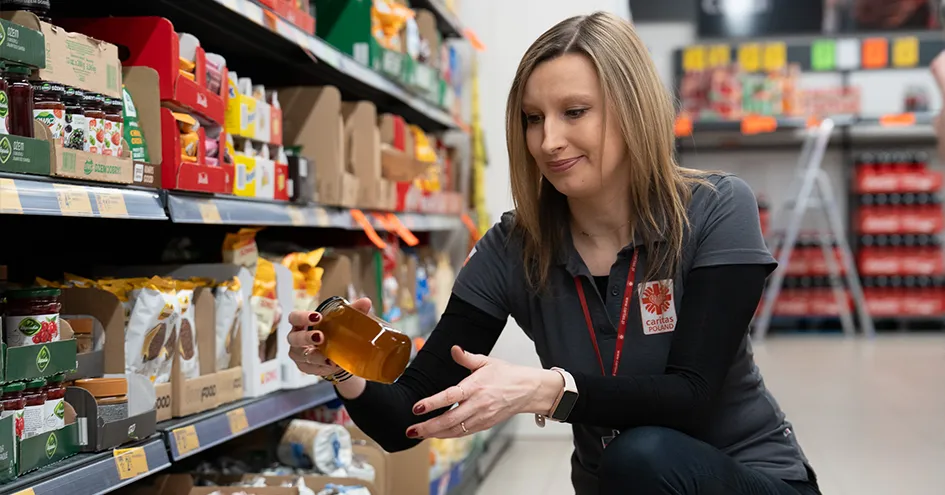
The Company donated more than 10,200 tonnes of food (4.7% less than in 2024) through 2,337 stores –60% of all its stores in Poland. Surplus food donations delivered to institutions near our stores and distribution centres benefited 144 organisations, among which the Federation of Polish Food Banks stands out, representing around 45% of total food donations. Despite Biedronka’s expanding store network, donated quantities have been declining due to the success of the incentive programme for purchasing products close to their expiry date and the collaboration with platforms that sell surplus at reduced prices. The decrease is also due to operational measures aimed at improving stock control and reducing losses, which led to a reduction in the surplus available for donation.
Biedronka has a strong tradition of supporting community and charitable initiatives during the Christmas season. In 2025, it supported the 29th edition of Wigilia Kościuszko (Kościuszko Christmas Eve), an event that provides hot meals and Christmas food baskets to people in vulnerable situations. It also supported the 24th edition of Opłatek Maltański (Maltese Christmas wafer), a charitable initiative with more than two decades organised by the Order of Malta, held annually in dozens of locations and offering festive meals, food baskets and social gatherings for people experiencing poverty, loneliness or disability. In addition to donating food products, the Company also provided financial support to ensure the project’s continuity in 2026. In total, Biedronka supported these initiatives with nearly 26 thousand euros.
In partnership with Caritas Polska, and to mark World Children’s Day, Biedronka offered 25,000 Happiness Boxes to children from economically vulnerable families supported by the institution. These boxes included Private Brand food products, such as fruit purées, dried fruit and snacks, as well as toys from the “Gang Produkciaków” (The Product Gang) campaign. Around 102 thousand euros were invested in this initiative.
Biedronka Foundation
345 million zloty (the equivalent to over 80 million euros) have been invested by the Foundation since 2020 to develop and support programmes mostly to fight poverty and malnutrition as well as loneliness and social isolation amongst older people, and also initiatives to promote health and well-being and respond to humanitarian emergencies (such as support for refugees from the war in Ukraine or for the victims of the dramatic floods in Poland in 2024).
In 2025, the year of its fifth anniversary, the Biedronka Foundation allocated over 18 million euros to its community support programmes and, together with 1,600 partner organisations, benefited over 140 thousand people, mostly older adults in line with its mission, but also children and youngsters.
The year’s impact highlights include:
-
over 27 thousand people supported with cards to provide for food;
-
over 46 thousand elders engaged in the “Food for Shared Moments” programme, developed in partnership with 1,200 Rural Housewives Clubs, resulting in more than 7,200 gatherings organized specially for seniors living alone, mainly in rural areas;
-
more than 179 thousand meals delivered to the homes of older people living in situations of poverty and isolation in the scope of the “Lunch Post” project;
Hebe
Hebe’s responsibility strategy is primarily centred on supporting women through the promotion of female entrepreneurship and assisting residents of orphanages as they transition to more independent lives. In 2025, the Company supported eight organisations with around 307 thousand euros – nearly four times the value registered in 2024. This increase reinforces Hebe’s position as a close partner of institutions that promote the integration of young people from disadvantaged backgrounds into society and the labour market.
Pingo Doce3
In 2025, Pingo Doce responded to requests from around 1,330 social institutions4 operating in the areas surrounding its stores. In‑kind food donations and monetary support – including fixed support, gift cards and support for environmental conservation projects – reached almost 30 million euros, more 55% than in 2024.
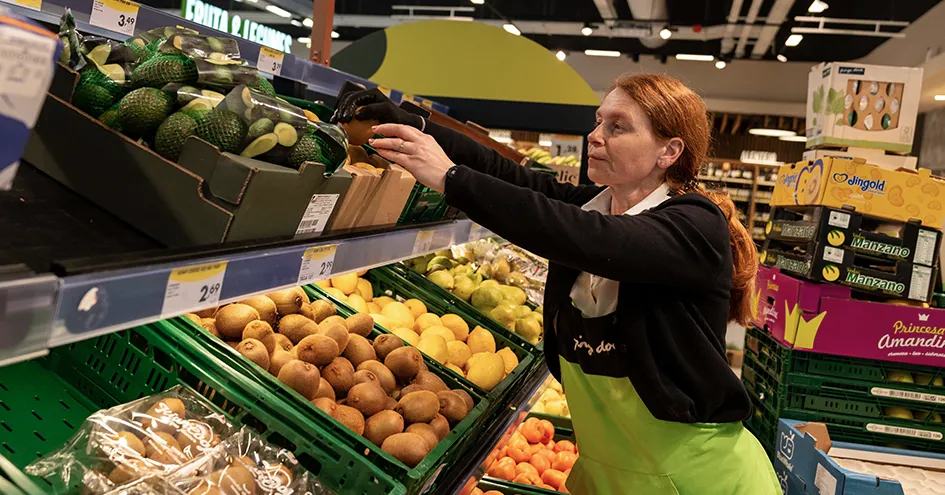
Food donations arising from surplus products in stores increased to 12 thousand tonnes, 68% more than in the previous year, driven by the implementation of the Alimenta o Bairro programme. Launched in 2024, this project seeks to reinforce the active role of our store teams in fighting hunger in the neighbourhoods where Pingo Doce operates while reducing food waste in stores. The programme’s effectiveness improved considerably thanks to measures such as:
expanding the range of items eligible for donation;
increasing the frequency of in‑store donation moments (two times a day, at the store opening and closure);
training and capacity‑building for partner institutions (271 throughout the year) and store teams on proper surplus collection procedures (18 training sessions during the year).
Alimenta o Bairro programme began with a questionnaire directed to supported institutions to understand their needs. Based on this feedback, Pingo Doce developed a series of workshops to better understand institutions’ views on support procedures, the most valued and needed food items, their capacity for collecting products in stores and ways to address identified improvement areas.
5 years of Bairro Feliz (Happy Neighbourhood)
Bairro Feliz is a programme that supports causes proposed by organisations and residents in the neighbourhoods surrounding Pingo Doce stores, awarding a donation of up to one thousand euros to the ideas that receive the most customer votes.
In the 2025 edition, the fifth with nationwide coverage, 2,581 applications were submitted. After the public voting phase, Pingo Doce granted more than 429 thousand euros to a total of 467 causes voted by customers, 31% of which related to education.
Since 2019, the programme has supported with 2.3 million euros, 2,417 causes from more than 14,400 applications. A total of 120 million customer votes have been recorded.
It is estimated that the winning Bairro Feliz projects have benefited more than 11,000 elderly people and 19,000 children – two of the priority groups in the Group’s initiatives to support affected communities.
Since December 2022, Pingo Doce has had a cooperation protocol with the National Republican Guard (GNR) to carry out proximity support actions for elderly people, children and vulnerable youth. In 2025, more than 6,100 baskets containing food, hygiene products and blankets were delivered to 1,800 elderly people. Additionally, five Christmas lunches were organised in the five districts where elderly loneliness is most severe. More than 500 elderly people took part in these gatherings, which involved local GNR units and Pingo Doce operational teams. Since 2022, more than 12,900 food baskets have been distributed through this partnership.
Recheio5
Recheio donated more than two million euros in food and monetary support, almost double the amount provided in 2024. The Company supported 166 organisations, the result of a more focused approach to allocating donations, in line with its priorities.
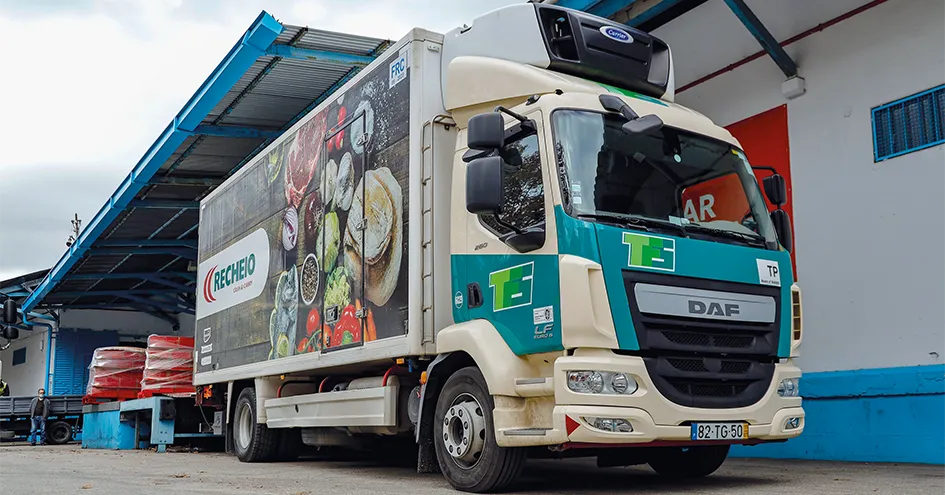
Food donations arising from surplus increased by almost 82%, reaching 638 tonnes, due to the consolidation of the donation programme and new operational measures that enhanced efficiency, safety and consistency. Throughout 2025, all stores were paired with a partner institution to collect surplus. The centralisation of donation requests through the Company’s website also allowed for the standardisation of procedures and improved request management. Mandatory training for store teams on food safety, product eligibility and proper storage practices contributed to more rigorous screening and a reduction of the food waste.
Jerónimo Martins Agro-alimentar
The various JMA companies allocated around 34 thousand euros in support to 11 social institutions located near their production units.
Ara
Ara supported the social action of 27 organisations with around 2 million euros – 24% more than in 2024. This increase, aligned with the objectives set for 2024-2026, reflects Ara’s commitment to being a key ally of the communities surrounding its stores, particularly considering that one in three people in Colombia lives in poverty – 17 million people with a monthly income below 100 euros6.
To effectively guide its efforts, Ara analyses the most relevant social indicators in the country, including monetary poverty, food insecurity and malnutrition. Before establishing formal partnerships, the Company engages with recognised organisations active in these areas, including experts, public bodies and NGOs – such as UNICEF, the Colombian Institute for Family Welfare, social integration departments and food bank associations. Ara also regularly consults the communities surrounding its stores, integrating local expectations into decision‑making whenever possible. This process underpins the creation of the “2 Millones de Razones” (2 Million Reasons) initiative, that under this communication theme, aggregates a diverse set of community support projects.
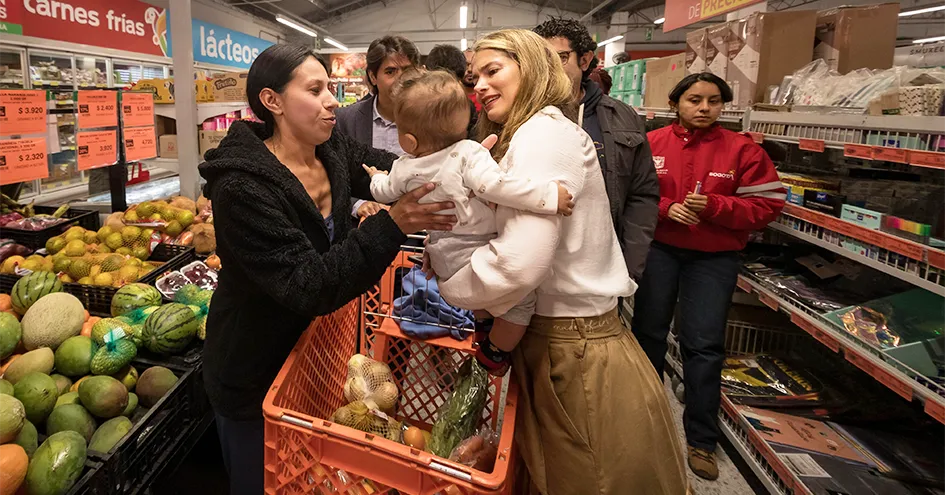
The project – an evolution of the 2024 “1 Millón de Razones” (Um Milhão de Razões) programme – is a unique social investment initiative in the country, providing 2 million euros in support to 19 social organisations through 14 projects. It is estimated to have benefited over 64 thousand people, particularly children, young people, mothers and the elderly. The initiatives under the project include programmes to reduce chronic undernutrition and malnutrition, improve living conditions for vulnerable populations and promote education as a key driver of social change.
Key initiatives include:
Associación de Bancos de Alimentos de Colombia (ABACO) – Tackling child undernutrition through surplus food donations, reinforced collection logistics and support for expanding the food bank network. The support benefited 31,940 children across various regions.
Fundación Alimentar – Improving food security among vulnerable communities. The project in Cartagena involved food donations suitable for consumption and a monthly contribution to strengthen logistics, distribution and direct support to families, benefiting 1,822 people.
SoyDoy – Addressing nutritional needs of families facing unemployment, benefiting 67 children at the Fusunga School in Soacha. The initiative included distributing food baskets and nutritional workshops for children and families, including guidance on adequate fruit and vegetable consumption to encourage healthy eating habits.
Cáritas – Promoting sustainable and solidarity‑based human development in vulnerable communities. The project involved the distribution of food baskets, support for the creation of 30 community enterprises and activities aimed at families’ economic autonomy, benefiting 808 people.
Fundación InmensaMente – Supporting the integral development of early childhood. The initiative included providing food for nutritional reinforcement, strengthening food security in educational and community spaces, and improving conditions for children aged 0 to 5, impacting 150 people.
Administrative Unit “Buen Comienzo”, Medellín – Ensuring that all children have access to early education, nutrition, health, protection and care, with a focus on those from vulnerable backgrounds. Ara contributes by providing food vouchers to 500 beneficiaries.
Bogotá’s Department of Social Integration – Focused on promoting healthy eating, Ara supported the improved health and nutrition of 386 pregnant women and new mothers through food vouchers and educational workshops on nutrition, early‑life care and preparing balanced meals.
1 This amount does not include the initial endowment of 40 million euros allocated to the Jerónimo Martins Foundation. The articles of association of Jerónimo Martins state that future endowments will result from the appropriation of profits, subject to approval by the Shareholders’ General Meeting.
2 Biedronka’s annual sustainability reports are available at csr.biedronka.pl.
3 Includes Lidosol.
4 See pingodoce.pt/sustentabilidade.
5 Includes Recheio Masterchef and João Gomes Camacho.
6 Source: National Administrative Department of Statistics (DANE), Colombia.