
Our Climate Ambition
The identification, assessment and management of climate-related risks and opportunities are central pillars of our Climate Transition Plan, guiding actions that strengthen business resilience and accelerate decarbonisation across the value chain. The plan defines our greenhouse gas (GHG) reduction targets and sets out the strategy towards carbon neutrality which is supported by a set of measures both in our own operations and in the supply chains of our Companies. We will continue to develop our Climate Transition Plan in order to strengthen our action regarding Scope 3 emissions, particularly with respect to our relationship with suppliers.
In 2024, our GHG reduction targets were validated by the Science Based Targets initiative (SBTi1), deepening our commitment to tackling climate change. This validation ensures that our goals are aligned with climate science, making us the first food retail company headquartered in Portugal to have its short-term and net‑zero targets recognised by that initiative.
In 2025, we achieved a milestone in the independent recognition of our sustainability practices: for the first time, we obtained an A rating from CDP in all three assessed dimensions – Combating Climate Change, Water Management as a Critical Resource and Management of Commodities Associated with Deforestation Risk (palm oil, wood/paper, beef and soy)2. This is the highest possible score and represents a level of excellence in disclosure, robust environmental governance and action towards climate resilience. This achievement places the Jerónimo Martins Group among the select group of 23 companies worldwide recognised with CDP’s top score and marks the first time a food retailer has reached this level of distinction globally.
Our governance model
The decarbonisation strategy and the management of climate-related risks and opportunities are monitored and supported by the Board of Directors, ensuring that climate matters are integrated into the corporate strategy across the entire value chain. Responsibility at Board level lies with the Group’s Chief Executive Officer, who is also Chairman of the Board of Directors and of the Corporate Governance and Corporate Responsibility Committee (CGCRC). This Committee, which includes members of the Board in its composition, oversees matters related to governance, ethics, social responsibility and the environment, including those related to climate change. More information on these bodies is provided in items 21. and 29. of “Corporate Governance” and in “Governance and Strategy”.
Climate-related risks and opportunities are addressed during the regular meetings of the sustainability committees of each of our Companies and in the CGCRC, which supports the Board of Directors by evaluating and submitting proposals for strategic guidance in the field of corporate responsibility. Mitigation and adaptation to climate change and the GHG emissions reduction targets defined in the Climate Transition Plan are included in these proposals.
The Board of Directors also defines the Group’s risk management policy and objectives. Climate-related risks, incorporated into environmental risks, are integrated into the Group’s multidisciplinary risk management process. Our risk management mechanisms, including environmental risks, are described in items 52., 53. and 54. of chapter “Corporate Governance”.
Climate matters are an integral part of the business strategy. The implementation of our climate commitments is supported by continuous investment with execution cycles aligned with the business plans, namely:
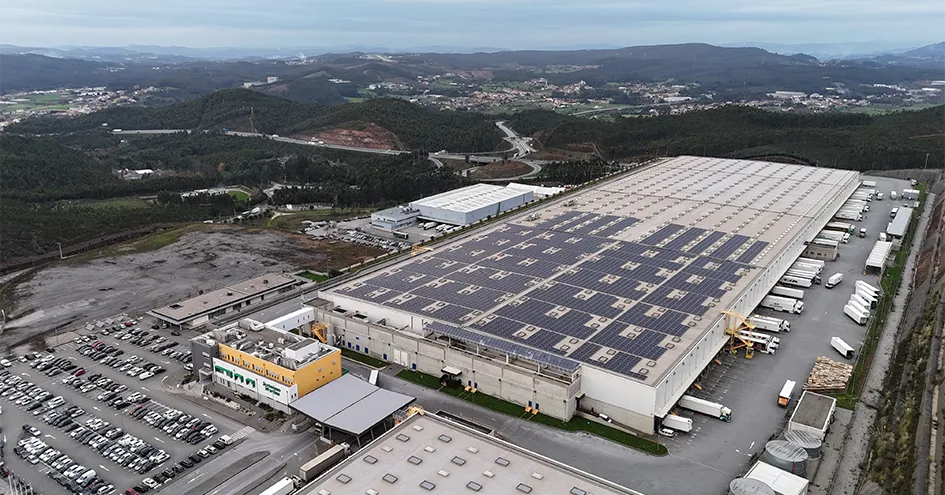
the installation of photovoltaic systems for self-consumption of renewable electricity in Poland, Portugal and Colombia;
the use of high‑efficiency refrigeration and freezing facilities and equipment, using natural refrigerant gases or gases with a low Global Warming Potential (GWP);
the procurement of certified renewable electricity to power our operations in Portugal and Poland.
Recent examples of integrating climate related considerations into governance mechanisms include the approval of our net‑zero emission targets and our short‑ and long‑term reduction targets (validated by the SBTi in 2024), as well as the decision to allocate to their implementation an average annual amount corresponding to approximately 10% of consolidated CAPEX.
Meeting climate-related objectives and other corporate responsibility goals forms part of the incentive scheme for employees whose roles influence the definition and/or implementation of the company’s climate commitments and targets. The ways in which we integrate sustainability-related performance into employee incentive schemes are detailed in section “Governance and Strategy”, and in item 69. “Description of the Remuneration Policy for the Governing Bodies” of chapter “Corporate Governance”.
Our strategy
We recognise the impact of our activities, as well as those carried out across our supply chains, on greenhouse gas (GHG) emissions released into the atmosphere. Our mitigation and adaptation strategy aims to reduce physical and transition risks through the sustained reduction of those emissions in our own operations and throughout our supply chain.
Aligned with a GHG reduction trajectory that limits the increase in global average temperature to 1.5ºC, our plan sets out intervention measures across our own operations (distribution centres, stores, manufacturing units and agri‑food units), in logistics, in the engagement with our suppliers (especially food suppliers) and in the development of products with lower associated carbon emissions.
To this end, we have set targets and measures such as the transition to renewable energy sources and improving the efficiency of our facilities, among others, which are described in sections 5.1. “Initiatives to reduce Scope 1 and 2 GHG emissions” and 5.2. “Initiatives to reduce Scope 3 GHG emissions” of our Climate Transition Plan, “Disclosures under Article 8 of Regulation (EU) 2020/852 (Taxonomy Regulation)” and “Sustainable Finance”. Progress on these actions, as well as on the remaining GHG reduction objectives, is presented in “Sustainability Commitments”.
Given the inevitability of certain climate change effects, we work to strengthen business resilience by promoting adaptation measures across our own operations and supply chain. We do this through the sharing of best practices and the identification of alternative sources or products. This close collaboration with our suppliers has also enabled us to incorporate into our assessment the mitigation and adaptation actions already implemented by them for ingredients with high climate risk.
Risk assessment also enables us to identify, within our operations, opportunities to reduce our carbon footprint and increase our energy production capacity (such as the generation of renewable energy for self‑consumption), as well as opportunities to develop innovative low‑carbon products that meet the expectations and needs of our consumers.
Initiative |
|
Target |
|
Action |
|---|---|---|---|---|
Transition to natural refrigerants and those with low Global Warming Potential (GWP) |
|
Use only natural or low-GWP refrigerants in all stores and distribution centres in Poland and Portugal by 2030 and in Colombia by 2035 |
|
|
Transition from fossil fuels |
|
Gradually increase the electrification of the light vehicle fleet and the use of biofuels |
|
|
Transition to renewable energy |
|
By 2030, 60% of the electricity consumed will come from renewable sources |
|
|
Increase the energy efficiency of our premises |
|
By 2026, reduce energy consumption by 10% compared to 2021 (per 1,000€ of sales) |
|
|
Managing climate-related risks and opportunities
As a food retailer with activities also in the agri‑food sector, we are substantially dependent on favourable climatic conditions, which may affect both our food and non‑food supply chains. Examples include changes in water availability for agriculture, disruption of logistics processes due to extreme weather events, and risks affecting our facilities, such as flooding.
The growing challenge that climate change poses to society and businesses, together with the complexity of assessing associated financial risks and opportunities, led us in 2020 to adopt the recommendations of the Task Force on Climate‑related Financial Disclosures (TCFD). These recommendations have since been incorporated into the standards of the International Sustainability Standards Board (ISSB), overseen by the International Financial Reporting Standards (IFRS).
Despite the high degree of uncertainty associated with assessing the impact of climate risks, the process we have implemented covers all stages of our value chain:
upstream (e.g., the impact of changing rainfall patterns on global food production chains);
own operations (e.g., CapEx impacts associated with the replacement of refrigeration systems);
downstream (e.g., the opportunity to increase the capital markets’ confidence in the company through optimized management of risks and financial opportunities related to climate change).
The assessment of short‑, medium‑ and long‑term climate‑related risks and opportunities covers the value chains of the Group Companies with a turnover above 100 million euros (representing 99.95% of total revenue) and involves our Private Brand and perishable goods suppliers.
This process, aligned with ISO 31000, includes a Risk Exposure Matrix with four levels calculated based on two dimensions: probability and impact. This methodological framework follows the same principles, assessment criteria, and monitoring cycles established within the Group’s global Risk Management system and is described here in greater detail in response to the specific reporting requirements on climate- and environment-related risks.
Climate risks are assessed by considering the exposure and sensitivity of the Group’s assets and activities to the identified climate hazards. The assessment incorporated geospatial data relating to the location of operations and relevant elements of the supply chain, enabling an analysis of exposure to climate hazards specific to each region.
Risks are classified according to five probability levels and five impact levels, assessed across four indicators (sales, EBITDA, safety and reputation), considering the probability, impact and duration of climate‑related risks. The likelihood of occurrence of each identified risk and the level and management of its impact, including financial impact, are analysed as part of our regular short‑, medium‑ and long‑term risk assessment procedures. Management may include mitigation (e.g., reducing energy consumption to lower exposure to increases in energy costs driven by regulation), risk transfer (e.g., insurance against damage caused by increasingly frequent extreme weather events) and maximising opportunities for both niche or traditional investors who choose to allocate capital based on our climate strategy and performance.
Risk reviews are conducted quarterly and, annually, a new global risk matrix is produced listing all risks and management measures, including those relating to climate risks. Depending on their nature, risks are assessed over the short (1-3 years), medium (3-10 years) and long (more than 10 years) terms, to fully capture the impacts of climate‑related physical risks, which may materialise further into the future. The short term is aligned with the Companies’ business cycle and is particularly relevant for assessing transition risks and opportunities. The medium term enables the analysis of risks and opportunities with the potential to influence the Group’s strategic development and encompasses operational climate targets with a horizon up to 2030, including the greenhouse gas emissions reduction targets approved by the Science Based Targets initiative. The long term is used to The long term is used to assess potential impacts on operations and the value chain, particularly chronic physical risks that affect long‑lived assets, and supports alignment with long‑term climate targets.
Risks and opportunities are considered material when they exceed an internally defined proportion of EBITDA, considering inherent risk3; in such cases, they are identified, assessed and managed at corporate level. For environmental risks, the qualitative indicators Reputation, Operational Criticality and Dependency are also decisive for classification. Climate‑related risks and opportunities that fall below the Group‑level materiality threshold are identified and managed at business unit/operational level. Identification includes monitoring country‑specific regulation (e.g., carbon taxes in Poland, Portugal and Colombia) and assessing the vulnerability of facilities to extreme weather events (e.g., mapping flood risk for stores and distribution centres).
In 2025, the assessment and management of risks and opportunities aimed to:
update the financial quantification methodologies for physical and transition climate risks across the Group’s value chain;
strengthen the understanding of the carbon footprint of the Companies’ key suppliers, promoting information‑sharing and the identification of GHG emission‑reduction opportunities;
enhance the assessment of specific risks related to certain ingredients – particularly those used in Private Brand and perishable products, in their production and processing.
These mechanisms are described in detail in items 52., 53. sub‑section “Environmental risks” and 54. of chapter “Corporate Governance”.
Identifying risks and opportunities
The identification of climate risks is based on quantitative scenarios using projections from the Intergovernmental Panel on Climate Change (IPCC), the International Energy Agency (IEA), and other data sources such as the FAO4. To strengthen the climate risk assessment process and meet the requirements of the Corporate Sustainability Reporting Directive (CSRD), our assessment considers the most recent data published by the IPCC, in line with CSRD requirements.
This analysis includes monitoring country‑specific regulation (e.g., carbon taxes in Portugal, Poland and Colombia), a detailed assessment of the vulnerability of facilities to extreme weather events (e.g., mapping flood risk for stores and distribution centres in the countries where we operate), energy market projections (e.g., trends in electricity demand and prices in Slovakia, the Czech Republic and Morocco), and market trend analysis, particularly consumer preferences (e.g., preference for local products, adoption of low‑carbon products or products aligned with flexitarian diets). For the measurement of impacts, the double‑materiality assessment described in “Impacts, risks and opportunities (IRO) management and double materiality assessment” is taken into consideration.
The financial risks and opportunities associated with climate change can be classified into two types:
physical (acute and chronic), such as increased procurement costs or disruptions to food supply chains due to changing climate patterns.
Transition (including policy and regulatory, market, technology and reputational risks), such as rising compliance costs related to regulatory restrictions on the use of high global warming potential (GWP) refrigerant gases in cooling and refrigeration equipment.
In 2025, we completed the first full update of our climate scenario analysis, initially conducted in 2020. Although annual revisions have been conducted since then, the 2025 update enabled a qualitative and quantitative assessment across three-time horizons: short term (2030), medium term (2040) and long term (2050). The methodology for calculating the mitigation and adaptation measures implemented in our own operations and supply chain was also revised, improving the quantification of inherent and residual risk5.
The analysis was based on three scenarios, reflecting different trajectories for climate policy developments and for the physical impacts of climate change:
“Net Zero 2050” scenario – assumes a rapid and effective transition to a low‑carbon economy, aligned with the objectives of the Paris Agreement. It enables an assessment of the resilience of the Jerónimo Martins Group’s business strategy in a context of strong climate action. This scenario highlighted transition risks, particularly those associated with country‑specific energy markets and technological risks, such as the early replacement of high‑GWP refrigeration equipment.
Delayed transition scenario – represents a moderate‑warming scenario in which climate policies achieve partial success in reducing emissions. This scenario enables an assessment of business strategy resilience in a context of gradual, but not fully effective, climate policy evolution.
Current policies scenario – assumes the continuation of existing climate policies without significant reinforcement. It reflects a future with high physical risks and reduced transition risks, enabling an assessment of business strategy resilience in a world where the physical impacts of climate change are more severe. This scenario highlighted physical risks, with particular focus on the exposure of our operations and supply chains to chronic risks (e.g., changing precipitation patterns and their impact on agricultural productivity) and acute risks (e.g., heatwaves affecting the performance of in‑store refrigeration systems).
The assessment of physical risks was carried out using projections from the climate models of the IPCC’s Sixth Assessment Report, applying three scenarios:
a sustainable development scenario with limited warming (SSP1‑2.6);
an intermediate scenario with moderate mitigation (SSP2‑4.5);
an intensive fossil‑fuel‑based development scenario (SSP5‑8.5).
The assessment of transition risks was based on three projections from the 2024 NGFS6 Scenarios for Central Banks and Supervisors:
Net Zero 2050 (1.5°C);
Delayed Transition;
Current Policies.
The assessment completed in 2025 used data specific to the Companies’ own operations and supply chain, including the use of geospatial coordinates for our facilities and regional‑level data for the origins and processing locations of ingredients:
Own operations – all Company facilities were assessed (food and specialised stores, distribution centres, central kitchens and industrial units, across approximately 6,400 locations in Poland, Portugal and Colombia), as well as a high‑level assessment for the Czech Republic and Slovakia. Projections of critical climate variables (e.g., regional heating degree‑days) and energy prices in each country were analysed, along with the profile of critical equipment (e.g., vulnerability of store refrigeration systems). The potential financial impact was expressed as a climate value at risk: additional investment (CapEx) for early equipment replacement; additional operating costs (OpEx) relating to energy and maintenance; revenue loss due to temporary store closures. Due to increasing pressure on water resources and given the high dependency of our agri‑food production area, we reassessed the level of water stress associated with the locations of the Companies’ facilities, with particular focus on JMA’s farming operations.
Supply chain (origin and processing of ingredients) – an assessment was conducted of the food portfolio of our banners in Poland, Portugal and Colombia (including Private Brand and branded products, representing around 80% of sales), based on a representative sample of 50 items per banner and a detailed analysis of 22 of their ingredients. Each ingredient was assigned a risk score combining the probability of climate‑related events in origin/processing countries (e.g., monthly variations in temperature and precipitation) with the product’s specific sensitivity (e.g., optimal temperature range and water consumption for crop or animal growth, critical period and tolerance). The results were extrapolated to groups of similar products. The potential financial impact was expressed as a climate value at risk: sales value of the product groups with the two highest risk levels.
The main risks and opportunities identified for our businesses are related to the origin of the ingredients used and to exposure to physical climate risks, such as short‑term extreme events characterised by increased frequency and severity (e.g., heatwaves, wildfires or floods), as well as chronic climate risks, characterised by long‑term changes in climate patterns, such as rising average temperatures, altered precipitation patterns and sea‑level rise. The risks and opportunities associated with the transition to a low‑carbon economy were also assessed which, among the risks related to the energy transition, include for example the increase in energy costs associated with meeting the targets established by the Paris Agreement.
As a food retailer, we offer a highly diversified product portfolio and have a mature and efficient logistics network, which ensures the continuity of the offer in our stores of similar or alternative products in the event of isolated supply disruptions. Increased production of certain food commodities in regions where climate change has enabled productivity gains, as well as the development of innovative and alternative products, constitute the main opportunities that the Companies have been exploring in recent years. One example is the growth in fruit and vegetable production in Poland.
From our assessment, it follows that the inherent physical and transition risks (i.e., without considering mitigation measures) in our own operations were not identified as material. With regard to the risk of extreme heat affecting refrigeration equipment in our operations – where we observed an increase in financial impact, although not material –over the medium and long term under the net‑zero and delayed‑policies scenarios, we assessed the accelerated depreciation of assets (refrigeration equipment) due to reduced lifespan and the potential increase in operating expenses related to cooling, resulting from higher cooling needs. The transition risk associated with energy markets (i.e., energy costs) represents a moderate, non‑material financial risk over the medium and long term under both the “Net Zero 2050” and “Delayed transition” scenarios.
Across our own operations, the transition of refrigeration systems to low‑GWP refrigerant technologies is expected to generate a moderate financial impact in the short and medium term. Colombia represents the greatest challenge, as the supply and maintenance network for this type of technology is still under development.
Within our supply chain, the physical and transition risks classified as material were extreme temperatures, chill hours7 and changes in precipitation pattern, all of which have a particularly significant impact on primary production. In the case of extreme temperatures, there is a long‑term trend towards a reduced impact from extreme cold.
The expected rise in the intensity and frequency of extreme heat (days with temperatures above 35°C) will affect crop and livestock productivity as early as 2030, with potential temporary disruptions in the supply of certain products. In processing activities, extreme heat is expected to directly affect the efficiency of processes dependent on cold chains, with negative impacts on energy consumption, in the systems’ lifespan and operating conditions, and effects on food quality and/or increased risk of the spread of micro‑organisms (e.g., bacteria and fungi). In line with the different energy‑transition scenarios, the increase in energy consumption represents a material financial risk across all time horizons and climate scenarios assessed.
Related to the gradual increase in temperature, the reduction in the number of accumulated chill hours leads to changes in the production cycle, particularly in flowering and fruit‑setting stages. The crops most affected are those that depend on a high number of chill hours to complete dormancy and ensure adequate fruiting.
Changes in precipitation patterns, whether through increased intensity and frequency of floods or droughts (depending on the region of the world), may lead to reduced productivity of certain crops or product losses, directly affecting food security as early as 2030. This impact is already evident in crops such as cocoa: more than 60% of global production is concentrated in West Africa, where successive episodes of extreme rainfall and severe drought have favoured the spread of diseases (e.g., black pod), leading to tree loss, reduced harvests and increased costs along the value chain.
Regarding reputational risk, this is mainly linked to stakeholder expectations on carbon emissions reduction, biodiversity preservation and fighting deforestation. These are also cross‑cutting concerns within our Corporate Responsibility strategy and are reflected in the development of action plans with defined objectives, alongside participation in coalitions such as the Science Based Targets initiative (SBTi) and The Consumer Goods Forum Forest Positive Coalition of Action.
Despite the risks identified, we consider that the implementation of mitigation and adaptation measures by the agricultural and industrial sectors, such as those identified in the table below, will enable timely and balanced management of these risks. At the same time, some of the risks identified may also represent opportunities in certain regions of the world. An example is the increase in average atmospheric temperatures, which could lead to higher food production, particularly when accompanied by the implementation of mitigation and adaptation measures by the agri‑food industry.
Category |
|
Opportunities |
|
Impacts |
|---|---|---|---|---|
Energy efficiency |
|
Reduction of operational and infrastructure costs through improved energy management, including the modernisation of equipment (e.g., efficient refrigeration systems, LED lighting) and reduced consumption in stores and distribution centres. |
|
|
Renewable energy |
|
Replacement of conventional energy sources with renewable energy sources (e.g., installation of photovoltaic panels for self-consumption). |
|
|
Infrastructures |
|
Investment in infrastructure that is resilient to extreme weather events (e.g., cooling systems adapted to extreme heatwaves, preventing interruptions and ensuring operational autonomy). |
|
|
Products |
|
Diversification and development of the product portfolio to include low‑carbon alternatives, more resilient varieties (e.g., drought‑resistant crops to reduce supply disruptions) and identification of alternative sourcing options. |
|
|
Supply chain |
|
Engagement with suppliers to support the decarbonisation of the supply chain (e.g., collaboration to adopt low‑carbon practices in primary production and processing). |
|
|
Market |
|
Diversification of financing instruments (e.g., green loans) with sustainability‑linked criteria to support investments in renewable energy, resilient supply chains and low‑carbon product development in retail. |
|
|
We believe that our influence in promoting the adoption of good practices must be reflected in our own operations. That is why we have developed a Water Management Plan for JMA’s agricultural and industrial operations which, due to their nature, have significant water consumption when compared with our distribution activities. The Plan defines measures aimed at increasing the resilience of operations during periods of severe drought, enabling improved monitoring of consumption and higher water‑use efficiency in production processes.
We also publicly and comprehensively report climate‑related risks and opportunities in our responses to the CDP.
Regarding business opportunities within our supply chain, we continue to support and encourage investment by our suppliers in the production of renewable energy for self‑consumption, particularly for energy‑intensive processes (e.g., the processing of raw materials such as coffee bean roasting or sugar refining), and in the production of raw materials, where we highlight the growing use of low‑carbon fuels in agricultural machinery and the valorisation of residues for the production of those same fuels. These investments by our suppliers in low‑carbon technologies are essential to reducing the indirect emissions associated with our purchases of goods and services. The adoption of new varieties, investment in practices and technologies that make production more resilient to climate change, and the diversification of countries of origin are opportunities identified by producers.
Country where we operate |
|
Stage of the value chain |
|
Opportunity |
|---|---|---|---|---|
Portugal |
|
Primary production |
|
Production and commercialisation of improved fruit and vegetable varieties that are more resilient to climate change. |
Portugal |
|
Primary production |
|
Production in greenhouses or covered facilities that ensure out‑of‑season supply and enable access to new markets. |
Portugal |
|
Primary production |
|
Development of low‑carbon feed formulas for meat and fish production. |
Portugal |
|
Primary production |
|
Increased soil fertility and yield through the adoption of regenerative agriculture practices. |
Poland |
|
Primary production |
|
Development of low‑carbon products based on plant protein for markets with emission‑reduction targets. |
Poland |
|
Processing |
|
Reduction of energy costs through investment in cogeneration systems and photovoltaic energy for milk processing. |
Portugal |
|
Logistics |
|
Reduced exposure to fuel price fluctuations through electrification and the use of renewable fuels (e.g., biofuel blends) in the heavy and light fleet. |
Metrics, targets and progress
As part of our climate risk and opportunity management and our Climate Transition Plan, we have set short‑, medium‑ and long‑term targets, which can be consulted in section 4. “Our targets”, of the Climate Transition Plan and in “Sustainability commitments”.
In 2026, our objective is to continue advancing the assessment of climate‑related financial risks and opportunities and to strengthen collaboration across the supply chain in order to:
engage suppliers in the Companies’ decarbonisation strategy and identify initiatives that support the transition to a low‑carbon economy;
assess the maturity of our suppliers’ carbon footprints to improve the calculation of emissions associated with the purchase, use and end‑of‑life of our Companies’ products.
expand the number of Private Brand and perishable products subject to the identification and assessment of climate‑related risks and opportunities through the integration of new ingredients and origins;
increase the accuracy of residual‑risk calculation by collecting information on mitigation and adaptation measures identified within our supply chain;
map and quantify business opportunities associated with the development of new products and identify alternative origins or potential increases in production of certain crops in regions with favourable climatic conditions.
1 For more information, visit https://sciencebasedtargets.org/
2 Our CDP responses are available on our website.
3 Inherent risk refers to the level of risk without considering any response strategies to a given climate-related risk (physical or transition).
4 Food and Agriculture Organization of the United Nations (FAO).
5 Inherent risk corresponds to the level of risk that exists before any mitigation or adaptation measures are applied. Residual risk reflects the risk that remains after the implementation of such measures, including energy‑efficiency initiatives.
6 Network for Greening the Financial System.
7 Chill hours refer to the number of hours during which the temperature remains below a certain threshold, required to break the dormancy of certain plants.