
In line with the strategy to expand and grow our operations, we have implemented a set of actions aimed at reducing water consumption and mitigating the risk of scarcity in the regions where we operate, particularly those facing higher water stress. This is why our refurbishment and store‑opening plan includes measures such as:
the installation of flow restrictors;
the use of taps with timers;
the collection of rainwater for irrigation or equipment cleaning;
the treatment of wastewater to prevent the deterioration of water quality, among other measures.
Additionally, we promote the adoption of specific measures within our agri‑food operations, including:
investment in technologies that detect irrigation needs based on weather conditions and soil moisture in livestock and farming units;
the adoption of night‑time or drip irrigation to minimise evaporation losses in agricultural units;
the incorporation of off‑calibre fruit and vegetables and by‑products from the food industry into animal feed, as these contain high moisture levels, thereby reducing the need for drinking water.
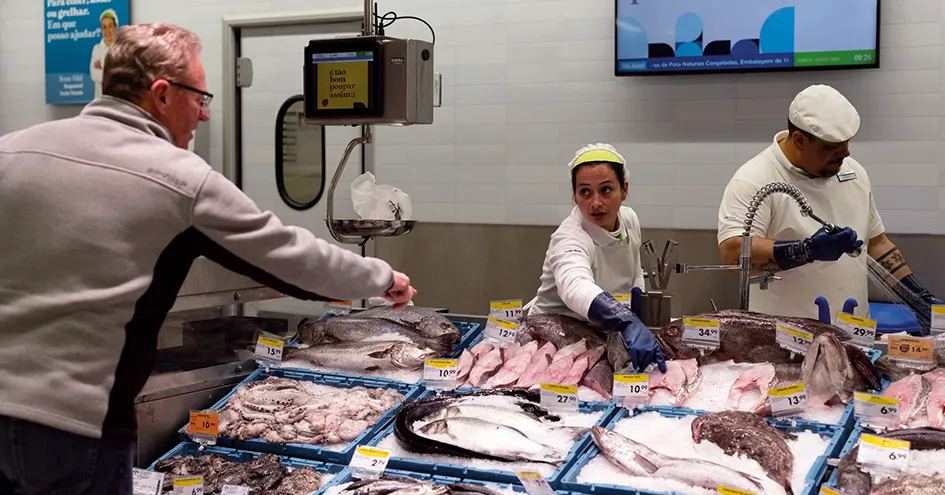
We complement these measures with awareness‑raising initiatives for our employees, namely through the projects “Water and Energy Consumption Management Teams” at Pingo Doce and Recheio, “Todos pelo Ambiente” at Pingo Doce, and “Let’s Go Green” in our office buildings in Portugal, Poland and Colombia. These projects are described in Support for biodiversity protection and ecosystem regeneration projects”.
Alongside our own operations, we also implement measures to optimise water consumption and improve water quality within our supply chains. The sustainable agriculture project, which we have promoted among our fruit and vegetable suppliers since 2014, and the environmental audits through which we assess both water consumption and the way our suppliers and service providers mitigate potential water pollution impacts, are two relevant examples. These initiatives are detailed in “Supplier awareness and training”. Information on our Sustainable Fishing Strategy is presented in “Sustainable Fishing Strategy”.