
According to the Food and Agriculture Organization of the United Nations (FAO), the main driver of tropical forest destruction is the expansion of agricultural activities. Deforestation and land‑use conversion remain the factors that most contribute to the loss of forest areas and biodiversity.
As a food retailer, we recognise that much of our supply chain depends on raw materials of agricultural origin, directly or indirectly linked to forests. The protection of terrestrial ecosystems with High Conservation Value (HCV) contributes to carbon sequestration and climate regulation.
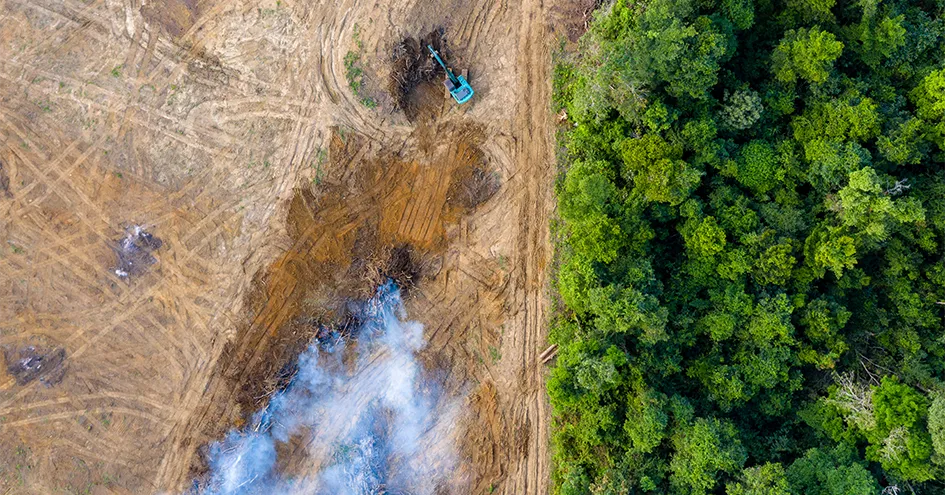
For these reasons, since 2019 we have been part of the Forest Positive Coalition of Action (FPCoA), an initiative of The Consumer Goods Forum, with the aim of strengthening responsible management of the raw materials most associated with deforestation. This commitment covers our Private Brand products and perishable items that use palm oil, paper and timber, soy or beef in their composition. The Coalition acts as a mobilisation platform for companies to implement coordinated and individual measures to eliminate deforestation and ecosystem conversion from the supply chains of these four commodities. At the same time, the Coalition promotes the adoption of sustainable management, conservation and forest‑restoration practices, ensuring that these efforts are aligned with respect for human rights.
Commitment to Fighting Deforestation Recognised in 2025
In 2025, we reached an important milestone in the independent assessment and recognition of best practices in sustainability and corporate citizenship. We were awarded the highest score (A) by CDP (Disclosure Insight Action) for our management of commodities associated with deforestation risk (Forests programme), namely palm oil, soy, beef and timber/paper.
This is the first time globally that a multinational food retailer has achieved this level of distinction, attesting to the robustness and consistency of our commitments and actions in this field.
Although we committed to ensuring that, by the end of 2025, the palm oil, soy, paper and timber, and beef present in our Private Brand and perishable products would be free from deforestation and ecosystem conversion (DCF – Deforestation and Conversion Free), we acknowledge that, despite the efforts we have been undertaking with our suppliers, it has not yet been possible to fully achieve this target.
In this regard, we are aligning our next steps with the FPCoA, recognising that full compliance with DCF objectives requires a continuous and structured journey, grounded in traceability, monitoring, responsible sourcing and producer support – all essential pillars for progress beyond 2025.
In parallel, we follow the guidelines from the Accountability Framework initiative (AFi1) – a collaborative initiative bringing together environmental and social organisations to promote ethical and deforestation‑free supply chains – that emphasises that, even when proposed targets are not fully achieved, the priority must be to accelerate progress through improvements in traceability, supplier engagement and investment in critical landscapes. These are actions we have continuously developed.
Unlike sectors with simpler and relatively concentrated supply chains, our operations, as is typical in the food retail sector, tend to rely on long, fragmented and multi‑tier supply chains – particularly for non‑food products and processed foods. In these complex supply chains, such as soy used in animal feed (e.g., feed given to a laying hen that produces eggs later used to prepare a product sold in our stores), or palm‑oil derivatives incorporated indirectly through processed ingredients – often an ingredient within another ingredient (e.g., palm oil in margarine used to make a bakery product) – or through by‑products whose traceability back to source is highly complex, ensuring full DCF compliance becomes significantly more challenging.
Additionally, for palm oil and soy, the limited market availability of physically certified volumes (“Identity Preserved” and “Segregated”), or certification availability, in the case of beef, have not allowed us to mitigate the distance between our operations and the production of these ingredients. This structural reality creates a difference in the capacity to ensure full compliance with DCF criteria at the same pace as industries with more direct links to primary production.
Despite these challenges, we will continue to map the presence of ingredients associated with deforestation in our Private Brand and perishable products, collecting information from suppliers regarding origin and sustainability certification, as well as their respective policies to fight deforestation. Nevertheless, we recognise that the full verification of DCF status – particularly for raw materials present in long supply chains with multiple intermediate processing stages – requires a joint sector‑wide effort, greater upstream transparency, and the development of technological and regulatory solutions that make it possible to achieve this objective in a robust, verifiable, effective and efficient way.
Direct and complex supply chains
As a food retailer, our supply chains vary depending on the type of product, the origin of raw materials and the number of actors involved. In general, supply chains can be classified as direct or complex.
Direct supply chains are characterised by a relatively simple structure and fewer intermediaries in the value chain. Raw materials are usually sourced directly from producers, processors or first‑tier suppliers (Tier 1). Because the flow of raw materials involves fewer steps, traceability is simpler, and the supply chain can more easily be monitored back to the farm or production unit.
In contrast, complex supply chains involve multiple tiers and intermediaries, including traders, aggregators, processors, importers, manufacturers and/or brand owners. Due to the involvement of many actors, complex supply chains are inherently more structured. Traceability is more difficult, particularly in upstream activities such as land‑use change, harvesting or feed production. Information on the origin of raw materials may become incomplete or be lost as products move along the value chain.
Regarding our direct supply chains, for each of the material commodities associated with deforestation, we consider the following assumptions:
Palm oil: products containing crude or refined palm oil and palm kernel oil as an ingredient.
Soy: products containing a minimum of 5% soy as an ingredient. Categorising products according to the CGF Soy Measurement Ladder, the following are included:
Tier 1: soy and soy derivatives purchased directly (e.g., soy drinks, soy sauces, soybean oil, edamame), where products contain more than 95% soy;
Part of Tier 5: soy or soy derivatives that may be present in the supply chain, including soy lecithin in chocolate, soybean oil in margarine, as well as soy by‑products in cosmetics and personal‑care products where soy represents between 5% and 95% of total product composition.
Timber: all products containing timber as an ingredient.
Beef: products containing a minimum of 5% beef.
In turn, complex supply chains can be categorised as follows:
Palm oil: products containing palm‑oil derivatives or other fractions as an ingredient.
Soy: products containing animal protein from animals fed with soy, and products containing less than 5% soy as an ingredient. Categorising products according to the CGF Soy Measurement Ladder, the following are included:
Tier 2: soy used in feed for animals such as cattle, pigs, poultry, aquaculture fish and other species; fresh meat and fish products.
Tier 3: soy used in the feed of laying hens and dairy cows, and other milk‑producing animals, for the production of eggs and dairy products (e.g., yoghurts and milkshakes), where more than 95% of the product consists of eggs or dairy.
Tier 4a: soy used in the feed of animals whose meat is incorporated into processed food products (such as ready meals, sausages, etc.), where that meat or fish represents less than 95% of the final product.
Tier 4b: soy used in the feed of animals whose meat is incorporated into food products (such as cakes, smoothies, ice creams, etc.) and for which eggs and dairy account for less than 95% of the total product.
Part of Tier 5: soy or soy derivatives that may be present in the supply chain, including soy lecithin in chocolate, soybean oil in margarine, and soy by‑products in cosmetics and personal‑hygiene products in which soy represents less than 5% of the total product composition.
Timber: packaging containing virgin paper fibres (primary, secondary and tertiary) used to pack the products sold in our stores.
Beef: products containing more than 5% beef.
|
|
Total quantity (tonnes) |
||||||||||
|---|---|---|---|---|---|---|---|---|---|---|---|---|
Main agricultural commodities with deforestation risk in Private Brand and perishables |
|
2025 |
|
2024 |
|
Δ 2025/2024 |
||||||
Palm oil |
|
92,473 |
|
77,667 |
|
19.1% |
||||||
Soy |
|
511,370 |
|
513,486 |
|
-0.4% |
||||||
Soy (direct) |
|
7,985 |
|
21,061 |
|
-62.1% |
||||||
Soy (indirect)1 |
|
503,385 |
|
492,425 |
|
2.2% |
||||||
Paper and timber |
|
234,120 |
|
212,152 |
|
10.4% |
||||||
Paper and timber (products)2 |
|
185,111 |
|
170,751 |
|
8.4% |
||||||
Paper and timber (packaging)2 |
|
49,009 |
|
41,401 |
|
18.4% |
||||||
Beef |
|
40,895 |
|
40,337 |
|
1.4% |
||||||
|
||||||||||||
|
|
Total quantity (tonnes) |
|---|---|---|
Direct and complex supply chains by commodity |
|
2025 |
Palm oil |
|
92,473 |
Direct chain |
|
81,323 |
Complex chain |
|
11,150 |
Soy |
|
511,370 |
Direct chain |
|
5,972 |
Complex chain |
|
505,398 |
Paper & Timber |
|
234,120 |
Direct chain |
|
185,111 |
Complex chain |
|
49,009 |
Beef |
|
40,885 |
Direct chain |
|
39,347 |
Complex chain |
|
1,548 |
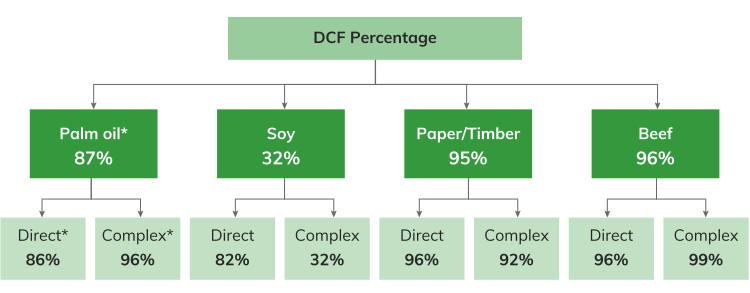
Given the structural differences between direct and complex supply chains, the outcomes of implementing DCF commitments can vary significantly. In direct supply chains, proximity to suppliers and greater operational visibility enable faster and more consistent progress towards DCF, supported by higher levels of traceability and control. In contrast, in complex supply chains – as is particularly evident in the case of soy, characterised by multiple intermediaries, dispersed origins and limited upstream verification capacity – results tend to be more variable and harder to consolidate.
DCF Status
In the chart below, the DCF percentages are outlined by value chain, clearly illustrating the differences in risk exposure between direct and complex chains for each commodity. This analysis enables us to understand and prioritise different traceability, verification and mitigation strategies tailored to the specific complexity of each supply chain.
Palm oil
The 19.1% increase in palm‑oil consumption in our Private Brand products is explained by the change in the composition of edible oils (more palm and less soy), particularly at Ara, where around 90% of the total palm‑oil volume is used in cooking vegetable oils – a product that is especially relevant to consumers in Colombia.
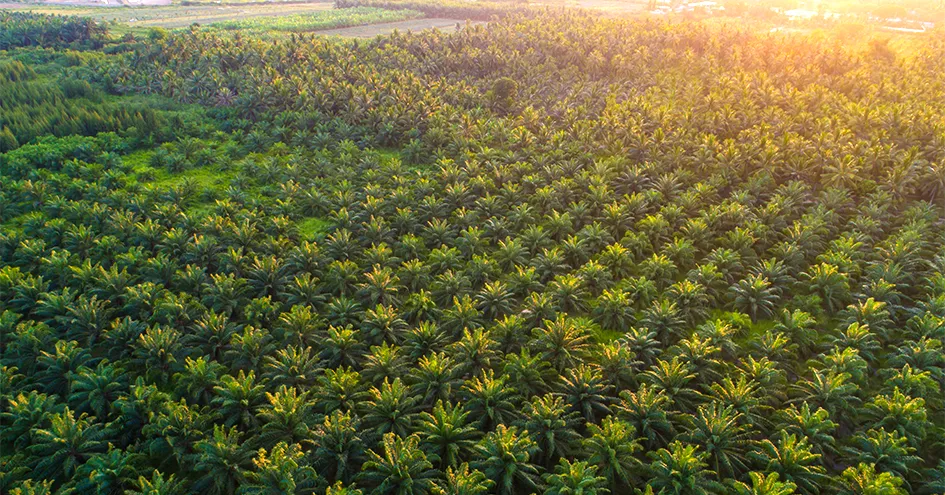
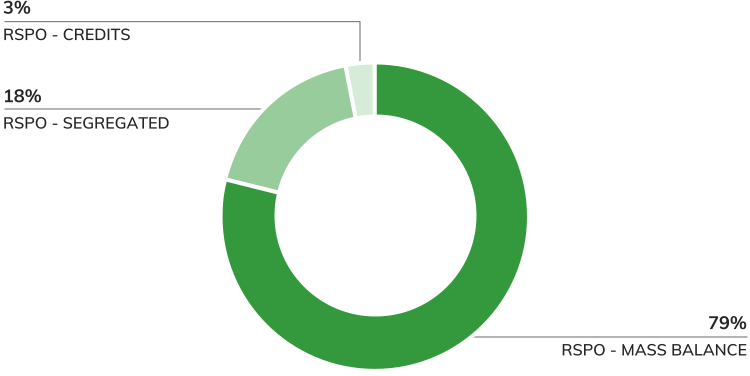
In 2025, 100% of the palm oil used in Private Brand and perishable products in Poland and Portugal held RSPO (Roundtable on Sustainable Palm Oil) certification, with the vast majority certified under the Mass Balance and Segregated schemes2.
RSPO schemes in Portugal and Poland (2025)
Although Colombia is one of the world’s largest producers of palm oil, the proportion of this ingredient that is certified by RSPO remains low. This constraint, combined with our commitment to encouraging local sourcing whenever possible in the countries where we operate, creates a particularly challenging context for increasing the RSPO certification of Colombian‑produced palm oil incorporated into our products. To address this challenge, since 2021 Ara has been part of the Acuerdo de Voluntades para la Deforestación Cero en la Cadena de Aceite de Palma en Colombia, a government‑led initiative that aims to ensure that palm oil used in the country does not contribute to deforestation. The agreement brings together various civil‑society organisations – such as RSPO, Proforest, Tropical Forest Alliance and WWF – and promotes collective actions to improve traceability down to the plantation level, ensuring that local production is not associated with ecosystem conversion. The initiative also seeks to ensure that palm oil imported into Colombia holds a sustainability certification such as RSPO. This framework has gradually strengthened the monitoring and verification mechanisms relating to deforestation associated with this ingredient in Colombia.
In 2025, 90% (15 p.p. more than in 2024) of the palm oil used in Ara’s Private Brand and perishable products originated from Colombia, of which around 41% was RSPO certified (25 p.p. less than in 2024). In 2025, we were able to trace 94% (1 p.p. less than in 2024) of the Colombian palm oil used in Private Brand and perishable products back to the plantation region where it was produced. Based on this information, we confirmed that the palm oil originated from the Departments of Norte de Santander, Santander, Bolívar, Cesar, Magdalena, Meta and Casanare, located across the country’s four producing zones (Central, Eastern, Southwestern and Northern Zones), and from 18 processing mills operating in Colombia. However, only 0.75%3 of the deforestation identified by Colombian public authorities was associated with palm oil. The combination of high traceability levels, increasing RSPO certification and the low deforestation rate associated with palm oil in Colombia validates our DCF strategy for this commodity in the country.
Regarding the palm oil used in Ara’s Private Brand and perishable products that did not originate from Colombia, we will continue to work closely with suppliers to increase RSPO certification levels for imported palm oil, with the commitment to ensuring that it is not associated with deforestation or the conversion of HCV ecosystems.
Assuming that:
for countries considered at risk of deforestation and conversion, physical certification schemes up to the “Segregated” level are considered DCF;
6% of our Colombia‑origin consumption carries a potential deforestation risk (we adopt a conservative approach, as it was not possible to map 100% of consumption to the plantation level);
we applied the deforestation rate associated with Colombian palm oil (0.75%) – identified by public authorities – to 94% of our consumption (the portion we were able to trace back to the plantation area where it was produced);
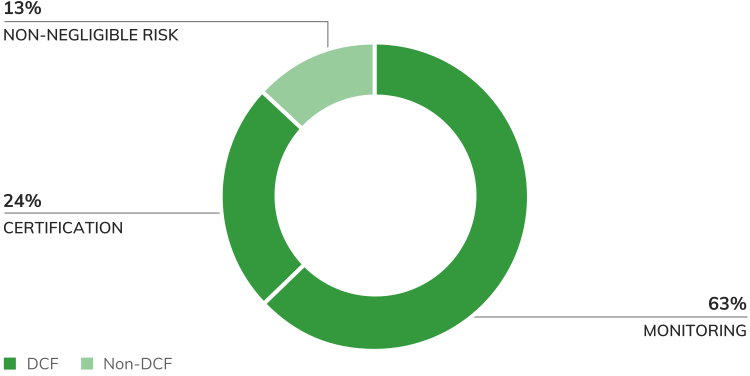
we can estimate that 68% (62,885 tonnes) of our total palm‑oil consumption in 2025 was free from deforestation and the conversion of High Conservation Value ecosystems – 6% (4,067 tonnes) through DCF physical certification schemes and 94% (58,817 tonnes) controlled through traceability and DCF verification.
Breaking down our total consumption – 81,323 tonnes in direct sourcing and 11,150 tonnes in complex sourcing – we find that:
in direct supply chains, 73% of the volume (58,963 tonnes) meets the DCF criteria;
in complex supply chains, 35% of the volume (3,921 tonnes) is aligned with our DCF assumptions.
In the case of direct supply chains, the fact that 73% of the volume meets DCF criteria largely reflects that palm oil is predominantly used as a direct ingredient in edible oils at Ara.
In complex supply chains, the volumes considered DCF are mainly limited by greater value‑chain fragmentation and related upstream traceability constraints, as well as by the difficulty in securing RSPO‑certified segregated palm oil for derivatives – widely used as ingredients in processed products.
However, when considering the volumes of palm oil certified to the RSPO “Mass Balance” level, 80,842 tonnes (around 87% of our total consumption in 2025) would be free from deforestation and the conversion of High Conservation Value ecosystems.
The inclusion of the “Mass Balance” certification model in the DCF calculation is a measure that values the investment and commitment of our Private Brand and perishable suppliers, as it requires additional financial and operational efforts from them. These efforts reflect their commitments to reducing the risk of deforestation and conversion, as well as the respect for human rights and for preserving biodiversity within the palm‑oil supply chain. By acknowledging these contributions, we also reinforce progress towards more responsible production practices aligned with internationally recognised sustainability standards.
DCF Status - Palm Oil (2025)
Soy
Due to its global production volume and widespread use, soy plays a central role among agricultural commodities. In the context of our Private Brand and perishable products, soy appears in two distinct forms: it is used directly as an ingredient in food products (such as beverages, oils and other soy derivatives), and it is present indirectly, as a fundamental component of animal feed for animals responsible for producing eggs, milk, cheese, meat and aquaculture fish.
In 2025, only 2% of total consumption corresponded to soy used as a direct ingredient (direct soy – Tier 1 and Tier 54), namely in vegetable oils or beverages. The 2 p.p. decrease in direct soy consumption resulted from reformulations in the composition of vegetable oils containing soy in Ara’s Private Brand products.
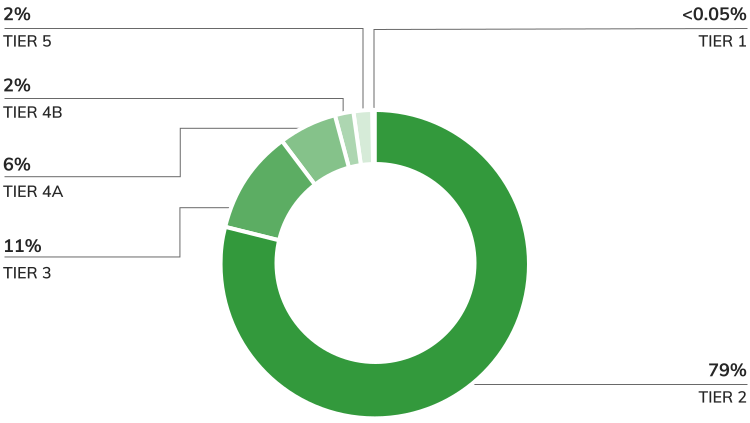
Regarding indirect soy, it represents around 98% of the total soy consumption associated with our Private Brand and perishable products (Tiers 2 to 4b4). The vast majority of the soy present in our supply chain (91%) is associated with specialised perishables in the categories of meat and aquaculture fish (Tier 24) and non‑specialised perishables such as eggs and dairy (Tier 34). The remaining 7% is associated with processed foods that contain in its composition products from animals fed with soy, such as ready meals and sausages.
Soy footprint by tier (2025)
Soy footprint by ingredient (2025)
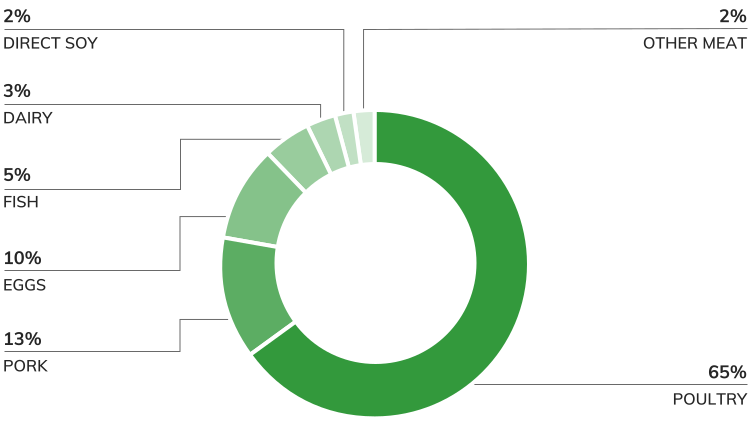
Around 65% of soy was associated with poultry feed (4 p.p. more than in 2024), 13% with pig feed (5 p.p. less than in 2024) and 10% with egg production (approximately the same share as in 2024).
Our soy strategy is based on two complementary lines of action. The first is to strengthen traceability mechanisms down to the level of agricultural production, which reduces uncertainty regarding the origin and increases value‑chain transparency. The second is to ensure that, when soy originates from countries with a higher risk of deforestation – such as Argentina, Brazil and Paraguay – we work closely with our suppliers to ensure sourcing is based on sustainable practices.
In 2025, we reduced soy of unknown origin to 3% of the total (2 p.p. less than in 2024), meaning that we strengthened traceability for 97% of soy at least to the country of production. This progress reflects the commitment and joint efforts of our suppliers to increase the traceability of their own supply chains. This work with suppliers will continue in 2026, with a particular focus on poultry, pork and eggs, given the relevance of these products in our supply chain.
Around 72% (8 p.p. more than in 2024) of the soy used in Private Brand and perishable products – mainly indirect soy – originated from countries at risk of deforestation5. From these percentage, 16% (1 p.p. less than in 2024) had sustainability certification6, such as RTRS or ProTerra.
Mapping indirect soy continues to be a challenge for food retailers, particularly until the plot production level. Since soy is often incorporated into animal feed far upstream in the value chain, our direct suppliers do not buy soy, but animal‑origin products whose production chain includes soy at a distant and less visible stage. This complexity reinforces the need for collaborative approaches to identify the origin of feed ingredients and increase transparency in the sector.
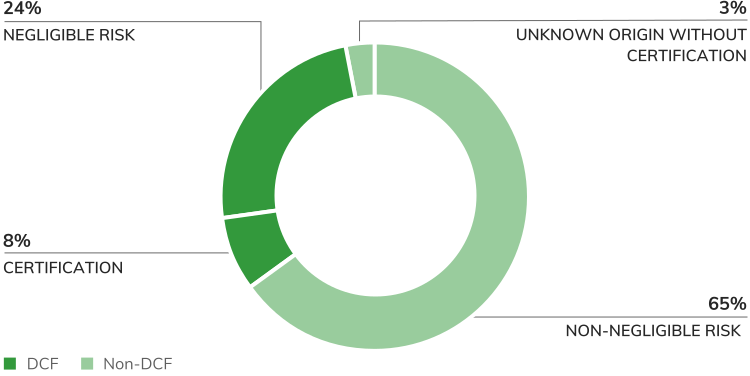
We estimate that, in 2025, 32% (12 p.p. less than in 2024) of our total soy consumption was not associated with deforestation or the conversion of High Conservation Value ecosystems. This value (equivalent to 164,185 tonnes) results from the combination of 25% from negligible‑risk origins and 8% covered by physical certification schemes (up to the Mass Balance level). The results reflect the global pattern of the soy value chain – particularly soy used for animal feed – which originates mainly from South American countries and shows limited availability of certified raw material.
Analysing the direct soy supply chain, 4,880 tonnes were considered DCF (82% of the total), due to sourcing from negligible‑risk regions. In the complex chain, 159,305 tonnes (32%) achieved DCF status, reflecting the greater complexity associated with animal‑origin products. This value results from the combination of 24% from negligible‑risk origins and 8% covered by physical certification schemes (up to the Mass Balance level).
DCF Status - Soy (2025)
For soy originating from higher‑risk countries, the RTRS credits purchased by our suppliers represented more than 5% of consumption (20,253 tonnes). In 2026, in cooperation with our Private Brand and perishable suppliers, we will seek to convert part of these credits into physical certification schemes, with the aim of progressively increasing the share of soy classified as free from deforestation and ecosystem conversion.
Paper and timber
In 2025, the consumption of virgin paper and timber fibres in our Private Brand and perishable products and packaging increased by 10% compared with 2024, explained by two factors: the global trend of replacing plastic packaging with paper‑based alternatives, and the growing demand for recycled paper and timber fibres, which reduces their availability on the market.
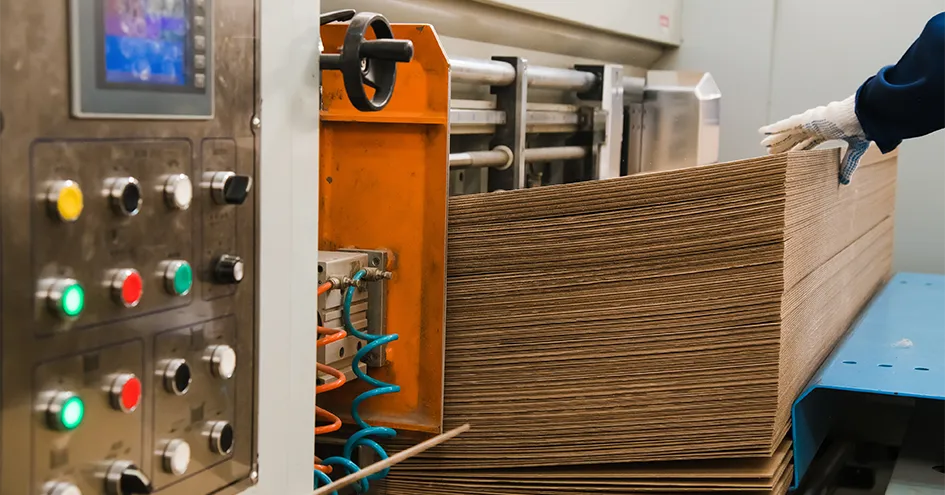
To reduce the risk of deforestation associated with our Private Brand and perishable products and packaging, we apply a strategy based on three pillars:
the progressive incorporation of recycled fibres;
monitoring the origin of virgin fibres at least to the national level;
the use of virgin fibres with FSC® or PEFC sustainability certification.
In this context, our two main objectives are:
by the end of 2026, ensure that 95% of virgin fibres used in our products and 80% of virgin fibres used in our packaging have a sustainability certification such as FSC® or PEFC;
to ensure that, by the end of 2030, 100% of virgin fibres used in our products and packaging hold FSC® or PEFC sustainability certification.
The use of virgin paper and timber fibres in Private Brand and perishable products in the three main countries where we operate (Poland, Portugal and Colombia) is assessed annually. Accordingly, we calculated the DCF consumption of these fibres assuming that:
countries identified by the FPCoA as free from deforestation and conversion are considered negligible risk;
in countries identified as having a high risk of controversial sources, FSC® or PEFC sustainability certification schemes are considered DCF.
Regarding virgin fibres, around 92% (2 p.p. more than in 2024) held sustainability certification (FSC®, PEFC or SFI), in line with our objective of ensuring 100% certification for Private Brand products and packaging by 2030.
Also in 2025, we were able to trace the origin – at least to country level – of around 95% (5 p.p. more than in 2024) of the virgin fibres used. This exercise revealed that around 11% (5 p.p. less than in 2024) of our virgin paper and timber fibre consumption originated from countries with non‑negligible or unknown deforestation risk. We mitigated this risk by incorporating raw material certified to FSC® PEFC or SFI, which represented 76% of the total virgin fibres originating from countries with non‑negligible or unknown deforestation risk.
DCF Status - Paper/timber (2025)
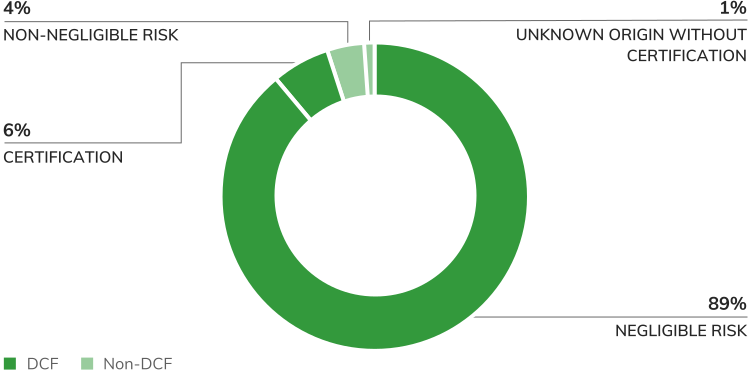
Based on this information, we can estimate that 95% (222,578 tonnes) of the total virgin paper and timber fibres used in Private Brand and perishable products and packaging were free from deforestation and the conversion of High Conservation Value ecosystems.
Paper and timber products
In the case of virgin paper and timber fibres present in Private Brand products (185,111 tonnes), there was an 8% increase in consumption compared with 2024, due to the launch of new products and sales growth, particularly at Biedronka and Ara.
Around 94% of the virgin fibres used in Private Brand products held FSC® or PEFC certification. We were able to trace 100% of the virgin fibres to country level, which allowed us to identify that around 7% originated from countries with non‑negligible deforestation risk7. However, from this percentage, 81% came from responsibly managed forests, as they carried FSC® or PEFC certification.
This analysis shows that 96% (177,539 tonnes) of the total virgin paper and timber fibres used in products were free from deforestation and the conversion of High Conservation Value ecosystems. Of this amount, 97% (172,612 tonnes) came from negligible‑risk countries, and 3% (4,927 tonnes) held physical certification considered DCF.
Paper and timber packaging
In the case of paper and timber used in packaging, around 79% (1 p.p. less than in 2024) of the fibres are recycled. Of the remaining 21%, which correspond to virgin fibres (49,009 tonnes), we identified that around 83% of the virgin fibres used in our packaging held FSC® or PEFC certification. Additionally, we found that the remaining 27% (31 p.p. less than in 2024) originated from countries with non‑negligible or unknown deforestation risk. Of these virgin fibres with non-negligible risk or unknown origin, 71% held FSC®, PEFC or SFI certification.
Assuming the previously mentioned criteria, we can estimate that 45,040 tonnes (92%) meet the DCF requirement, of which 35,852 tonnes (80%) originate from negligible‑risk countries, and the remaining 9,187 tonnes (20%) hold physical certification considered DCF.
As a food retailer, we consider this supply chain particularly complex, given that we do not purchase directly the raw materials used in packaging production. Even so, the DCF result reflects the joint efforts undertaken with our suppliers to ensure increasingly robust traceability of this raw material.
Beef
In 2025, our total beef consumption in Private Brand and perishable products was 40,895 tonnes. As in the previous year, we were able to trace all beef at least to the country of origin, which allowed us to determine that around 4% of our consumption originated from countries where the risk of deforestation associated with beef production is non‑negligible8.
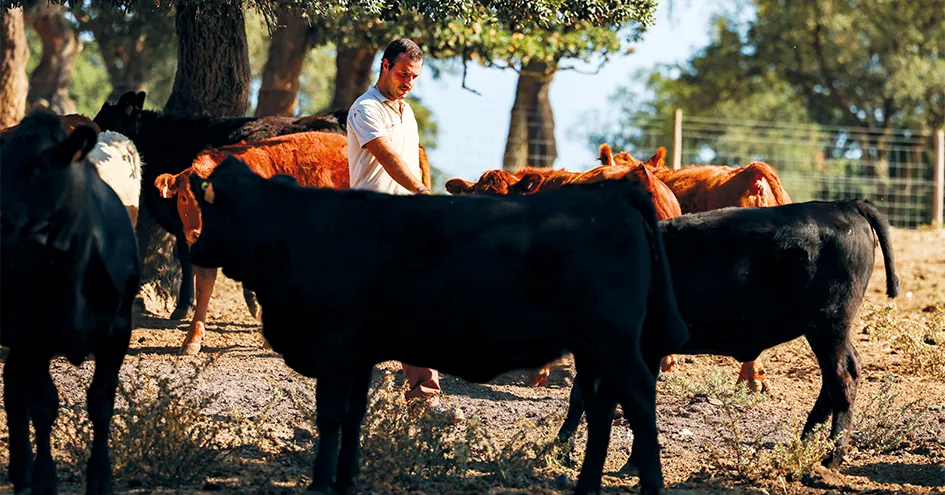
Given that countries with negligible risk are considered free from deforestation and the conversion of High Conservation Value ecosystems, we can estimate that 96% (39,105 tonnes) of our beef consumption is DCF.
DCF Status - Beef (2025)
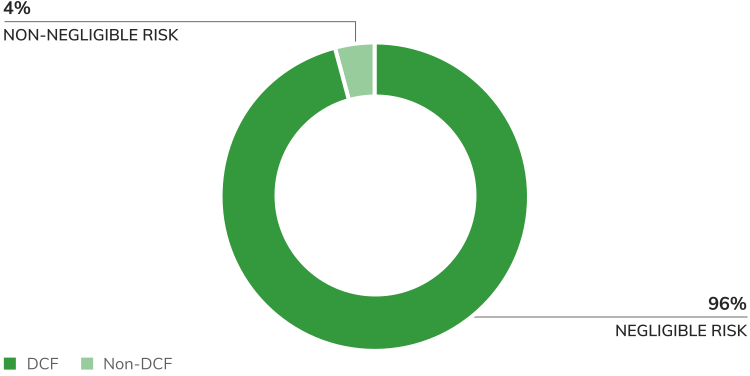
Considering our total consumption in direct sourcing (39,347 tonnes) and complex sourcing (1,548 tonnes), we can see that:
in direct supply chains, 95% (37,566 tonnes) meets the DCF criteria;
in complex supply chains, 99% (1,539 tonnes) of the volumes are aligned with our DCF assumptions.
Sustainable landscapes in Mato Grosso (Brazil)
With the aim of supporting the preservation and regeneration of ecosystems, in 2025, we continued to invest in multi‑stakeholder initiatives, aligned with the ten principles established by the FPCoA. One of the most relevant initiatives is the project in Mato Grosso, Brazil’s largest agricultural‑producing state, in which we participate in collaboration with the Amazon Environmental Research Institute (IPAM), Nestlé and Sainsbury’s.
This initiative aims to create the conditions and implement governance processes capable of transforming soy and cattle‑production landscapes, ensuring the conservation and restoration of forests and ecosystems, the protection of the human rights of Indigenous peoples and traditional local communities, and the improvement of production practices and livelihoods for small farmers.
In 2025, the project recorded significant progress across several areas. Under the production pillar, six farms (covering 18,000 ha) were supported in preparing for RTRS certification, and three farms (14,000 ha) joined the Reg.IA regenerative agriculture programme, initiating carbon, soil and productivity monitoring. In livestock, actions advanced to ensure individual traceability of 2,000 animals, animal‑welfare certification, and the development of pasture‑restoration plans.
In the conservation dimension, twenty families with the potential to join the CONSERV Smallholders programme were mapped, and a survey of around 400 relevant stakeholders was completed to structure Payment for Environmental Services (PES) schemes in the participating municipalities. Additionally, 26 Rural Environmental Registry (CAR) submissions were prepared and lodged, and another 21 were reviewed, strengthening the environmental regularisation of small producers.
Ecological restoration progressed with the implementation of 25 hectares of agroforestry systems (SAFs) in Tangará da Serra, benefiting 25 new families with technical assistance, raw materials and the distribution of certified seedlings. The regional seedling‑production chain was strengthened by supporting three nurseries: the construction of the new Sapezal municipal nursery, the restructuring of the EMPAER nursery in Tangará da Serra, and the regularisation of the Mendes Nursery in Acorizal.
Under the inclusion pillar, a land‑tenure diagnosis of the territories was initiated, and 92 family‑farming groups and Indigenous communities (associations, cooperatives and unions) were mapped, laying the foundation for future socio‑economic and organisational‑strengthening actions.
The progress achieved so far highlights the success of collaborative strategies based on participatory governance, technical innovation and community engagement.
Cocoa and Coffee
As we deepen our understanding of our impacts and dependencies across the four commodities most material to the Group, we have been extending this analysis to other ingredients which, although less material, are relevant in the fight against deforestation, such as cocoa and coffee. Following reference initiatives such as SBTi FLAG and CDP, we are now including in this report our progress regarding these two raw materials.
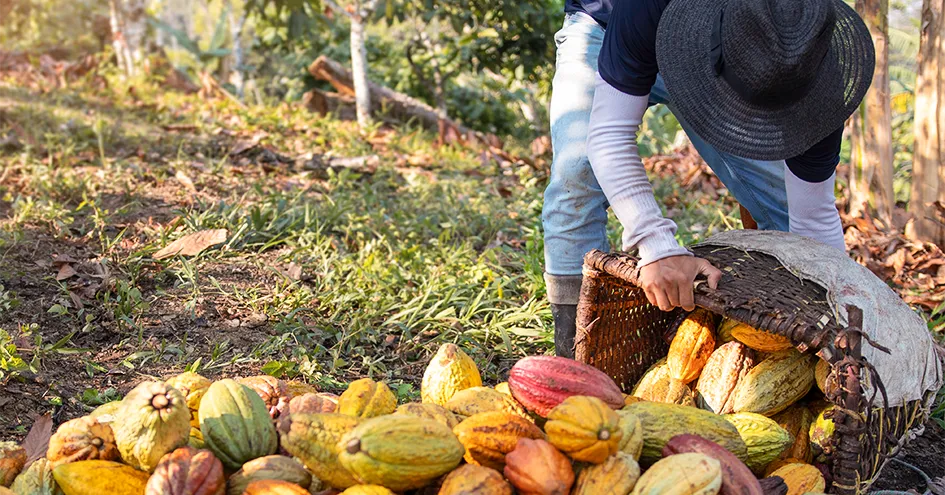
In 2025, we were able to ensure traceability of 80% (7,847 tonnes) of the cocoa incorporated into Private Brand and perishable products to the country of origin. Côte d’Ivoire, Ghana, Cameroon, Colombia, Nigeria and Ecuador were the most representative origins, consistent with the structure of global cocoa production. Around 14% of our cocoa consumption was Rainforest Alliance certified, ensuring more sustainable production and contributing to the protection of people, forests and biodiversity. It is important to highlight that, as a food retailer, traceability within this supply chain presents complex challenges, given that cocoa is predominantly used as an ingredient in processed products, involving multiple intermediate stages in the value chain.
In the case of coffee, 98% (9,353 tonnes) of the volume present in Private Brand and perishable products was also traced to country of origin. The most representative origins were Vietnam, Brazil, Ecuador, Colombia and Indonesia. Together, these countries account for more than 90% of the coffee volumes traced.
We are committed to strengthening the reporting of cocoa and coffee and progressively integrating the same deforestation‑related requirements already applied to the four priority commodities (palm oil, soy, paper/timber and beef).
1 More information on AFi’s position can be consulted here.
2 Information on these certification schemes is available on the RSPO website.
3 Data disclosed in the analysis of deforestation levels associated with palm‑oil production, carried out in 2023 by IDEAM – the Institute of Hydrology, Meteorology and Environmental Studies – and the Colombian Ministry of Environment.
4 All five tiers of soy quantification in the value chain are accounted for, in accordance with the “Calculation guidelines for the measurement of embedded soy usage in consumer goods businesses” methodology of The Consumer Goods Forum.
5 According to the FPCoA, the list of countries considered to have a non‑negligible risk of deforestation associated with agricultural soy production includes Argentina, Brazil and Paraguay.
6 According to the FPCoA, the recommended list of DCF certification schemes and Voluntary Sustainability Standards (VSS) applies. More detailed information is available here: Soy DCF Methodology.
7 The countries considered to have a non‑negligible risk of deforestation associated with agricultural production of paper and timber correspond to those defined in the CGF guidelines (Argentina, Indonesia, Malaysia, the United States and Vietnam).
8 The countries considered to have a non‑negligible risk of deforestation associated with beef production also correspond to those defined in the CGF guidelines.